
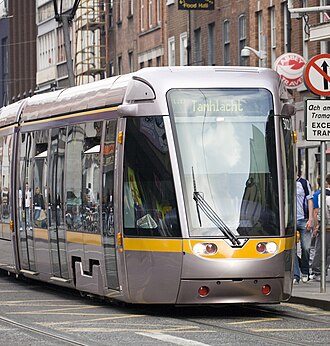
Dublin’s lost tram depots are a different kind of ruin: compact industrial husks tucked behind Victorian terraces, long rows of arched brick, rusting rails in weeds and shuttered sliding doors that seem to breathe with the city’s older rhythms. For travellers drawn to dark history, transport archaeology and local folklore, these disused rail sheds offer an approachable, urban trail where documented transport history and street‑level legend meet—on pavements you can walk, on lanes you can drive, and in evenings that are atmospheric but not reckless.
Introduction: Why Dublin’s lost tram depots intrigue dark‑history travellers
What makes the “lost tram depots trail” appealing is that the sites are part museum, part set dressing: their architectural bones are often intact, their original function readable to anyone who knows what to look for, and their quiet presence invites stories. They stand where ordinary business, municipal reform and later urban renewal collided—so folklore, accident reports and workplace memories cluster around them. The trail is best experienced as a layered walk: first observe the built fabric, then read the documentary clues, then note the local tales. All three layers enrich one another without asking you to trespass into private property.
Book the Lost Tram Depots Trail — Ghost Tour Dublin Experience (https://www.ghosttourdublin.com/)
A brief history of Dublin’s tram network and the rise (and fall) of depots — documented facts
Documented history shows Dublin’s tram network developed as an expanding urban service across the late 19th and early 20th centuries. The system required a network of depots and sheds for storage, maintenance and administration. Depots were typically located at the outer edges of routes or close to industrial districts, where space and rail access were already available.
As motor buses and changing transport policy took hold during the 20th century, many tram routes were wound down. Depot buildings were redundant, sold or repurposed. Some survived as commercial workshops, storage yards or municipal depots; others were absorbed by later rail or light‑rail projects. What remains across the city are fragments: purpose‑built sheds, shortened carriage houses and the occasional embedded rail stub visible in cobbles and yards.
Spotlight depots: locations, current condition and what you can legally see (map & suggested route)
Rather than give precise coordinates for fragile or private sites, this trail description points you to durable public vantage points and a simple loop that highlights representative depots and remnants. Expect to see arched brickwork, loading bays, trace rails, company initials carved into lintels, and converted industrial units where the outlines of tram bays are still visible.
Suggested loop (walking/driving)
- Start at a central, well‑connected city point (city centre near O’Connell Street or the Docklands) so you can link the trail to other visits.
- Head west toward the inner north city industrial quarter; here you will find former carriage houses visible from public streets and lanes.
- Continue northwest to a group of brick sheds and former stabling yards that now sit behind mixed residential and light‑industrial blocks—these are best seen from pavement vantage points or public car parks.
- From there, loop east along the north city boundary toward coastal approaches where tram termini once reached the promenades—views from public walkways reveal platform edges and service roads.
- Return south through the Docklands to view late‑Victorian depots that were later adapted for other municipal uses; finish with a stop in the brewery and industrial quarter where subterranean cellars and ancillary buildings often retain tram‑era traces.
On this loop you will remain on public land and pavements at all times. A simple city map, or a phone’s map app, will help you follow the sequence above; the total route is manageable in a half‑day at a relaxed pace, or split into shorter walks between cafes and visitor stops.
Representative site notes
- Brick arch depot remnants: Typically visible from lane ways and public roads; you can photograph façades and architectural details but not enter locked yards.
- Former terminus edges and promenades: Look for raised kerbs, stone platforms or stub rails near seafront promenades; these are public and ideal for evening photography.
- Converted sheds in commercial areas: Now used as workshops or storage; observe signage and building lines from the pavement—do not attempt to enter without permission.
For complementary dark‑history stops on your route, consider detours that pair well with the trail: the Abandoned Brewery Cellars in Dublin: History, Cellar Hauntings & Visitor Guide, the Clontarf Promenade Evening Legends guide, Hidden Dublin Courtyards, or, for a coastal medium‑distance extension, Howth Head Cliffside Spectres; these are close enough to add variety and contextual storytelling to your day.
Separating legend from record: common ghost stories attached to the depots and what is historically verifiable
Many depots have accrued ghost stories: sightings of uniformed figures, unexplained footsteps, a lantern seen in a sealed bay. These accounts are part of living oral history and contribute to local colour. Distinguishing between legend and record is straightforward if you keep categories clear.
Documented fact: depots were noisy, dangerous workplaces with documented incidents and injuries in period newspapers and company reports; staff lived locally and their names appear in census and employment records. These proven facts explain why stories of memory and mourning concentrate at depots.
Folklore: tales of a “last conductor” or “night watchman” are typically passed down by residents and vary in detail. Folklore is valuable because it reveals how communities processed industrial change, but individual spectral details are usually unverified.
Legend: dramatic accounts (full apparitions, repetitive supernatural phenomena tied to a single building) often emerge in tourist retellings. Legend can be entertaining and evocative, and it is best enjoyed with an appreciation for the distinction between storytelling and archival evidence.
Practical visiting advice: permissions, safety, best times, photography and what to avoid
Respect private property. Many depots sit behind gates or in operational yards. Legal access is limited to public pavements and viewing points unless you have explicit written permission from the landowner. Do not climb into derelict buildings—unstable floors, asbestos and hidden pits are real hazards.
Best times: daylight for close inspection and photography; dusk for atmosphere and long‑exposure shots of façades and streets. Avoid visiting alone at night in isolated lanes. Wear sturdy footwear, high‑visibility clothing if you are near traffic, and carry a charged phone and a small torch if you plan to walk after sunset.
Photography: street photography of the exteriors from public spaces is allowed. Drone use is governed by Irish aviation rules and local privacy laws; if you plan drone work, secure permissions and check no‑fly areas. Respect residents’ privacy—do not photograph through windows or inside private courtyards without permission.
What to avoid: trespassing into locked yards, removing or disturbing site fabric, and provoking confrontations with on‑site workers or residents. A respectful, low‑impact approach protects the sites and keeps this trail available for others.
Guided vs self‑guided: what a licensed Ghost Tour adds, sample itinerary and estimated timings
Self‑guided advantages: flexibility, pace control, and the ability to combine the route with other city stops. A map, this article and the internal links provided are sufficient for an informed walk. Expect a self‑guided loop to take 2–4 hours depending on stops and photography.
Guided benefits: licensed guides provide verified transport history, access to curated archival detail, safer night‑time routes and storytelling that clearly flags folklore versus fact. Guided groups also reduce the risk of inadvertently trespassing, and experienced guides can point out subtler traces—patina on bolts, embedded rails in cobbles—that are easy to miss.
Sample guided itinerary (3 hours)
- Meet at a central pickup point; short safety and permissions briefing (10 minutes)
- Walk to the first depot façade with documented history and a short talk (30 minutes)
- Move to a converted shed and discuss workplace records and local folklore (30 minutes)
- Coffee break and Q&A near a complementary dark‑history site such as the Abandoned Brewery Cellars (20 minutes)
- Coastal terminus point at promenade to close with legend vs record discussion and photography tips (30 minutes)
- Return to start and recommendations for further walks (20 minutes)
For private groups and bespoke timings—special access, extended archival talks or evening photographic sessions—please enquire about private bookings: Book private groups — Ghost Tour Dublin Experience (https://www.ghosttourdublin.com/)
Book the Lost Tram Depots Trail — Ghost Tour Dublin Experience (https://www.ghosttourdublin.com/)
Nearby amenities, transport links and how to combine the trail with other Dublin dark‑history stops
The loop is deliberately close to public transport corridors. Start or finish at major tram, bus or rail hubs to combine the trail with other visits. Cafes and pubs in the inner city provide convenient breaks; many hospitality venues around Smithfield and the Docklands welcome groups and photographers.
To expand the day, link the trail to the Abandoned Brewery Cellars guide for subterranean atmosphere, stroll the Clontarf Promenade for seaside legends, explore Hidden Dublin Courtyards for uncanny urban nooks, or add a coastal leg to Howth Head if you want dramatic cliffside spectres. The Bull Island keeper legends are also an evocative extension if you prefer quieter natural settings with maritime folklore.
FAQ
Are the old tram depots open to the public or can I enter them?
Most old tram depots are private or repurposed and are not open without permission. You can legally view façades and features from public streets and walkways. If a depot has been converted into a museum or publicly advertised space, follow the operator’s access rules. Never enter locked or fenced sites without written consent from the owner.
Is it safe to visit the depots after dark and do you recommend doing so alone?
Visiting after dark can be atmospheric but carries higher risk—uneven surfaces, poor lighting and isolated lanes. We do not recommend visiting alone at night. Join a guided evening walk or visit in pairs/groups and stick to well‑lit, populated routes.
Can I take photographs or drone footage of the sites?
Photography from public spaces is fine; always respect privacy. Drone use requires compliance with Irish aviation regulations, and local restrictions may apply near populated areas. Secure permissions for drone flights and avoid filming private property without consent.
Do Ghost Tour Dublin Experience run guided tours specifically for the lost tram depots trail?
Yes. Ghost Tour Dublin Experience offers guided Lost Tram Depots Trail walks with licensed guides who separate documented history from folklore and manage permissions and safety. Bookings, group options and private tours are available through the website.