
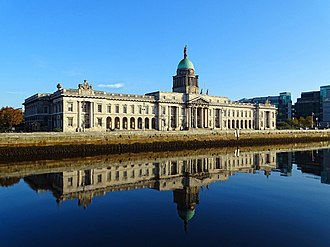
Apparitions on the Custom House Waterfront: History, Sightings & Visitor Guide
The Custom House waterfront in Dublin sits where civic power, commerce and the River Liffey meet—and where stories of vanished sailors, mournful figures and sudden chills have gathered for generations. This guide separates documented history from folklore, compiles modern witness accounts without inventing sources, assesses their credibility and offers a practical walking route and investigative tips for visitors who want to explore the waterfront responsibly and respectfully.
Book a Ghost Tour Dublin Experience to join an expert-led route that includes the Custom House waterfront and nearby haunted sites. Our guides combine historical context with eyewitness storytelling to give you a grounded, atmospheric evening on the quays.
Documented history: construction, nineteenth‑century waterfront life, and notable incidents
The Custom House we see today is the result of a major civic project from the late 18th century and was designed to present Dublin to the river. Its façades and domes reflect a taste for classical architecture intended to impress shipping masters arriving on the Liffey.
Through the 19th century the quays were a working waterfront: warehouses, ropeworks, victualling houses and frequent small‑boat traffic. The river was an urban highway for people and goods, and its currents and tides shaped daily risks. Drowning incidents, accidental collisions and the steady attrition of a working river left a social memory of loss that local storytellers and families passed on.
In the early 20th century the Custom House also became a site for dramatic civic events. These historical facts—the building’s civic role, its visibility from the river and the area’s long history of maritime activity—create the background that often appears in later ghost narratives.
Architecture, river traffic and how the site’s past creates a setting for apparitions
Places with strong architectural presence, regular night‑time activity and a history of loss are naturally fertile ground for haunt stories. The Custom House’s riverside façade, its long sightlines along the quays and the play of lamplight on water exaggerate shadows and reflections.
Many modern sightings describe figures seen briefly on the riverbank or a sense of movement on the water that vanishes on approach. Architecturally, low alcoves, staircases that lead down to quays, iron railings and the vertical planes of warehouses produce acoustic pockets where echoes and distant voices can be amplified or warped by wind and the river’s surface.
Apparition reports and modern encounters: what witnesses say
Eyewitness reports collected over the last few decades fall into a few recurring patterns: glimpses of a solitary figure standing by the waterside, sudden drops in temperature, camera anomalies during long‑exposure shots, and indistinct footsteps or voices heard when no one else is present.
Some witnesses emphasize a maritime flavour to the encounters—seeing a soaked coat, a hat from the age of steam traffic, or a person who seems to be searching the water. Others report more ambiguous figures: a woman in dark clothing, a child by the railings, or a shadow that passes through a lamppost.
It’s important to note that most modern accounts come from anonymous visitors, late‑night walkers, or tour participants. These reports are valuable for patterns and atmosphere, but they rarely include corroborating documentation such as multiple independent timed witnesses or physical evidence that can be examined in the historical record.
Assessing credibility: contemporary records, newspaper mentions, and what’s missing
When weighing apparition claims, a useful approach is to separate three things: documented events, oral tradition, and modern subjective experience. Documented events are those that appear in contemporary records—official reports, coroner’s notices, local newspapers, shipping registries and municipal archives. They establish the fact of drownings, accidents or notable civic acts at or near the Custom House.
Oral tradition and folklore often preserve emotional truth—stories passed through families and communities that may conflate incidents or situate characters at memorable landmarks. These tales can be centuries old, but their details shift and accumulate theatrical elements over time.
Modern subjective experiences—eyewitness sightings, photographs, recordings—are valuable cultural data but require careful scrutiny. In many instances there are no corroborating contemporary newspaper reports that record a supernatural element; instead newspapers document the underlying tragedies (a drowning, a collision, a firefight). The missing link in most apparition narratives is contemporary witnesses or physical artifacts that survive from the time the apparition is claimed to represent.
That absence doesn’t negate eyewitness testimony, but it does frame how we interpret it: as part of a living urban folklore that overlays the documented history of the waterfront rather than as direct evidence of historical persons returning from the past.
A visitor‑friendly walking route: where to look, best times and safety notes
Start at the plaza in front of the Custom House and take the north quays westward. This stretch gives the best combination of architectural perspective and river noise that contributes to the waterfront atmosphere. Pause at spots where staircases or openings descend to the waterline; these are common locations for reported sightings.
Crossing to the south bank with care lets you view the Custom House from the opposite angle and can change how reflections and lights read in photographs. If you’re working with a small group, try a slow, quiet five‑minute stop at each highlighted point rather than walking continuously—the waterfront’s soundscape and light can change rapidly.
For safety: the quays are generally well lit and busy into the evening, but remain aware of traffic on adjacent roads. Keep to pedestrian areas, avoid leaning over railings, and mind weather conditions—the river environment gets colder and windier than inland streets. If you plan to visit late at night, travel in a group and share your plan with someone not in your party.
Practical tips for visitors and amateur investigators
Photography: use a tripod for long exposures, but be prepared for reflections and passing car lights. If you want to capture alleged anomalies, bracket exposures and take both long and short shots. Avoid excessive post‑processing claims—present unedited originals if you intend to share findings.
Sound recorders: a small field recorder with a directional mic helps reduce river wind. Record ambient sound for several minutes at each spot; subtle changes in frequency or sudden drops in noise level are the types of data people report. Be mindful of privacy—recording people without consent can be intrusive.
Permissions and regulations: casual photography and small group tours are usually permitted along public quays, but commercial shoots, tripods on narrow footpaths or drone use may require permissions. Check local rules and always be considerate of residents and workers in the area.
Respect: if you encounter markers, memorials or private entrances, treat them with restraint. Many of the apparition narratives are tied to real human loss—approach the stories with curiosity but also sensitivity.
How to experience it with Ghost Tour Dublin Experience and booking information
Our guided waterfront segments place eyewitness accounts alongside the documented civic history so you can hear both the archive and the anecdote. The guides emphasise credible context: what we can confirm from records, what comes from oral tradition, and what is the subjective experience of modern visitors.
Book a Ghost Tour Dublin Experience to join an evening tour that includes the Custom House waterfront. If you are organising a private group, you can also arrange a tailored after‑hours walk—please select the private groups option when booking or contact our team for details and accessibility arrangements. Book a private Ghost Tour Dublin Experience
FAQ
Are the Custom House waterfront apparitions historically documented or mostly folklore?
The waterfront’s apparitions are primarily a mix of folklore and modern eyewitness accounts layered over documented historical events. Archival records confirm maritime accidents, civic events and notable incidents by the river, but the specific supernatural details in most sightings tend to belong to oral tradition and contemporary subjective experience rather than to primary historical records.
Can I visit the Custom House area at night, and is it safe for walking tours?
Yes—you can visit at night. The area is generally well lit and frequented by locals and tourists. For the safest experience, join a guided tour, stay in a group, avoid narrow or restricted areas, and be aware of traffic on adjacent roads. Dress for wind and damp conditions near the river.
Does Ghost Tour Dublin include the Custom House waterfront on its regular routes?
Yes. Many of our regular evening routes incorporate a waterfront segment to discuss the architectural setting, documented history and eyewitness reports. Check availability and specific route details when you Book a Ghost Tour Dublin Experience.
What should I bring on a waterfront ghost walk to get the best experience?
Bring warm, layered clothing, sturdy footwear and a small torch for pathways. If you plan to photograph, bring a tripod and spare batteries; if you plan to record audio, bring a portable recorder and wind protection for the mic. Above all, bring patience and an openness to both history and contemporary stories—there’s a difference between what’s recorded in archives and what people feel beside the water at night.