
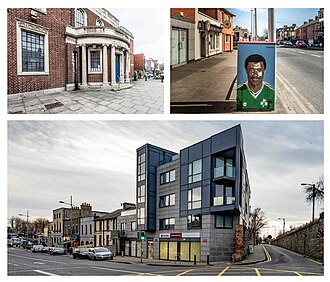
Inchicore Canalside Spectral Trail: Visitor Guide to Dark History & Folklore
The Inchicore canalside spectral trail invites visitors to walk a narrow seam of Dublin where industrial grit, working-class life and the stillness of water create an intimate stage for both documented history and rich local ghost lore. This guide pairs verifiable canalside and industrial heritage with the oral stories that travellers and residents pass down, offering a practical mapped route, safety and photography advice, and clear options to join a guided experience.
Book a guided Inchicore Canalside Spectral Trail with Ghost Tour Dublin Experience
Why Inchicore’s canalside makes a compelling spectral trail
Inchicore’s canalside feels atmospheric because of the layering: the canal itself, surviving industrial structures, tight workers’ terraces and quieter churches or public houses. The built environment still shows signs of a working past—locks, bridges and old quay edges—so a night walk here foregrounds both human stories and the noises of the city falling away. For visitors looking for a short, focused dark-history walk, the canal corridor offers clarity of route and concentrated material culture to interpret.
Getting there & practicalities
Transport: Inchicore is reachable by public transport from central Dublin; check local transit timetables for the best connections. If driving, allow extra time for limited on-street parking in residential areas and avoid blocking narrow lanes.
Accessibility: The towpath is generally level but can be uneven in places. Wheelchair users should expect some firm surfaces near main access points but may encounter ramps or steps at bridges—plan your route accordingly.
Best times and weather: Early evening or the blue hour is the most atmospheric while still allowing navigation in fading light. Dublin weather can change quickly; bring a weatherproof jacket and sturdy shoes for wet or muddy towpath sections.
Documented history along the canal
Documented history here reflects Dublin’s industrial growth and social life. The canal corridor supported mills, small factories and the logistical movement of goods. Nearby railway workshops and foundries employed local residents for generations, shaping terraces, pubs and schools to serve those communities.
Industrial workplaces commonly recorded accidents and workplace fatalities in their own logs and newspapers of the time. Those records help explain the sense of danger often attached to canalside work: moving barges, wet stone banks and heavy machinery created hazards for those who worked the water and the adjacent yards.
Social history is visible in surviving worker housing, community halls and public houses. These buildings anchor many of the personal accounts that later became the basis for local storytelling.
Canalside stops: eight key locations
The following stops form a compact trail along the Inchicore canalside. Historical notes are clearly separated from folklore so you can tell what’s on record and what comes from oral tradition.
1. Towpath access point and lock
Documented: Locks and access points were the operational heart of canal traffic—places where cargo was raised or lowered and bargemen paused between journeys.
Folklore: Locals tell of a lone bargeman who appears to help with a lock at night and then vanishes—an oral story used as a cautionary tale about accepting help from strangers after dark.
2. Former milling site
Documented: The riverside mill site reflects the canal’s role in powering and transporting goods for small-scale industry.
Folklore: Stories of late-shift figures seen moving among the ruins are often described; these are passed on by evening walkers rather than supported by archival records.
3. Bridge with workers’ inscriptions
Documented: Bridges over canals were meeting points and are sometimes inscribed with initials from generations of residents.
Folklore: A repeated anecdote tells of names that appear and disappear overnight—an example of playful oral tradition rather than a documented phenomenon.
4. Old railway works overlook
Documented: Railway workshops near Inchicore shaped employment and the built environment; remnants of yards and walls remain visible from the canal.
Folklore: Ghostly footsteps after midnight near the yard are commonly reported in conversation among shift workers; these unverified reports form part of local lore.
5. Terraced workers’ streets facing the water
Documented: Rows of small houses were built for canal and railway families—social histories record births, deaths and everyday life here in parish records and local newspapers.
Folklore: Tales of friendly or scolding apparitions in upper windows reflect community memory and are best understood as oral history rather than archival fact.
6. Canal-side public house
Documented: Pubs served as social hubs where anecdotes and local histories were exchanged and recorded informally across generations.
Folklore: A commonly told tale credits the pub with a resident spirit who looks after the regulars—classified as legend shared by long-time patrons.
7. Small churchyard or memorial wall
Documented: Churchyards and memorials record names and sometimes accounts of tragedies that impacted the neighbourhood.
Folklore: Persistent stories about night-time weeping at a specific grave are written up in local storytelling collections but not in official records.
8. Quay-end with flood markers
Documented: Flood markers and worn quay edges show the canal’s changing levels and practical challenges to riverside life.
Folklore: The quay-end is often the setting for tales about lost cargoes and midnight recoveries; these stories reflect how communities narrate risk.
Separating fact from legend
When exploring the Inchicore canalside spectral trail, it helps to separate documented events—those recorded in local newspapers, parish registers or municipal archives—from the oral traditions that develop in communities. Both are valuable. Documented history grounds the trail in verifiable human experience; folklore reveals the ways residents make sense of loss, work and the river’s dangers.
Ask questions on any guided tour about what is documented and what is local story. Guides should be clear about the distinction and point to where records can be consulted if you want to dig deeper.
Safety, etiquette & photography
After-dark safety: Stick to the towpath and well-lit access points. Walk with a partner or in a small group, carry a charged phone and a torch, and let someone know your route if you are alone. Avoid crossing into private property.
River-edge caution: Canal edges are slippery; keep a safe distance and supervise children closely. Many quay edges lack modern barriers.
Permissions: Do not enter fenced-off areas or climb on historic structures. If you want access off the public path for photography or research, seek permission from property owners or appropriate local authorities.
Low-light photography tips: Use a tripod for long exposures, keep ISO moderate to avoid excessive noise, and consider a wide-angle lens to capture the canal and surrounding structures. Use exposure bracketing for high-contrast scenes and respect other visitors when using bright lights or flash.
Tour options and commercial details
Guided tours: Ghost Tour Dublin Experience operates guided walks that interpret both the factual history and the living folklore of the canalside. Professional guides offer context, safe routing and storytelling shaped for visitors.
Private bookings and groups: Private groups and bespoke experiences are available on request; contact the operator for details about availability and tailoring the walk to your group’s interests.
Pricing expectations: Rates depend on group size, length of tour and whether it’s a private booking. For current prices and scheduled departures, contact the tour operator directly.
Suggested self-guided route and timing
Mapped loop: Start at the main towpath access point near the bridge, follow the towpath downstream for the first four stops, cross at the footbridge to view the railway works overlook, and return along the opposite bank to complete a compact loop.
Duration: The loop is typically 45–75 minutes at a steady walking pace with short stops. Allow 90–120 minutes if you plan extended photography or want to linger at each stop.
Start/finish and refreshments: Begin at a visible public access point for ease of navigation and end near a local public house or café for refreshments. Many small eateries in the area serve early-evening snacks—one benefit of a canalside walk is the close proximity of friendly local stops.
Further reading and related walks: If you enjoyed this trail, consider other evening walks in the city that combine dark history and folklore, such as the nearby guides to seaside and suburban narratives or how to plan interpretive projects. For planning events or pop-up exhibits inspired by dark heritage, see How to Budget a Pop-up Haunted Exhibit in Dublin: Costs, Funding & Practical Steps. For comparable local guides, read Blackrock Village Twilight Stories: A Visitor’s Guide to Dark History & Evening Walks, Rathmines Shadowed Terraces: Local Ghost Lore & Visitor Guide, and Casino at Marino at Midnight: Statues, Legends & Night Visitor Guide. If you are working on a community dark-tourism project, see How to Apply for Heritage Grants for Dublin Dark Tourism Projects.
Book a guided Inchicore Canalside Spectral Trail with Ghost Tour Dublin Experience
For private groups and tailored itineraries, contact our private bookings team to arrange a bespoke nighttime walk for your party: Private group bookings with Ghost Tour Dublin Experience.
FAQ
Is the Inchicore canalside spectral trail safe to visit after dark?
Yes, when you follow sensible precautions: stay on public towpaths, walk in groups where possible, carry a torch and phone, and avoid restricted areas. Guided tours provide added safety and local knowledge of the best-lit, safest route.
How long does the suggested walking route take and is it suitable for families?
The suggested loop takes 45–75 minutes at a steady pace; allow 90–120 minutes if you pause for photos or refreshments. It is suitable for families with older children; supervise younger children closely near the water and avoid late-night departures if children are involved.
Are sightings or ghost experiences documented or just local folklore?
Most personal sightings are part of oral tradition and local lore rather than independently documented events. The canalside does have documented industrial and social histories—accidents, workplace records and community registers—that provide factual background for many stories.
Can I join a guided tour and how do I book one with Ghost Tour Dublin Experience?
Yes. To book a guided Inchicore canalside spectral trail with Ghost Tour Dublin Experience, visit the booking page to view scheduled tours and private booking options: Book a guided Inchicore Canalside Spectral Trail with Ghost Tour Dublin Experience.