
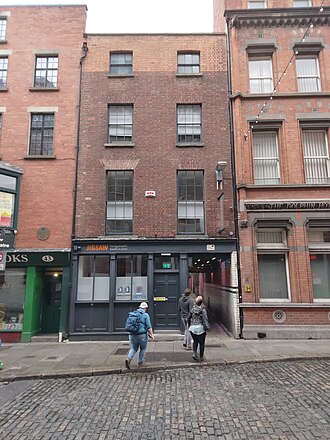
Lost Lanes Night-Walk: Tracing Dublin’s Vanished Alleys and Eerie Addresses
The narrow alleys and mews that once threaded Dublin’s streets are part archaeology, part atmosphere: physical traces on old maps, bricked-up arches on a modern façade, and stories that have accreted into legend. For dark-history visitors the appeal of lost lanes is threefold — they reveal hidden patterns of urban life, they concentrate stories of misfortune and resilience, and they create the kind of intimate, after-dark setting where history and folklore meet. This guide shows you how to map those vanished alleys on a night-walk, how to tell what is documented and what is hearsay, and how to experience Dublin’s lost urban fabric safely and respectfully.
Book the Lost Lanes night-walk with Ghost Tour Dublin Experience
The appeal of lost lanes — why vanished alleys matter to Dublin’s dark-history visitors
Lost lanes concentrate human stories. Narrow passages once served servants, tradespeople and small businesses; they carried refuse and rumours and sometimes tragedy. Walking them at night helps you sense the scale and rhythm of a different Dublin: smaller plots, courtyard activity, doorways and coach-houses that no longer front a main street.
That atmosphere draws ghost stories and oral histories, and those stories are valuable whether or not they are strictly true. Our goal is to help you enjoy the mood while understanding which details are documented and which are part of local folklore.
How alleys vanish: redevelopment, fires, sanitation projects and the changing street plan
Many alleys disappeared for practical reasons. Urban redevelopment creates larger building footprints, rebuilding after fires can erase side entrances, and public-health improvements often widened streets or eliminated cramped courts and backlands. Sometimes alleys were absorbed into private property as courtyards or service yards.
Documented history will show these changes on successive map editions or in planning records. Folklore tends to supply a single, dramatic cause — a curse, a murder, or a vanished population — as a tidy explanation. Both are part of the landscape, but they play different roles: documented causes explain how the fabric changed; folklore explains how people remembered and made sense of those changes.
Tools for the walk: reading historical maps, street indices and old photographs without archival expertise
You don’t need formal training to use basic tools that bring vanished alleys into view.
- Historic map layers: many municipal and national map services offer overlay layers. Toggle between historic and modern views to see where building lines shifted.
- Street indices and old directories: these list businesses and addresses and can confirm an alley’s role as a service entrance or tenement access.
- Photographs and postcards: look for bricked-up arches, recesses in façades or different rooflines that hint at former courtyards.
- On-street clues: irregular plot shapes, oddly narrow gaps between buildings, patched brickwork, and blind arcades are physical traces of lost lanes.
- Local resources: libraries, small museums and neighbourhood-history groups often have collections or volunteers who will point you to specific references.
Use a smartphone to carry a map overlay and a note app for quick records. Take a screenshot of the historic layer at each stop so you can compare while standing in place.
Separating myth from record: evaluating ghost stories and address claims
When a spooky anecdote attaches to an alley, ask three simple questions: is there documentary corroboration, is the story consistent across independent accounts, and does the physical evidence support the claim?
Documented history: look for contemporaneous records — maps, directories, court records, newspaper reports — that confirm that a lane existed and describe its use. If several independent documentary sources point to the same fact, that is strong evidence.
Folklore and legend: many evocative tales are oral, passed down and adapted. They’re not ‘wrong’ — they’re a different type of source. Label them clearly when you share them: “local tradition holds…” or “as the story goes,” rather than presenting them as verified fact.
On tours we distinguish documented history from legend at every stop so you can enjoy the atmosphere without conflating speculation with evidence. For a sense of how oral histories are preserved and evaluated, see our practical notes on Archiving Dublin’s Oral Ghost Histories.
Suggested night-walk route: mapped stops, on-the-ground clues and historical notes
This suggested loop is built for after-dark exploration: compact, walkable, and rich in on-street clues. It mixes visible traces with places where historic maps reveal what once stood there.
Stop 1 — Bachelor’s Walk and the North Quays
Begin on the north quays where older street lines meet the riverfront. The river’s edge and quays have been reworked repeatedly; historic maps often reveal narrow approach lanes and house plots that have since been absorbed. Look for irregular building lines and archways set back from the modern pavement. For context, our piece on Bachelor’s Walk explores some of the area’s charged histories.
Stop 2 — A Temple Bar alley (hidden courts and service entries)
Temple Bar’s present-day lanes conceal earlier service patterns. At night, the scale of alleys and the manner in which building facades step in and out is clearer. Compare modern sightlines with an old-plan overlay to spot bricked-up openings and former courtyards.
Stop 3 — Georgian mews and coach-houses
Look for rear-entrance coach-houses and narrow mews behind grand terraces. These were working spaces — coach sheds, stables, and servant access. Physically, they leave telltale traces: low arches, different rooflines, and loading bays. See also our article on Coachhouses and Servant Quarters for more atmosphere.
Stop 4 — Fringe-theatre backstreets
Small theatres and rehearsal spaces often occupy converted industrial or service buildings. The narrow lanes around these venues can preserve original service alleys and hoist-ways. For theatrical ghost lore and backstage reports, our Backstage Phantoms piece discusses how performance spaces accumulate stories.
Stop 5 — Lesser-known pubs and their back alleys
Many less-prominent pubs opened directly onto lanes or courtyards that later closed or shifted. Look for rear deliveries and patched brickwork. If you’d like to pair architecture with atmosphere, our guide to Offbeat Haunted Pubs suggests quiet spots for a late refreshment.
At each stop compare the map overlay to what you can see: door positions, changed plot boundaries, and any surviving evidence of former access. Take photos of façades and map screenshots for later research.
Practicalities: lighting, photography tips, group safety, accessibility and respectful behaviour
Lighting: carry a small torch and use your phone’s low-power night mode for photos rather than harsh flash. Flash can be intrusive for residents and washes out subtle textures that tell a building’s history.
Photography: use long exposures with a tripod or steady surface for night shots. Capture details (stonework, patched bricks, bricked-up arches) as well as contextual wide shots so you can match features to historic maps later.
Safety and group conduct: stick to well-lit public routes where possible. Stay on public thoroughfares and do not enter private courtyards or properties without clear permission. Keep noise to a minimum and avoid obstructing doorways. If you are in a group, appoint a sweep and a point person to manage timings.
Accessibility: many historic lanes are narrow, uneven, and not step-free. Check with us about accessible route options if mobility is a concern.
Making it your own vs joining a guide
DIY variations are rewarding: you can linger where you want, follow an interest in mews or theatre districts, and build a personal record of observations. Bring historic map screenshots and a notebook.
Guided benefits: a guided Ghost Tour Dublin Experience saves time, adds context, and offers curated interpretation that clearly separates documented history from folklore. Guides can point to small clues you might miss and manage group safety. Book the Lost Lanes night-walk with Ghost Tour Dublin Experience to join scheduled walks or arrange private bookings.
If you’re organising a private group or a specialised research walk, we offer tailored experiences and can accommodate schools, local-history societies and corporate groups. For private groups and bespoke itineraries, please contact our private bookings team.
Next steps and resources
To deepen your experience, consult historic map overlays, local library map collections, and photograph archives. Local museums and community-history projects are good places to find volunteers and reference material. For oral-history practice and costs associated with archiving, our guide on Archiving Dublin’s Oral Ghost Histories outlines practical steps for tour operators and researchers.
Finally, if you want a professionally led evening that blends clear historical framing with atmospheric route-finding, consider booking a guided Lost Lanes night-walk. Book the Lost Lanes night-walk with Ghost Tour Dublin Experience
If you need a private group booking or a tailored after-dark route, reach out through our private bookings page: Arrange a private Lost Lanes experience with Ghost Tour Dublin
FAQ
Is the Lost Lanes night-walk suitable for first-time visitors to Dublin?
Yes. The route is designed to be orientation-friendly and compact. Guides provide context that helps first-time visitors understand how the lanes relate to the city’s major streets and landmarks. If you prefer, choose a DIY walk but bring map overlays and a guidebook or app to help with navigation.
How much walking and what level of fitness should I expect on a Lost Lanes night-walk?
Expect moderate walking over uneven pavements and short flights of steps in places. Most participants find the pace gentle, but the terrain is not fully step-free. If mobility is limited, check with us about accessible route variants.
Are the vanished alleys still visible on the surface or do they lie under private property and modern buildings?
Both. Some alleys survive as narrow cut-throughs or as visible differences in building lines; others exist only on historic maps and in property boundaries hidden behind later façades. The night-walk highlights both visible traces and places where the alley survives only in archival records.
How does the walk handle ghost stories — do you present folklore as fact?
No. We clearly distinguish between documented history and folklore. Guides share both kinds of information but label them explicitly: documentary claims are supported by maps or records; folklore is introduced as oral tradition or popular memory. That way you can enjoy the atmosphere without confusing story with verified fact.