
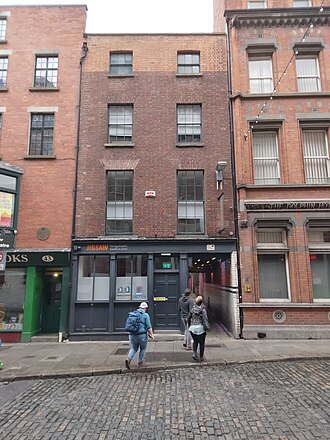
Merchant’s Quay lost-shopfront hauntings: Night‑Walk Guide to History & Tales
Merchant’s Quay sits where Dublin’s riverfront commerce once met the city’s narrow lanes, and the visible traces of vanished shopfronts make the area a compelling stage for night‑walks. This guide blends archival context and urban history with the local reports and folklore that cluster around the so‑called Merchant’s Quay lost‑shopfront hauntings. It aims to help visitors recognise solid documentary facts, understand how legend grows from place, and decide whether to explore alone or join a guided Ghost Tour Dublin Experience.
Why Merchant’s Quay and its lost shopfronts matter to Dublin’s night‑walks
The appeal of Merchant’s Quay for evening walkers is twofold: visible urban palimpsest and human memory. Where a row of buildings once offered goods and services, gaps, boarded windows, and odd doorways now catch lamplight and imagination. On a night‑walk these architectural hints act as prompts—anchoring stories that may be documentary, anecdotal or purely folkloric. If the phrase Merchant’s Quay lost-shopfront hauntings brings to mind shadowed archways and footsteps where a baker once stood, that blend of material trace and narrative is exactly what a careful night‑walk explores.
Documented history: Merchant’s Quay — trade, buildings and urban change
Documentary evidence for Merchant’s Quay is strongest in maps, property records and trade directories held in city and national collections. Those materials show Merchant’s Quay as part of Dublin’s mercantile spine: warehouses, small shops and services clustered near the river and the quays that handled goods into the city. Over time the corridor changed—fire, redevelopment, changing transport patterns and planned clearances altered street frontages and left empty sites.
Architectural surveys and historic maps (visible in public archives) record building footprints that do not always match the present streetscape. That mismatch is the origin of the term “lost shopfront”: the ground‑floor commercial face no longer exists as it did on the map, even where upper facades survive. These are the verifiable layers you can point to while standing under a streetlight: a sealed doorway recorded on an 18th‑ or 19th‑century map; a brick infill that plainly post‑dates the original shopfront; or a narrow alley that once served as a delivery route.
What ‘lost shopfronts’ means: physical traces, maps and commercial evolution
On a practical night‑walk, look for three common markers of lost shopfronts. First, an incongruous seam in masonry or a recessed opening filled with later brick or glass. Second, mismatched signage or ghost signs—faded paint outlines that suggest a former company name. Third, irregular building lines where a modern pavement meets an older plinth or step. Comparing what you see with historical maps and street directories reveals how commercial corridors evolved: small family shops gave way to larger warehouses, stalls replaced with arcades, and sometimes complete demolition opened new frontages.
That process—gentrification, wholesale redevelopment or incremental decay—also shaped how stories form. A boarded-up former bakery is visually suggestive; an attic window left open in winter is a good prompt for an imaginative tale. Knowing what to look for helps separate physical fact from the stories those facts inspire.
Hauntings and reports: notable sightings and stories — folklore vs recorded testimony
There are two distinct strands to local reports around Merchant’s Quay. One is eyewitness testimony: residents and late‑shift workers describing a sense of being watched, unusual cold spots, or an encounter with a transient figure near a specific doorway. These accounts are valuable as social records—they tell us how people experience place at night. The other strand is folklore: tales passed among locals that tend toward symbolic motifs (a grieving figure, a lost child, a merchant’s lament) that exist in many port‑side communities.
It is important to distinguish documented testimony from folklore. Documented testimony can sometimes be corroborated by multiple independent accounts recorded in contemporary media or preserved in oral history projects. Folklore, by contrast, is a living narrative that may reuse motifs from other Dublin stories—similar patterns can be found in accounts around the GPO and 1916 sites and tenement neighbourhoods, as explored in our piece on GPO 1916 Hauntings and the North Inner City Tenement Hauntings. Both types are meaningful: testimony for how people report experience; folklore for how a community processes loss and change.
Suggested night‑walk route along Merchant’s Quay
This route is designed as a gentle, observational walk—about 45–60 minutes at an unhurried pace—focusing on architectural clues and well‑attested stories. Times are suggested for early evening; adjust to local light and safety considerations.
Stop 1 — Approach and orientation (5–10 minutes)
Begin where the quays widen and you can see both river and shopfront rhythm. Take a moment to compare the line of buildings with their upper‑storey details—cornices, windows and attic lights often outlast shopfront design. Use this vantage to explain what ‘lost shopfront’ looks like.
Stop 2 — The ghost signs and infill (10–15 minutes)
Move along the stretch with faded advertising or obvious infill work. Discuss how commercial change (warehousing, changing dock traffic) created opportunities for demolition and reuse. This is a good place to read aloud an old trade listing if available—documentary fragments help anchor the telling.
Stop 3 — A narrow alley or former passage (10 minutes)
Find a service alley where deliveries once came in. Such alleys are common loci for reports of footsteps or a sense of following. Encourage listeners to notice acoustic changes at night—sound often carries differently in tight spaces and produces the sensations people describe.
Stop 4 — River‑facing vantage (10 minutes)
Finish with a short pause by the river. Many stories link the quays to arrivals and departures—merchants, sailors and goods. This pause is an opportunity to discuss how maritime life shaped both historical reality and the symbolic stories attached to the area, similar in mood to accounts collected around the docks in the Dublin Port Longshoremen Ghosts piece.
Practical tips: safety, photography, permissions and responsible listening
Merchant’s Quay is an urban area with active residences and businesses. Respect for people who live and work here should guide any night‑walk.
Safety
Stay on public footpaths, keep to well‑lit routes where possible, and travel in small groups. If you intend to explore alleys, let someone know your route and expected return time. Carry a charged phone, wear visible clothing and use local transport options for late returns.
Photography and recording
Photography is common on night‑walks, but approach it thoughtfully. If a private residence or doorway is the focus, do not take close‑up shots without permission. For low‑light imagery consult our Budget Night-Photography Guide for Dublin Ghost Bloggers for practical settings that capture atmosphere without intrusive lighting. Consider using a tripod and a remote shutter to avoid blocking pavement or posing a hazard.
Permissions and responsible listening
Remember that many stories are tied to living communities. When asking locals about experiences, be respectful and aware that some narratives involve personal grief. Avoid sensationalising private accounts and do not trespass to validate a claim. Responsible listening is part of ethical night‑tour practice.
Joining a guided experience: what Ghost Tour Dublin Experience offers
Ghost Tour Dublin Experience runs guided night‑walks that combine an informed reading of the built environment with well‑sourced local testimony and careful storytelling. Guides emphasise what is documented—building histories, map evidence and verifiable testimony—while also recounting how folklore has layered over those facts. Tours are moderated to be sensitive in residential areas and calibrated for small groups so you can ask questions and compare what you see with what the archives record.
Book the Merchant’s Quay night‑walk with Ghost Tour Dublin Experience
For groups seeking a private or corporate evening, Ghost Tour Dublin Experience can tailor a Merchant’s Quay night‑walk to your needs—timing, focus and accessibility options are available on request; contact the private groups team to discuss a bespoke itinerary and booking details at the private group page.
Responsible conclusions: what to expect and how to decide
Visiting Merchant’s Quay with the intention of exploring the lost‑shopfront hauntings is best approached as a blend of city‑historiography and community story‑listening. Expect to encounter tangible, explainable architectural traces and a handful of consistent personal reports; expect too to find folkloric motifs that appear across Dublin’s waterfront and tenement narratives. If you are drawn to firmly evidenced history, focus on the mapped footprints and trade evidence. If you come for atmosphere and story, allow space for local motifs and communal memory.
Book the Merchant’s Quay night‑walk with Ghost Tour Dublin Experience
We welcome private groups and special requests: whether planning a photography evening or a corporate outing, the private booking page outlines options for bespoke Merchant’s Quay walks designed to combine archival context with careful storytelling.
FAQ
Is Merchant’s Quay safe to visit at night for a walking tour?
Yes, when you follow common‑sense precautions: stick to well‑lit public routes, travel in groups, tell someone your plans and use licensed transport for later journeys. Guided tours provide an additional safety layer through group management and local knowledge of the best walking lines.
Are the hauntings around the lost shopfronts historically documented or local folklore?
They are a mixture. The physical traces of lost shopfronts are documented in maps and property records. Personal reports from residents and workers are contemporary testimony. Folklore emerges where narrative motifs are repeated and adapted; distinguishing between the strands is part of the careful approach taken on a guided night‑walk.
Can I take photos or record on the night‑walk and are there lighting recommendations?
Yes, but be considerate: avoid photographing private residences closely without permission. Use low, steady lighting and consult tips on settings and equipment in the Budget Night‑Photography Guide linked above. A tripod and long exposure often produce the most atmospheric results without intrusive illumination.
Does Ghost Tour Dublin run a guided tour specifically covering Merchant’s Quay?
Yes. Ghost Tour Dublin Experience offers a Merchant’s Quay night‑walk that focuses on the lost‑shopfronts, combining documented history with local reports and folklore. Bookings and bespoke group options are available via the main booking page.