
Ghosts of Dublin’s Old Tram Routes: A Self-Guided Trail & Guided Tour Guide
Dublin’s vanished tramlines cut through the city’s memory: corridors of commerce, junctions of crisis, and now long stretches where cobbles, kerbs and names still whisper of rails beneath the tarmac. Walking those corridors at dusk or by night reveals not only technical traces — sheds, widened streets, surviving junction geometry — but also the stories that clustered around them: accidents recorded in newspapers, depot labour disputes, and the persistent local tales of spectral conductors and phantom carriages. This guide pairs what archivists can confirm with the folklore that grew from those facts and gives you a safe, practical route to explore both.
Trams and Transport — the documented history
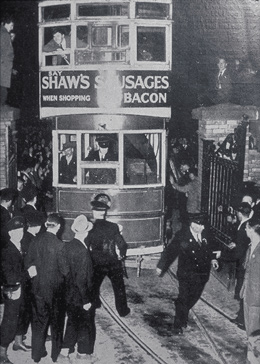
The existence of an electric tram network in Dublin is well documented in maps, company records and contemporary newspapers. Municipal and private companies once ran a dense network linking core streets with suburban termini. Depots, workshops and dedicated track corridors were part of the urban footprint and remain visible in street widths, surviving buildings and period photographs.
Confirmable material includes route maps held in local archives, newspaper reports of collisions and service disruptions, planning notices for depots and the gradual replacement of trams with buses in the mid‑20th century. Where this guide labels a fact as “documented,” it refers to records such as transport company filings, archived press accounts, and surviving cartographic evidence rather than oral tradition.
Mapping the Trail: a suggested self-guided route
This trail is designed as a flexible 90–120 minute walk that follows visible and inferred traces of former tram corridors in central Dublin. Two sensible start points: O’Connell Street (for an east-to-west traverse) or Smithfield (for a north-west loop). A full loop can be completed on foot with public transport access back to the city centre.
Suggested order: begin at O’Connell Street to observe carriageway widths and tram-era junction geometry, proceed west toward Parnell/Grattan areas, cross to Smithfield to visit market approaches and depot-adjacent streets, then continue along the corridor that links toward Heuston/Constitution Hill or a southern route depending on your interest. Shorter options confine the walk to the north-side segment around Smithfield.
Navigation tips: use a modern mapping app with walking mode, but keep historic route maps (photocopies or downloaded scans from archives) on your phone to compare alignments. Wear sturdy shoes; many sections include uneven paving or kerb-level remnants. For thematic context, pair this walk with our Smithfield Dusk Ghost Stories page and the Forgotten Dublin Tram Depot Ghosts feature.
Stop-by-stop highlights: depots, accident sites, junctions and their stories
O’Connell Street corridor — documented facts
The wide central thoroughfares were primary tram arteries. Documentary evidence — old maps and council plans — shows double track alignments and space allocated for overhead wiring infrastructure. Newspapers of the time record mechanical failures and occasional collisions at busy junctions; these are the incidents that various local tales often reference.
Folklore: the “late-night conductor” tale that follows many city-centre routes is an example of legend building on truth. The pattern is familiar: documented accidents or late shifts inspire reports of a tired figure still climbing onboard after the system closed. Treat such accounts as folklore unless corroborated by contemporary reportage.
Smithfield and Broadstone approaches — documented facts & legend
Smithfield’s market streets and adjacent yards were near tram approaches and interchange spaces. Archival photos and council records point to service concentrations here. This area features in our own storytelling programme, and you can read more in our Smithfield Dusk Ghost Stories piece.
Folklore: stories of a phantom carriage heard at market dusk are widespread. These tales often merge memories of noisy maintenance work, late-night deliveries and the atmospheric market buildings. They are persistent tales rather than proven hauntings; treat them as cultural folklore rooted in a noisy past.
Depot sites and workshops — documented facts
Depots were workplaces where trams were stabled, repaired, and sometimes the site of industrial disputes or accidents — details that appear in period press and trade records. Buildings converted for other uses sometimes retain architectural clues: large door openings, gantry mounts or track imprints in floors.
Folklore: many depot sites attract stories of former employees still “keeping watch.” Narratives about apparitions in depots are widespread; our article on Forgotten Dublin Tram Depot Ghosts explores where the fabric of building and folklore intersect.
Accident and junction sites — distinguishing fact from story
Major junctions were the loci of documented collisions and emergency responses; those events gave rise to widow‑maker narratives and dramatic retellings. If a tale names a crash, look for a surviving newspaper report or an entry in transport board minutes before treating it as documented fact.
Folklore: a common legend is of a carriage that replayed a crash each anniversary. Such cyclical stories are symbolic memory rather than a matter of record. They reveal how communities used ghost stories to process tragedy.
Separating record from rumor: spotting archival evidence
Practical signals that a claim is documented: a named newspaper account, a transport company minute, a mapped route or a surviving photograph. If a story lacks these, it may still be valuable cultural folklore but should be presented as such.
Start your verification with historic map overlays, newspaper archives and municipal planning records. Photographic collections and oral-history interviews are useful, but approach memory-based accounts with caution: memories blend events over decades and often transform mundane details into dramatic narrative.
Practical visitor information
Safety first. Much of the trail is in urban streets with standard pedestrian infrastructure. Take care crossing busy junctions and avoid stepping on active roadways to inspect kerb-level rail impressions. Carry a torch for night walks and wear reflective clothing if you’ll be out after dark.
Accessibility: some stretches include uneven paving, steps into older yards and narrow footpaths. While sizable sections are firm and curb-level accessible, the full trail is not guaranteed wheelchair- or stroller-friendly end-to-end. Consider shorter, central segments if mobility is a concern.
Best times: twilight and early night enhance atmosphere while keeping safety manageable. Weather can change quickly; dress in layers and bring a waterproof layer. Comfortable walking shoes are essential.
Guided options with Ghost Tour Dublin Experience
Our guided Ghost Tour Dublin Experience combines verified transport history with contextual storytelling. Tours include archival insights, route geometry demonstrations, and period anecdotes that illuminate the difference between documented incidents and later legend. We also offer themed walks that intersect tram-route stories with other city narratives, such as our Dublin statues at night: Silent sentinels and stories and our Underground Dublin: Railway Tunnel Hauntings feature.
Booking advice: small-group night walks sell out for popular evenings. If you prefer a private experience for a group, we can tailor a tram-route walk to focus more on depot histories or concentrated ghost stories — contact us for private bookings. To reserve a place on a public tour or enquire about private groups, visit our booking page.
Respect, research and next steps
Respect the city and its communities: don’t cross private property, avoid loud behaviour in residential areas, and remember sites of recorded tragedy deserve sensitivity. If your curiosity is academic, seek primary materials at local repositories such as the National Library of Ireland and Dublin City archives, and consult historic map overlays and period newspapers.
For deeper reading on related themes, our pages on Gaslight Ghosts: Victorian-Era Apparitions in Dublin Streets and Underground Dublin: Railway Tunnel Hauntings provide contextual threads that often overlap with tram-route lore. Combining those resources will give you the best-balanced view of documented transport history and the city’s layered folklore.
FAQ
How long is the Ghosts of Dublin’s old tram routes trail and how much walking should I expect?
A typical self-guided loop takes around 90–120 minutes and covers several kilometres on mostly paved streets. Shorter segments confined to the Smithfield or central-city sections can be completed in 45–60 minutes. Expect uneven paving and some kerb-level remnants; comfortable walking shoes are recommended.
Are the ghost stories along the tram routes backed by documented incidents or primarily local folklore?
Many stories are folklore that grew from everyday truths: real tram operations, documented accidents, and depot workplaces. Some incidents are supported by archival evidence such as newspaper accounts; others are oral traditions without primary-source corroboration. This guide aims to mark which is which and encourage verification through archives.
Does Ghost Tour Dublin offer a guided walk that follows parts of the old tram network and how do I book?
Yes. Ghost Tour Dublin Experience runs guided walks that trace former tram corridors and pair historical facts with storytelling. Bookings and private-group enquiries can be made via our main booking page: Book a guided Ghost Tour Dublin Experience along Dublin’s old tram routes — historical insights, storytelling, and night walks. Reserve your spot today.
Is the trail family-friendly and accessible for wheelchairs or strollers?
The trail is family-friendly in content, though night walks may not suit very young children. Accessibility varies by segment: many central streets are accessible, but older yards and depot areas can include steps or uneven surfaces. If you require wheelchair access, choose a shorter, paved section or book a private tour so we can plan an accessible route.