
Trinity College’s Lesser-Known Ghost Tales: A Visitor’s Guide
Trinity College Dublin has long been a magnet for stories that blur the line between recorded history and whispered legend. Its courtyards, chapels, and book-lined halls span centuries of scholarship, ceremony and everyday life—precisely the kind of layered past that breeds ghost stories. This guide gathers a selection of lesser-known Trinity College tales, explains how to read them responsibly, points you to visible locations on campus, and offers practical advice for exploring these stories in person.
Introduction: Why Trinity College draws ghost stories — a brief historical context
Founded in 1592, Trinity College is one of Ireland’s oldest universities and home to long-lived institutions such as the Old Library and the Book of Kells. Over time the campus grew, buildings were repurposed, and generations of students, staff and visitors have left imprints on the place—both documented and imagined. That mixture of centuries-old records and human memory is why Trinity attracts so many ghost tales: the physical setting is intact enough to map stories against real spaces, while archival gaps invite imaginative explanation.
Book a guided Trinity College ghost walk with Ghost Tour Dublin Experience
How to read the stories: distinguishing documented history from folklore and oral tradition
When you encounter a ghost tale on campus, it helps to separate three layers:
- Documented history: verifiable records such as foundation dates, building works, college registers, and newspapers. These are the solid anchors—Trinity’s founding, formal ceremonies, faculty lists and published accounts.
- Folklore: stories that have circulated for decades, often transmitted orally or recorded in local collections. Folklore preserves social memory and cultural anxieties but may compress or conflate events.
- Legend and embellishment: narrative accretions—dramatic details, character names and supernatural elements—added over time to entertain or to explain sensations that had other causes.
Good practice for visitors is to treat supernatural claims as folklore unless you can trace a clear historical record. For practical guidance on research and ethics when talking to witnesses, see our internal checklist on interviewing witnesses: Interviewing Dublin Apparition Witnesses: An Ethical Checklist for Tour Guides & Researchers.
Lesser-known campus tales mapped for visitors
The tales below are presented as vignettes of local tradition. Each includes where to look on a public route. Where a site is ticketed or restricted, that is noted.
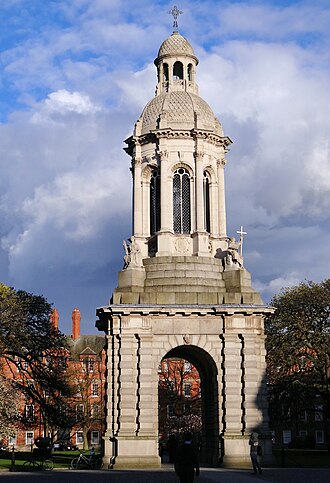
1. The Watcher beneath the Campanile
Vignette: Students have long told of a solitary figure glimpsed at the base of the Campanile on foggy nights—an apparition said to turn away if approached. This story circulates in student folklore rather than official records.
Where to look: Front Square, around the Campanile and the flagged paving. It’s a public area, but be mindful of foot traffic and events.
2. Whispers in the Old Library Archive corridor
Vignette: Staff and visitors sometimes speak of an indistinct presence in the quieter stacks near the Long Room. The story often centers on the hush of book-filled corridors and the emotional weight of centuries of reading.
Where to look: The Old Library and Long Room are ticketed; public access is controlled. You can view the Long Room gallery during visiting hours but access to back stacks is restricted to staff and researchers.
3. The Lantern on the Examination Hall steps
Vignette: A dim light seen on exam nights became a tale of anxious students later telling of an unseen proctor. The imagery serves as a folklore shorthand for exam stress rather than a documented event.
Where to look: Exterior steps near the Examination Hall and surrounding quadrangles. Note: avoid blocking entrances during events.
4. The Cloak in Fellows’ Square
Vignette: In Fellows’ Square there’s an oral story of a cloaked figure passing between fellows’ rooms in the small hours—an evocative piece of campus lore that varies in detail by storyteller.
Where to look: Fellows’ Square and adjacent lanes. Much of this area is publicly visible, though some entrances are private.
Historic anchors: records, dates and archival facts that inform the tales
Concrete facts help ground tales where possible. Trinity’s founding year (1592) and the long institutional record give researchers a baseline for checking claims. The Old Library and the Book of Kells are catalogued and managed as part of the college’s collections; changes to buildings and major events are documented in college minutes, building records and contemporary newspapers. For rigorous research, the Trinity College Archives and the Library’s catalogues are the primary places to verify dates, names and formal incidents.
When a story references a specific person or event, check college registers, published alumni lists or archival finding aids rather than oral accounts alone. For advice on practical tour operations and pricing for guides working in Dublin, see this piece on pricing and guide resources: How to Price a Dublin Ghost-Guide eBook: Practical Strategies.
Best ways to experience these stories: self-guided route, times, and photography tips
Self-guided approach:
- Start at Front Square to orient yourself to the Campanile and the Long Room façade.
- Move clockwise to Fellows’ Square and the Examination Hall, then loop back toward the Old Library ticket entrance.
- Respect ticketing and opening hours for the Old Library and special exhibits.
Best times: Twilight and early evening amplify atmosphere without risking late-night safety concerns. Many tales are strongest in the dim light just after sunset when courtyards quiet down; however, always avoid restricted hours and private events.
Photography tips: Use a tripod for low-light shots if permitted. Avoid flash in museum or library interiors. Be courteous: students and researchers may be working inside buildings.
Guided options and what a Ghost Tour Dublin Experience adds
A guided walk with Ghost Tour Dublin Experience offers contextual narration that separates archive-backed history from folklore and legend. Our guides are trained to explain when a tale is drawn from documented records, when it is oral tradition, and when it is likely embellishment. We can point out visible features, explain how institutional changes shaped the stories, and provide safe, public-route access while avoiding private or restricted spaces.
Practical benefits of a guided walk:
- Local knowledge: guides knit stories to visible architecture and archival facts.
- Safety and timing: groups are routed to avoid busy gates, ceremonies and restricted hours.
- Responsible storytelling: interview and witness-handling practices inform our approach—see our ethical checklist for more on interviewing witnesses: Interviewing Dublin Apparition Witnesses.
If you’d like a structured option, Book a guided Trinity College ghost walk with Ghost Tour Dublin Experience. For private groups and tailored access, we also offer bespoke bookings: Book private Trinity College group experiences.
Responsible visiting, accessibility notes, and local etiquette
Be respectful of the college as a working university: keep noise levels down, don’t obstruct entrances, and follow signage. Many areas are studied and used by students during the day and evening. For accessibility guidance on night tours and inclusive practices, review our practical guide: Accessibility & Inclusivity for Dublin Night Tours: A Practical Guide. If you are organising community or low-cost walks, the piece on funding models is a helpful resource for local operators: Funding Community Ghost Walks in Dublin: Grants, Partnerships & Low-Cost Models.
Do not attempt to enter restricted rooms or archives without permission. If you wish to consult primary sources, contact Trinity’s archival services or arrange a researcher visit through official channels.
Related walks and further reading
Trinity’s ghost stories are part of a wider Dublin folklore landscape. If you want to broaden your evening itinerary, consider complementary routes along the river and waterfront—stories there have their own local color and evening atmosphere. For an example of nearby evening legends, see our Ringsend waterfront guide: Ringsend Waterfront Twilight Legends: A Visitor’s Guide to History, Hauntings & Evening Walks.
Book a guided Trinity College ghost walk with Ghost Tour Dublin Experience
Closing practical checklist
- Wear comfortable shoes and bring a small torch for after-dark sidewalks.
- Check Trinity College’s visitor information for ticketed areas and events.
- Prioritise guided options if you want contextual narration, safe routing and respectful access.
- Leave elaborate claims to the storytellers—enjoy the atmosphere, but separate folklore from archival fact.
FAQ
Are these Trinity College ghost tales based on historical records?
Some elements of the tales are anchored in documented college history—such as building dates, institutional events or named people recorded in registers. However, most ghost stories depend on oral transmission and embellishment. Treat supernatural claims as folklore unless you find direct archival evidence.
Can visitors access the exact spots on campus where these stories are set?
Many exterior locations—squares, courtyards and pathways—are publicly visible. Key interiors like the Old Library are ticketed and controlled. Some rooms are private or used for college business; always obey signage and staff directions and avoid trespassing.
When is the best time to visit Trinity College for a ghost-focused walk?
Twilight and early evening provide mood without unnecessary risk. Avoid very late-night visits, and be mindful of college events. Guided evening walks balance atmosphere with safety and respect for campus life.
Do you offer guided tours that include these Trinity College tales?
Yes. Ghost Tour Dublin Experience offers guided walks that present these tales with clear distinction between documented history and folklore, safe routing, and local contextualisation. To reserve a spot, please Book a guided Trinity College ghost walk with Ghost Tour Dublin Experience.