
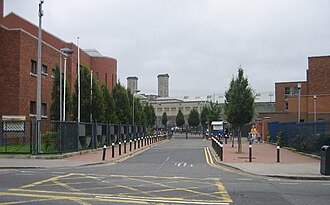
Mountjoy Prison sits at the edge of Dublin like a stone-bound chapter of the city’s modern past: high walls, guarded gates and a history that reaches into politics, punishment and social change. A twilight history trail here is less about cheap thrills and more about atmosphere and evidence — a guided evening walk that foregrounds documented events, separates folklore from fact, and helps visitors understand why Mountjoy matters in Ireland’s story.
Book the Mountjoy Prison Twilight History Trail with Ghost Tour Dublin Experience
Why a Mountjoy Prison twilight history trail?
Dusk softens the surrounding streets and brings a stillness to Mountjoy’s outer walls that daytime tours cannot match. Twilight sharpens shadows and lets architectural lines and guarded entrances speak to a different era, while remaining entirely respectful to those who suffered and lived through the events tied to the place.
A guided evening walk offers three things visitors value: atmosphere, reliable interpretation, and responsible dark-tourism practice. Atmosphere provides a sensory entry point — the way light catches stone, the hush of a street — but the guide’s role is to translate atmosphere into context. Responsible dark tourism foregrounds documented facts, calls out where stories are legend, and encourages respectful behaviour toward a place with human history rather than treating it like theatrical entertainment.
Mountjoy Prison — documented history & key dates
Mountjoy is a Victorian-era prison whose identity is shaped by its long use as a state detention facility in Dublin. Constructed in the mid-19th century, its design and fabric reflect penal philosophies of that period: containment, surveillance and strict regimes intended to reform or punish. The prison continued to play a central role through the late 19th and much of the 20th century.
Documented history includes the prison’s use to hold political prisoners during periods of unrest, its function as a place for judicial sentences, and its role in broader penal reforms. Contemporary records — government papers, court reports, newspaper archives and prison registers — are the primary sources historians rely on to piece together daily life, official events and notable incidents associated with Mountjoy.
Key, documented touchpoints often discussed on the trail are the prison’s construction period in the 19th century, its operational role across two centuries, and well-recorded episodes where Mountjoy features in national events — for example when political prisoners from Dublin insurrections were detained there. We focus on evidence from archives and contemporaneous reporting rather than on hearsay.
Separating fact from folklore
Around institutions like Mountjoy a rich seam of folklore and urban legend grows over time. Common tales include secret tunnels, dramatic unseen escapes, or hauntings attributed to unnamed figures. These stories can be compelling, but they are not the same as documented fact.
Historians verify events by consulting primary sources: prison registers that record names, dates and punishments; court and police reports; contemporary newspapers; and official correspondence. Where no written or archival evidence exists, a claim is treated as anecdote or legend. On this twilight trail we clearly label which parts of the narrative rest on archival documentation and which are popular stories, allowing visitors to appreciate both without conflating them.
Common myths you’ll hear
Many myths are born from dramatic imagination or misremembered stories passed down generations. Examples you may hear on the walk include tales of hidden cellars beneath the exercise yards or repeated supernatural sightings tied to specific cells. These are discussed as folklore: interesting cultural phenomena that tell us how communities remember difficult places, but often lacking archival corroboration.
How the tour handles contested claims
Guides point to the underlying evidence — or the lack of it. If a dramatic escape is claimed, the guide will say whether contemporary records corroborate it. If an execution or a particular incident is mentioned, the guide will make clear when this is supported by official registers or when it remains part of oral tradition.
The twilight trail route — highlights you’ll see and hear
The trail is an external, walking route around Mountjoy and its immediate environs. It focuses on architectural and urban context: the imposing perimeter walls, the main gate and entrance features, surviving prison buildings that face the street, and vantage points where guide-led storytelling ties the site to wider Dublin history.
Highlights include exterior viewpoints that allow interpretation of the prison’s layout and purpose without entering secure areas. Guides draw attention to stonework, gatehouse design, and the way exercise areas were oriented, using visible features to explain daily routines and the social history of incarceration.
The walk also places Mountjoy in its urban context: nearby streets, residential areas that grew up around the prison, and public spaces that bore witness to demonstrations and vigils. At some stops the guide references records and first-person testimonies to give visitors grounded accounts rather than sensationalized stories.
What to expect on the tour
The Mountjoy Prison twilight history trail is a guided, primarily outdoor walk lasting around 75 minutes. Small groups help maintain an intimate atmosphere and allow time for questions. The storytelling style is atmospheric but evidence-led: evocative language is used to set scene, but claims are clearly flagged as documented or folkloric.
Accessibility: the route is on public pavements and low-traffic streets, but it is not a fully flat, barrier-free course in all places. Sturdy footwear is recommended. If you require step-free access or other accommodations please note this when booking; we do our best to provide alternatives or advise on suitability.
Practical tips for visitors
Meeting point: the tour meets close to Mountjoy Prison’s main exterior entrance. Exact meeting details are included on your booking confirmation, so please check that email and arrive 10–15 minutes early to avoid delaying the group.
Ticketing: book in advance — twilight slots are subject to seasonal daylight and popular with both locals and visitors. Tickets are available through Ghost Tour Dublin Experience; online booking secures your place and includes any last-minute updates about meeting points or weather contingencies.
Safety at dusk: wear reflective clothing or carry a small torch if you prefer, and follow guide instructions while crossing streets. The area is generally safe but visibility is reduced at twilight, so take care on pavements.
Transport and facilities: Mountjoy is served by local buses and is a reasonable walk from many central Dublin locations. There are cafés and pubs a short distance away if you arrive early; public restrooms are not part of the tour, so plan accordingly.
Respect, photography and responsible behaviour
Dark-history sites ask for particular sensitivity. Mountjoy is associated with real hardship and, for some, recent family memories. Please treat the site with respect: keep voices low during storytelling, avoid mock-reenactment or ghoulish posing, and listen to guidance from your tour leader.
Photography: casual exterior photography is permitted on public streets. If you plan low-light photography, see our Low-Light Photography Tips for Dublin Ghost Blogs for practical advice on capturing mood responsibly without disrupting other visitors. Please do not attempt to access restricted areas for a photograph.
Responsible behaviour also means understanding the difference between exploring history and exploiting suffering as spectacle. Guides on this trail aim to contextualize, humanize and inform — please engage with that intent.
After the trail: continue your evening and how to book
After the walk you may wish to extend the evening in nearby neighbourhoods. For further exploration of Dublin’s darker corners, consider pairing this trail with other guided experiences from our collection — for example the Stoneybatter eerie evening walk for local legends and safe routes, or the Dublin City Walls after-dark trail if you want medieval context to follow your modern penal history experience.
To book your place, visit Book the Mountjoy Prison Twilight History Trail with Ghost Tour Dublin Experience. Booking online secures your slot and provides full meeting and accessibility information.
Private groups: if you’re organising a private or corporate group, we offer tailored twilight history trails and bespoke briefings for groups. Contact us via the private-groups booking page to discuss options and availability: Private group bookings.
Additional reading and related walks
If you enjoyed the Mountjoy trail and want to deepen your understanding of Dublin’s layered past, consider these guided routes and articles that explore local history, folklore and visitor tips: Stoneybatter eerie evening walk: Guide to Dark History, Local Legends & Safe Routes, St Kevin’s Church Ghostly Legends — History, Folklore & Visitor Tips, St Michan’s Crypt Mummies & Hauntings: Visitor Guide and Tour Tips, and Dublin City Walls After-Dark Trail: Medieval Ruins, Nighttime Stories & Guided Walks.
FAQ
How long is the Mountjoy Prison twilight history trail and where does it start?
The trail runs for approximately 75 minutes. It starts near the main outer entrance of Mountjoy Prison; exact meeting details are provided on your booking confirmation when you reserve your ticket.
Is the trail suitable for children or visitors who are sensitive to prison history?
The tour is evidence-led and presented in a measured tone, but it covers subjects like incarceration and political detention which some children or sensitive visitors may find distressing. We recommend parental discretion for younger children and contacting us ahead of booking if you have concerns about suitability.
Do I need to book in advance and what is the meeting point for the tour?
Advance booking is advised, especially for twilight slots which are in high demand. The confirmed meeting point is included in your booking email; please arrive 10–15 minutes early to check in with the guide.
Can I take photographs or record audio during the twilight trail?
Yes — casual exterior photography and non-disruptive audio recording are permitted on public streets. Please avoid entering any restricted areas for photos, be considerate of other guests, and follow any additional guidance from your guide. For tips on capturing the mood responsibly in low light, see our Low-Light Photography Tips for Dublin Ghost Blogs.