
Trinity College Nocturnal Legends and Back‑Campus Whispers — A Nighttime Guide
Trinity College in Dublin wears history like a coat of many pockets: academic, architectural and occasionally uncanny. By day the campus hums with students and tourists; by night it collects a different kind of attention—stories, shadows and local whispers about apparitions, old stones and unspoken pasts. This guide helps visitors separate well-documented facts from folklore, shows a short public after-dark route that respects college rules, and explains permissions, safety and how to join a commercial Ghost Tour Dublin Experience if you prefer an organised evening.
Book a Trinity College night ghost tour with Ghost Tour Dublin Experience
Why Trinity’s night stories fascinate visitors
Trinity is centrally located, visually dramatic and richly layered with human stories—scholarship, politics, rebellion and everyday student life across centuries. Those layers make it fertile ground for legends: a silent square at midnight prompts speculation; an old stone carving suggests a hidden tale. For tourists and history lovers, the appeal is both atmospheric and intellectual: the chance to experience a familiar city landmark under different light, and to test which accounts stand up to scrutiny.
Nighttime visits amplify senses. Fewer crowds, different lighting and the city’s quieter rhythms let you notice architectural details and hear local stories you might miss in daylight. That mixture of place and narrative is why so many visitors seek out Trinity’s nocturnal legends.
Separating folklore from documented history
When evaluating stories you’ll hear around Trinity, use three simple filters: provenance, contemporaneity and corroboration.
- Provenance: Where did the story originate? Tales passed down orally often shift with each retelling; written records (letters, college minutes, newspapers) are easier to verify.
- Contemporaneity: Is there a contemporary record of the event? True historical incidents typically leave traces—court reports, official paperwork, or entries in personal diaries.
- Corroboration: Do independent sources agree? Single unverified anecdotes should be treated as folklore until backed by reliable documentation.
Documented history will usually point to primary sources—archives, newspapers, or university records. Folklore and legend, by contrast, often grow from embellishment or symbolism and are valuable for cultural insight even when they are not strictly factual. In this guide, items flagged as “documented” refer to verifiable events or objects where public records exist; “folklore” or “legend” are labelled where confirmation is absent or purely traditional.
Notable campus spots tied to legends (what visitors can expect from public routes)
Many famous Trinity landmarks are visible from public thoroughfares and are the focus of most night-time narratives. Below are spots you can appreciate without entering restricted areas.
The Front Gate and College Green façade
Visible from College Green, the main gate and the façade create a dramatic first impression. The gate is often the backdrop for contemporary ghost stories that mix campus life with older myths. These are mostly folkloric: evocative, but not always backed by contemporaneous records.
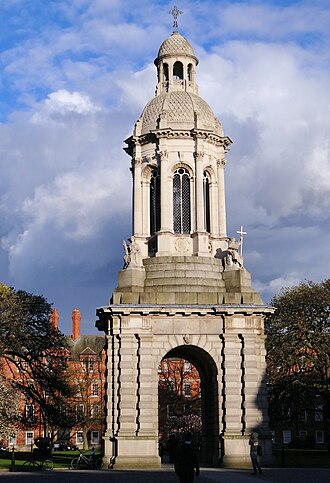
The Campanile
The Campanile is one of the most photographed features. Legends attach themselves to campaniles and bell towers everywhere—late-night tolls, vanished students, symbolic apparitions. While the structure itself and its place within college history are documented, the supernatural anecdotes surrounding it are typically unverifiable local legend.
Front Square and the Library exterior
From the public perimeter you’ll get a good view of Front Square and the stonework of the Old Library. The Library houses many documented collections (including important manuscripts), but stories about hauntings are folkloric unless linked to a verifiable event in the college record.
Nearby laneways and theatrical corners
The streets that frame Trinity—Nassau Street, Grafton Street approaches and quieter lanes—carry many student and city legends. For a complementary after-dark experience, consider related walks such as the Merrion Row cobbled laneway ghost walk — guide & tour tips, which explores similar atmospherics outside campus bounds.
A safe, respectful short nocturnal route for visitors
Below is a practical route you can follow that stays on public ground, avoids trespass, and offers strong viewing points for much of the campus atmosphere. Time it for early evening—when light is low but foot traffic remains reasonable—and be mindful of college opening hours.
Recommended short route (approx. 25–40 minutes)
- Start at College Green near the main gate—best at dusk when the stonework softens in evening light.
- Turn toward the Campanile and walk the public pavement along Nassau Street, pausing where you can safely view the Library façade from the outside.
- Continue to Grafton Street corner for a different angle on Front Square and to absorb stories about student life and older legends.
- Walk the pedestrian stretches along Dawson Street or along the Trinity perimeter toward Pearse Street to see quieter approaches and Georgian townhouses that share their own tales.
- Finish near a well-lit public area or an evening venue—bookending your walk in presence of other people is a sensible safety measure.
Tips: keep to well-lit pavement, travel with companions if possible, and consult local signage—college grounds may be closed at times and gates locked after certain hours.
Permissions, access and photography rules
Trinity College maintains opening hours and access rules that vary by season, special events, or security needs. If you plan to enter the campus after normal hours, seek permission from the college administration. Commercial tours should always check for the college’s current policy and obtain any required permits.
Photography from public pavements is generally allowed, but use of tripods, professional lighting or drone photography could require explicit permission. When in doubt, assume amplified equipment and after-hours setups need authorisation.
Practical safety & etiquette for night visits
Nighttime in a university setting demands simple courtesies: keep voices low, avoid crossing restricted lawns, and respect students’ privacy. Some points to remember:
- Wear comfortable shoes and bring a small torch or use your phone light for uneven pavements.
- Stick to populated, lit routes and avoid shortcuts through private or gated areas.
- Observe local noise norms—many students study late and the college values a calm atmosphere.
- Be mindful of traffic on busy streets bordering the campus; some sections have narrow pavements.
How to join an organised evening tour — what a commercial Ghost Tour Dublin Experience includes
A commercial evening tour with Ghost Tour Dublin Experience typically packages storytelling, local context and practical logistics into a coherent visit. Expect a knowledgeable guide who differentiates documented history from folklore, a planned route that avoids trespass, and small-group management for safety and atmosphere. The guide will often highlight connections to broader Dublin narratives—see further reading like St Patrick’s Cathedral After-dark Tales—and may add adjacent stops to broaden context.
When booking, check the tour description for meeting points, duration, group size and cancellation policy. Commercial tours also advise on permissions and will typically avoid requesting access that the college does not permit.
Book a Trinity College night ghost tour with Ghost Tour Dublin Experience
If you have a private group—family event, corporate evening or specialist history group—the private booking page can help arrange tailored times and routes: Book a Trinity College night ghost tour with Ghost Tour Dublin Experience (private groups enquiries available through the same site).
Where to verify stories and read further
To move from folklore to fact, consult primary sources where possible. College archives, manuscript collections and university library catalogues are the strongest starting points for verification. Local history publications and contemporary newspapers can offer corroboration for notable events. For broader context about Dublin’s night-time tales and tours, related local guides and posts are useful—explore practical pieces such as Crowdfunding a Dublin haunted walking guide, or practical industry reads like Running a Paid Dublin Ghost Tour: Pricing & Ticketing Tips.
For narrative-rich but less formal perspectives, oral histories and local storytellers provide cultural insight. Treat these as valuable folklore: informative about community memory, though not always strictly factual.
Final notes on respect and experience
Night walks around Trinity are most rewarding when they balance curiosity with care. Aim to appreciate the university’s architecture and layered history, listen for how stories function in local culture, and err on the side of seeking permission if you wish to venture off public paths. Guided experiences offer a way to enjoy atmosphere safely and to learn which stories are documented and which belong to the living tradition of Dublin’s storytellers.
Book a Trinity College night ghost tour with Ghost Tour Dublin Experience
FAQ
Are Trinity College grounds open to the public at night?
Policies change with the academic calendar and special events. Some perimeter areas remain accessible after dark, but interior lawns and certain gates may be closed. Always check Trinity College’s official opening hours and signage, and seek permission for any after-hours access beyond public pavements.
Can I take photographs on a nocturnal visit and are there restrictions?
Photography from public areas is normally permitted, but professional equipment, tripods, flash use or drone flights may require prior authorisation. Respect signs and staff instructions; when in doubt, contact the college for clarification.
How can I tell which Trinity legends are folklore and which are documented history?
Look for primary sources and independent corroboration. Documented items usually appear in archives, newspapers or official records. Folklore often lacks contemporary documentation and evolves through oral retelling. Guides and archivists can point you to verifiable material.
Is it safe to do a self-guided night walk around Trinity College or should I book a tour?
Self-guided walks can be safe if you stick to well-lit public routes, travel in company and respect local rules. Booking an organised tour adds context, a vetted route and the benefit of a guide who knows which stories are credible and which are cultural legend—useful if you want depth alongside atmosphere.