
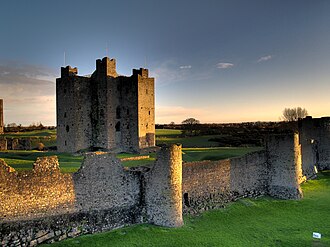
Dublin Castle Dungeons: History, Whispers & Visitor Tips
The low, vaulted spaces beneath Dublin Castle have long invited whispers: damp stone, echoes, names once spoken in fear. For visitors drawn to dark history, the dungeons offer a powerful combination of verifiable institutional use and a rich afterlife in folklore. This guide separates what the documentary record supports from later tales, outlines modern encounter reports, and gives practical, responsible advice for visiting as part of the Ghost Tour Dublin Experience.
Book the Ghost Tour Dublin Experience at Dublin Castle
Dublin Castle in Context
Dublin Castle occupies a central place in the city’s physical and political landscape. Originally established as a fortified seat of authority, its role shifted over centuries from a medieval stronghold to an administrative centre for successive governments. That long institutional history explains why secure spaces beneath the castle were used for containment and control.
The castle complex today is layered: official state rooms, halls used for ceremonies, and older service areas and vaults that once supported daily life and security. The “dungeons” visitors imagine are part of that older undercroft infrastructure: utilitarian spaces where prisoners, suspects, or detainees were held temporarily, records were kept, and guards stood watch.
Documented Uses of the Dungeons
When we speak of documented uses, we mean references in administrative records, contemporary accounts, and surviving architectural evidence that show how the underground spaces functioned.
Holding Cells and Temporary Detention
Accounts and administrative summaries indicate the castle’s lower spaces served as short-term holding cells. People detained for civil or criminal matters were sometimes kept there while awaiting transfer or adjudication. These spaces were not designed as long-term prisons but as secure, controlled rooms for processing.
Military and Guard Functions
The castle’s security needs created a continuous presence of soldiers or guards. Vaulted chambers provided storage, guardrooms and controlled zones for arms and equipment. Military use of these spaces is part of the documented administrative footprint of the castle rather than the stuff of legend.
Administrative and Logistic Uses
Beyond holding people, the lower areas supported administrative functions: records storage, custodial functions and service circulation. Where paper or sensitive items were kept, access was restricted. That combination of restricted access and bureaucratic secrecy helps explain later rumor and myth.
Notable Historical Events and Records
There are references in historical accounts to the castle being the site of political arrests and detentions connected to contested governance. These references often appear in broader narratives of Dublin’s political history rather than as detailed inventories of individuals held in particular cells.
Some event accounts mention prisoners being brought to or through the castle precincts. However, the historical record available to the public rarely offers minute-by-minute logs for every person or incident that later storytellers have attached to “the dungeons.” In short: the castle was undeniably a site of detention; the precise storylines attached to particular spots are more often reconstructed from piecemeal records and later retellings.
Folklore and Whispers
Folklore grows where gaps exist in the documentary record. Stories of anguished whispers, prolonged spectral watchmen, or specific named apparitions often postdate the periods when the spaces were in regular use as detention rooms.
Common themes in Dublin Castle folklore include the idea of unrested detainees, an anguished female presence, and echoes of lamplighters or guards. Many such tales borrow motifs from other Irish dark-site legends: unjust imprisonment, sudden execution, or the lingering resentment of those who died without ceremony.
It’s important to separate provenance from embellishment. A popular ghost story may be inspired by a real arrest or a noted political event, but over decades the tale accrues dramatic detail. When reading or hearing such stories, ask whether a claim derives from an archival reference, a contemporary eyewitness account, or later oral tradition. The latter is not “false”—it’s part of cultural memory—but it should not be conflated with documented fact.
Modern Encounters and Investigations
In recent decades, visitors and investigators have reported atmospheric sensations: inexplicable cold patches, unexpected sounds, and fleeting visual impressions. These reports often reflect subjective experience and the power of setting more than objective phenomena.
Investigative approaches vary. Some researchers use audio and environmental detectors, others rely on controlled observational methods. To date, there is no publicly available, reproducible evidence that conclusively demonstrates paranormal activity in the dungeons by scientific standards.
That said, modern encounters can be meaningful. Visitors often report a heightened emotional response to the environment—an indicator of place-based empathy rather than proof of ghosts. Responsible investigation respects both the site’s legal visitation rules and the lines between personal experience and verifiable data.
What Evidence Exists—and What It Doesn’t
Recorded visitor anecdotes and occasional audio anomalies circulate online and in tour debriefs. Many of these are compelling as personal stories but are not evidence of supernatural causation. Environmental factors—drafts, building acoustics, modern plumbing, and electrical interference—can explain a great many reported phenomena.
Investigators seeking stronger evidence aim for repeatable patterns, corroborated multiple-sensor detections, or documentation that rules out mundane explanations. At present, the strongest claim you can responsibly make about the dungeons is that they are evocative, historically resonant, and capable of producing meaningful personal encounters—not that they have been scientifically proven to host spirits.
Planning Your Visit
Access to the castle’s historic lower areas varies. Portions are part of guided tours, while other service areas are restricted for conservation and security. Check official visitor information and tour descriptions before planning a trip.
Guided tours—especially curated experiences like those offered by the Ghost Tour Dublin Experience—provide historical framing, controlled access, and a staff-trained perspective that helps separate documented history from legend. Independent visits can be rewarding but may offer less interpretive context.
Respect is essential. These are historic structures still used for official purposes. Follow signage, listen to staff instructions, and avoid entering restricted zones. Photography rules may vary depending on the area you’re in; flash and tripods can be disruptive and are sometimes prohibited.
Practical Tips for Dark-History Visitors
Best times: early evening tours often create a suitably atmospheric mood without violating visitation rules. Busy daytime hours can dilute the atmosphere but are often easier for access and photography.
What to bring: a charged phone with a decent camera, comfortable shoes for uneven surfaces, a small torch for safely navigating steps if permitted, and a notebook if you wish to log impressions. For investigative hobbyists, our guide Budget Gear for Dublin Ghost Podcasters: Essential Field Kit for Haunted Sites outlines inexpensive, practical equipment.
Photography and recording: check with your guide. Many restrictions exist to protect the fabric of the building and the privacy of other visitors. If recording, be explicit with companions and staff—consent matters.
Where to continue your itinerary: pair a castle visit with closely related sites to deepen the narrative. Marsh’s Library offers a different kind of hush and archival resonance, as noted in our Marsh’s Library: Spectral Librarians, History & Visitor Guide. For a more penitential atmosphere, Kilmainham Gaol Afterhours Echoes provides a focused look at incarceration history. For broad, landscape-based encounters, consider Phoenix Park After-Dark Encounters. If you’re drawn to lamplighters and urban night-time tales, Nightwatch Tales: Lamplighters and Ghostly Beacons of Dublin collects those threads.
Comfort and conduct: these sites can be emotionally intense. Give yourself time afterward to process, and avoid sensationalising or recording other visitors without permission.
For people organising larger or private groups, the Ghost Tour Dublin Experience also accommodates tailored bookings for private parties—contact us to discuss options and logistics at the private groups page.
Book the Ghost Tour Dublin Experience at Dublin Castle
Responsible Investigation and Interpretation
Dark-history tourism sits at the intersection of curiosity and care. When you walk the dungeons, hold three principles in mind: verify where you can, differentiate between archival fact and retold story, and respect the site’s living function.
If you’re collecting stories, label them clearly: eyewitness account, local folklore, or archival note. That discipline preserves the value of both documented history and community memory without conflating them. It also helps future researchers and tour leaders when they try to map how stories evolve around a place like Dublin Castle.
Final Thoughts
Dublin Castle’s dungeons are compelling precisely because they contain both recorded uses and a long afterlife in spoken memory. That blend makes the spaces powerful for visitors seeking a tangible connection to the past. Approach them with curiosity and caution: appreciate the documented history, enjoy the stories, and take practical steps to visit responsibly with an informed guide.
Book the Ghost Tour Dublin Experience at Dublin Castle
FAQ
Can visitors go down into the Dublin Castle dungeons, and are they open to the public?
Access varies. Some lower areas are included in guided tours while other sections are restricted for conservation or official use. Check tour listings and official visitor information. Joining a guided Ghost Tour Dublin Experience is the most straightforward way to access historically interesting spaces while benefiting from expert interpretation.
Are the reported hauntings at the dungeons based on documented incidents or later folklore?
Both. The castle was a site of detention and administrative control—those facts are documented. Many haunting narratives arise later as folklore, built from public memory, dramatic retelling, and the evocative nature of the spaces. Distinguish archival evidence from oral tradition when evaluating any claim.
Is it safe to photograph or record inside the dungeons during a visit?
Rules vary by area. Photography and recording may be restricted to protect the building and visitor privacy. Always check with your guide or site staff before using flash, tripods, or audio gear, and obtain consent if recording other people.
How can I include the Dublin Castle dungeons in a Ghost Tour Dublin Experience booking?
Visit the Ghost Tour Dublin Experience booking page to find tours that include the castle or to arrange a private group booking. Guides will outline access, tour length, and any specific restrictions so you can plan accordingly.