
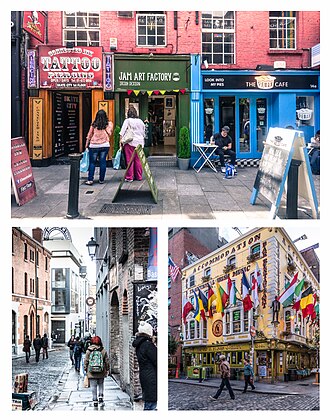
Fishamble Street sits at a compact, atmospheric corner of Dublin where music, theatre and the city’s darker tales converge. By day it is a narrow lane lined with Georgian facades and plaques; by night it becomes a stage for storytelling, where documented milestones—most famously the 1742 Dublin premiere of Handel’s Messiah—sit cheek by jowl with whispered hauntings and folklore. This guide blends verifiable theatre history with the local legends that grew around it, and offers practical, tourism-focused advice for experiencing Fishamble Street as part of a Ghost Tour Dublin Experience.
Book your Ghost Tour Dublin Experience to explore Fishamble Street after dark
Introduction: Why Fishamble Street matters to Dublin theatre history and night-time storytelling
In the eighteenth century Fishamble Street was a hub for music and public performance. The narrowness of the street and its proximity to the markets made it a natural place for smaller assembly rooms and music halls. For modern visitors the significance is twofold: it is a genuine cultural landmark in Dublin’s theatrical story and an atmospheric setting for the stories and legends that have accreted over centuries. When you walk the street at dusk, you are literally tracing the footfall of musicians, theatre-goers, and market traders—and of the stories people have told about them.
Documented history of Fishamble Street playhouses
One of Fishamble Street’s best-documented claims to fame is the venue often referred to as Neale’s Musick Hall. In 1742 Dublin hosted the premiere of George Frideric Handel’s Messiah, an event tied to the city’s thriving musical culture rather than to a single surviving building. Contemporary playbills and accounts note that the performance was given in a music hall on Fishamble Street to benefit local charities and to honor the composer’s patrons.
Beyond that famous performance, the eighteenth century saw a lively theatre scene across Dublin: temporary and semi-permanent playhouses, assembly rooms, and music halls offered everything from oratorios to ballad operas. These venues catered to a diverse public audience—merchants, professionals and visiting dignitaries—at a time when Dublin aspired to cultural parity with London. The primary documentation for this era consists of playbills, newspaper notices, and civic records; those items confirm Fishamble Street’s role as a performance space rather than suggesting a continuous, unaltered theatre building surviving into the present.
What remains today: plaques, streetscape, and nearby landmarks
Walk Fishamble Street today and you will find Georgian facades, commemorative plaques and a streetscape largely reshaped by subsequent centuries. There is no intact eighteenth-century playhouse you can step into that will transport you directly to the 1742 audience, but the site and several nearby landmarks mark the historic footprint. Plaques and informational markers indicate where music halls once stood and offer concise context.
Nearby points of interest—short walks from Fishamble Street—help frame a visiting route. The area’s narrow alleys and preserved pub interiors echo the rhythms of old Dublin social life. For evening walkers curious about neighbouring tales, routes often extend toward Temple Bar’s twilight alleys and well-known pubs; see our Temple Bar Twilight Alleys: Folklore Trail for Evening Walks for routes and atmosphere. For those interested in later echoes of Dublin’s public life and legend, The Long Hall is a nearby pub with its own landlord legends and late-night tales.
Hauntings and local folklore: cataloguing stories and distinguishing legend from evidence
Stories of hauntings attached to Fishamble Street fall into a few recognizable categories. First are rumours that the spirit of a performer or a grieving music-lover haunts the area—tales that emerge from the street’s association with performance and loss. Second are motifs about footsteps, unexplained music, or cold spots in alleys, which mirror common urban folklore themes found across many European cities.
It’s important to separate what is recorded from what is local storytelling. Verified archival material documents performances and social events. Folklore—oral tradition, pub tales, and later embellishments—often fills gaps with ghost stories. Some accounts collected over the last century describe odd sounds heard near historic sites; others are modern inventions or conflations with stories from adjacent streets. The atmosphere of Fishamble Street makes it fertile ground for ghost stories, but the existence of a legend does not equal historical evidence of paranormal activity.
Evaluating eyewitness accounts and contemporary records
When reading a claim about a haunting or an extraordinary event, consider three categories of source: contemporary documents (newspapers, playbills, diaries), later retellings (books, oral histories), and modern eyewitness reports. Contemporary documents are generally the most reliable for establishing what happened at a place and when. Newspapers and playbills will tell you where performances were advertised, who performed, and civic reactions. Diaries and correspondence can provide personal colour.
Later retellings and oral histories are useful for understanding how a story evolved, but they tend to accumulate details and dramatizations over time. This is why we recommend a cautious approach: verify claims in primary sources when possible, and treat dramatic details in later accounts as part of folklore rather than established fact. For methodology on collecting and evaluating oral reports, our Interviewing Eyewitnesses: An Oral-History Guide for Dublin Hauntings discusses techniques and pitfalls that apply directly to Fishamble Street stories.
How to experience Fishamble Street after dark: practical walking route and visitor tips
Evening atmospheres amplify storytelling. A simple walking route for an after-dark visit might begin at the south end of Fishamble Street, pause at plaques marking the historical music hall site, then continue toward nearby lanes and pubs that retain old interiors. Move slowly, listen for the urban sounds that give context, and pause at points where the street narrows to let the ambience settle.
Photography tips: use a tripod or stable surface for long exposures to capture low-light detail. If you’re shooting handheld, raise the ISO cautiously and stabilise your stance to reduce blur. Be mindful of private property and avoid intrusive flash photos inside pubs or residential doorways.
Accessibility and safety: Fishamble Street is narrow and parts of the older paving can be uneven. Wear sensible footwear for cobbles and steps. Streets can be busy with pedestrians and late-night traffic; keep to well-lit areas and travel in pairs or small groups after dark. If you have limited mobility, plan your route ahead and check with venues about step-free access.
Why join a Ghost Tour Dublin Experience
A guided Ghost Tour Dublin Experience gives context that a solo stroll may miss. Our guides weave documentary history with local folklore, clearly flagging where a claim is documented and where it is a tale. Stories are presented with source awareness: documented facts are distinguished from oral tradition, and guests are invited to ask questions and examine evidence together. On route we often combine Fishamble Street with other atmospheric stops—Temple Bar alleys, or longer routes like our Rathgar Victorian Lanes Twilight Trail—to show how local stories interconnect.
Guided tours also provide practical advantages: the pacing is tailored for evening light, storytelling is timed to key locations for maximum effect, and guides can advise on photography spots and safety. For groups interested in a private experience, we offer bespoke bookings for corporate events, history societies or private celebrations—contact us via our private groups page for arrangements.
Book your Ghost Tour Dublin Experience to explore Fishamble Street after dark
Further context and neighbouring walks
Stories rarely stand alone. If your curiosity extends beyond Fishamble Street, try pairing a visit with nearby themed walks. Arbour Hill explores soldiers’ whispers and memorial lore, while The Long Hall offers landlord legends and late-night tales rooted in the city’s pub culture. For a suburban twilight option, our Rathgar Victorian Lanes Twilight Trail provides a different kind of evening atmosphere but similar techniques for reading place and story.
Closing note on touring responsibly
Fishamble Street rewards slow, attentive visiting. Respect local residents and businesses, and avoid amplifying legends as facts when the record is silent. A good evening walk—guided or self-led—lets you enjoy both the documented theatre history and the folkloric layers that make Dublin’s nights so rich.
For private group bookings or custom routes, visit our private groups page for details and enquiries: Private group bookings with Ghost Tour Dublin Experience.
FAQ
Is Fishamble Street actually haunted or is that just folklore?
Most haunting claims around Fishamble Street are rooted in folklore and later retellings rather than contemporary documentary evidence. The street’s theatrical history and atmospheric setting encourage ghost stories, but there is no conclusive archival proof of paranormal events. Distinguish between verified history and oral tradition when evaluating specific claims.
Where exactly did Handel’s Messiah first perform in Dublin, and can I visit the site?
The premiere of Handel’s Messiah in Dublin in 1742 is associated with a music hall on Fishamble Street, often referenced as Neale’s Musick Hall in period accounts. While the precise eighteenth-century interiors do not survive intact, the site is marked and visitable as part of the street’s historic fabric. Plaques and local interpretation identify the general location.
Can I see any original playhouse buildings on Fishamble Street today?
There are no fully intact eighteenth-century playhouse buildings on Fishamble Street that remain as they were in 1742. The streetscape has evolved, and what visitors see today are Georgian facades, commemorative markers and later buildings rather than original theatre interiors. Interpretation panels and guided tours offer contextual information to bridge that gap.
What is the best way to experience Fishamble Street’s stories—alone or on a guided tour?
Either approach can be rewarding. A solo visit allows quiet reflection and personal photography, while a guided Ghost Tour Dublin Experience adds expert context, curated storytelling and safety benefits for evening walks. For first-time visitors or groups, a guided tour is recommended to get the most informed and atmospheric experience.