
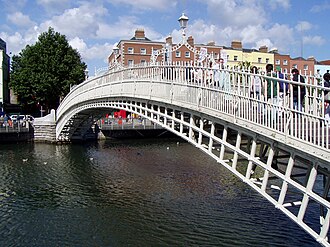
Ha’penny Bridge After-Dark: Legends and River Ghosts in Dublin
The Ha’penny Bridge is one of Dublin’s most photographed landmarks by day and one of its most whispered-about places by night. Straddling the River Liffey, the cast-iron span collects light, reflections and stories; in the low glow of street lamps it becomes a theater for tales that mix documented incidents with folklore. This guide separates what’s on the record from what’s told around pubs and tour groups, offers a practical after-dark walking route, and gives safety and photography tips for visitors who want to experience the bridge’s atmosphere responsibly.
Book a Ha’penny Bridge after-dark ghost walk with Ghost Tour Dublin Experience
Ha’penny Bridge at Night — Why the bridge inspires ghost stories
Built for foot traffic and memory, the Ha’penny Bridge’s delicate arches and narrow walkway make it intimate and evocative under night skies. The low hum of the city, the river’s slow flow and the patterns of light on water create sensory cues that prime the imagination. Bridges worldwide are natural sites for folklore: thresholds between places, liminal spaces where the ordinary feels slightly uncertain. In Dublin, the Liffey’s history of drownings, river transport and waterfront life feeds local storytelling, turning weathered facts into legends told after dark.
Historical background: The bridge, the Liffey and documented river incidents
Documented history gives us the bridge’s physical facts and the Liffey’s role in Dublin’s growth. The Ha’penny Bridge was constructed as a pedestrian crossing and has stood through centuries of urban change. Records and municipal reports document accidents, drownings and river recoveries that occurred along the Liffey over the years; these incidents are part of civic archives rather than spectral evidence.
It’s important to distinguish documented incidents—police reports, coroner notices and contemporary newspaper accounts—from narrative layers that accumulate in oral memory. The river is a working waterway: barges, tides and bridges created hazards that led to real tragedies. These events often anchor later stories but do not, by themselves, prove supernatural activity.
Key legends and river-ghost stories (clearly labelled as folklore)
Folklore: One of the most-circulated tales says the bridge is haunted by a figure in Victorian dress who appears at the bridge’s midpoint and then vanishes. Another common story describes a child’s reflection on the water that turns into an apparition on the bank. There are also versions about the clinking of a lost coin at night—an echo of the bridge’s toll history—heard when no one is there.
Folklore: River ghosts often take the form of misty shapes rising from the Liffey on foggy nights or of repeated sightings of shadowy figures on the opposite bank. These stories tend to share common elements—isolated witnesses, brief encounters, and sensory details like sudden cold or the smell of peat smoke—and they are part of Dublin’s oral tradition rather than verifiable phenomena.
Labelling these as folklore is not dismissive; it helps visitors enjoy the stories while understanding their cultural role. Folktales often encode social memory—loss, poverty, industrial hazards—and the eerie details that make them memorable are part of how communities talk about risk and place.
Eyewitness reports and cultural context
Eyewitness accounts are often personal and varied: commuters who felt watched, photographers who noticed unexpected shapes in long exposures, or pub-goers who describe a fleeting outline on the bridge rails. Oral accounts are valuable cultural data—telling us what people perceive and how local memory works—but they are not the same as documented evidence.
In Dublin, talk about the bridge blends affection with wry humour. Locals may recount a chilling moment and then follow it with a laugh and a practical tip about late-night buses. This mix of reverence and scepticism is part of the city’s cultural context: stories are shared, embellished and used to mark the city’s dark heritage in a way that is social rather than clinical.
For readers interested in how Dublin manages and funds its darker heritage themes, see Funding Dublin’s Dark Heritage: Crowdfunding & Grant Guide. For writers and guides shaping these stories responsibly, consult How to Write Concise Spooky Copy for Dublin Ghost Tours — A Folklore Guide.
Suggested after-dark walking route: where to stand, vantage points, and timed elements for atmosphere
This route is designed for safety, atmosphere and photographic opportunity. Allow 45–75 minutes depending on your pace and how much time you spend taking photos or listening to the river:
- Start at the north bank approach near Capel Street. This gives a view of the bridge across a dark waterline—good for first impressions.
- Walk along the north quays toward the bridge and pause at the northern ramp to listen for the river and watch reflections. At dusk, the water will catch the last light; later, lamplight will create contrast for photos.
- Cross the bridge slowly, pausing at mid-span. The narrowness makes this the most intimate vantage—bring a light but avoid bright beams that spoil the glow. Spend a few minutes leaning on the rail to feel the ambiance and observe the opposite bank.
- Descend on the south side and follow the south quays past Temple Bar. There are several sheltered alcoves and benches for quiet moments and reflections.
- Finish with a slow return or continue east to the Custom House for a longer walk. If you want to extend the evening later into themed experiences, consider our suggested nearby stops listed below.
Timings: try to arrive 30 minutes after sunset for the best blend of twilight and street lighting. Nighttime tides and weather change reflections dramatically; clear, still nights give the best photo reflections, while misty evenings supply atmosphere (and moody photography) but reduce visibility.
Practical visitor tips: safety, lighting, photography, and respecting the site
Safety first. The Ha’penny Bridge is a public thoroughfare, so avoid obstructing the walkway. Keep personal items secure and be aware of other pedestrians, especially on narrow spans.
Lighting: a small headlamp with a red mode preserves night vision and minimises disturbance. Avoid using flash directly across the bridge; it can startle others and wash out the subtle lighting that creates mood.
Photography: for long exposures bring a small tripod or stable support. Night shots of the bridge benefit from slower shutter speeds to smooth river reflections. If you intend to photograph people, ask first—the bridge is a busy place and consent matters. Watch out for lens flare from street lamps and consider shooting from the quays for wider compositions.
Respect: remember the Liffey has areas of memorial significance and real tragedies in its history. Treat the bridge and riverside with care—no graffiti, no loud or reckless behaviour. If you’re visiting as part of a tour, listen to your guide: they balance storytelling with respect for local memory.
Nearby stops for an atmospheric night out
Extend the experience with nearby themed pubs, memorials and cultural stops. Temple Bar has late-night venues where storytellers and musicians sometimes give the city’s nocturnal character extra texture. If you want quieter historical reflection, make time for the Irish Jewish Museum After-Hours: Histories and Echoes for a different kind of after-dark history reading.
If your evening mood leans toward coastal ghosts and tide-line tales, consider taking a later walk or an organized extension to Sandymount Strand Evening Legends Walk — Tides, Tales & Tour Tips. For budget-conscious travellers, our linked guide on Budget planning for Dublin dark walking tours has practical suggestions on how to stretch an evening out affordably.
How to join a guided Ghost Tour Dublin Experience: what to expect and booking pointers
A guided Ha’penny Bridge after-dark walk with Ghost Tour Dublin Experience blends folklore, eyewitness context and historical clarity. Expect a guide who frames stories as folklore or as documented events, points out vantage points for photography and leads a safe, paced route. Tours typically include background on the Liffey’s documented incidents, short readings from oral accounts, and time for questions.
Booking pointers: tours book up on weekends and around cultural festivals, so reserve ahead if you have a specific date. Dress for Dublin weather, bring a charged phone and a small light, and arrive a few minutes early so the group can start on time. If you’re organising a private group, we can tailor the route and content—contact us for private bookings.
Book a Ha’penny Bridge after-dark ghost walk with Ghost Tour Dublin Experience — or for private group arrangements, visit our private bookings page to discuss custom itineraries and accessibility needs.
FAQ
Is Ha’penny Bridge actually haunted?
Short answer: there is no scientific proof that the bridge is haunted. The stories told there are part of Dublin’s folkloric tradition and often grow from documented river incidents, personal experiences and collective imagination. Whether or not you believe in ghosts, the bridge’s atmosphere makes it a potent place for storytelling.
What is the difference between the bridge’s legends and documented history?
Documented history refers to archived records—municipal reports, newspapers and legal notices—detailing concrete events like accidents or construction facts. Legends are oral narratives passed between people, often embellished and serving cultural or emotional functions. Both matter: history anchors stories in real events, folklore shapes how communities remember and interpret them.
When is the best time to visit Ha’penny Bridge for an after-dark walk?
Arrive 20–40 minutes after sunset for the best mix of lingering twilight and street lighting. Weeknights are quieter; weekends are livelier. Weather affects mood: clear nights favour photographic reflections, while mist or light rain deepens atmosphere—choose based on your comfort with conditions.
Is it safe to explore the Ha’penny Bridge area at night and can I photograph the river ghosts?
The area is generally safe, but take standard precautions: stay in well-lit areas, keep valuables secure, and be aware of your surroundings. Photographing “river ghosts” will usually capture reflections, shadows or long-exposure effects rather than paranormal evidence. If you photograph people or private property, ask permission. Use respectful behaviour and avoid obstructing walkways during busy periods.