
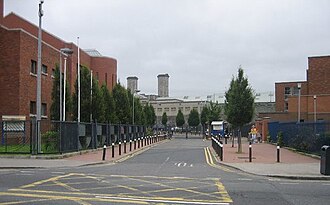
Phibsborough Eerie Lanes Night Walk — History, Legends & Where to Join
Phibsborough’s narrow service lanes, canal-side corners and low Victorian terraces take on a different personality after dusk: shadows fall in places daytime visitors rarely see, street lamps highlight brick textures and the hum of the city feels thinner. This guide is a practical, historically grounded companion to the Phibsborough Eerie Lanes Night Walk — it explains what you will see, where the documented history ends and folklore begins, the planned route, safety and accessibility details, and how to book a guided night walk with Ghost Tour Dublin Experience.
Book the Phibsborough Night Walk with Ghost Tour Dublin Experience
Introduction: Why Phibsborough’s Lanes Feel Different at Night
Phibsborough sits on a hinge between inner-city industrial Dublin and the quieter suburbs. At street level the area still shows traces of 19th- and early-20th-century industry and transport infrastructure: workshop units, brick terraces, narrow service lanes and the canal towpath. After dark these built features combine with sparse lighting, quieter traffic and the echo of distant trams and trains to create an atmosphere that encourages storytelling. Our walk treats that atmosphere seriously — we point out which features are verifiable historical markers and which stories grew around them later.
A Brief, Documented History of Phibsborough (19th–20th century)
Documented history: Phibsborough expanded as Dublin industrialised. Small factories, coachworks and artisan workshops clustered near transport lines and the Royal Canal, which supported goods movement. Worker terraces and rows of small shops were built to serve these communities. In the 20th century, municipal reform and redevelopment reshaped streetscapes: some dense housing was cleared, light industry declined, and commuting patterns changed with the appearance of trams and later buses and rail.
Folklore and memory: oral histories often focus on incidents that express the hardship of working-class life — factory accidents, sudden deaths and episodes of poverty. Where archival records exist they are sparse; where they do not, memories and retellings have filled the gaps, producing ghost stories and moral tales linked to particular lanes and buildings.
Mapping the Night Walk: meeting point, route, timing and practical logistics
Meeting point: we meet at the Phibsborough LUAS stop (Phibsborough Road side) — a clear, well-lit spot that is easy to find and close to public transport. The stop is also a convenient place to return to if you are joining or leaving the city centre after the walk.
Route and timing: the standard night walk runs for approximately 75–90 minutes and covers 1.8–2.5 km at a gentle pace with several extended stops for storytelling. The route uses pavements, short sections of cobbled lane and a stretch of canal towpath; we avoid unsafe shortcuts and private property.
Group size and pace: groups are deliberately kept small to preserve atmosphere and avoid blocking lanes. Expect a relaxed walking pace with opportunities to stand and listen for 5–10 minutes at each stop.
Stop-by-Stop Guide: lanes, canal-edge corners and notable junctions — documented history vs local legend
Stop 1 — The LUAS Gateway and Terrace Frontages
Documented history: terraces along the main road were built to house working families and small traders. Their facades still show window proportions, door patterns and occasional shopfront stonework from the late-19th century.
Local legend: a lane off the main road is said to be the locus of a recurring apparition — described in different versions as a woman in a shawl or a lost child. These stories tend to grow from collective memory and the anonymity of night; they are not corroborated by police records or contemporary newspapers in any consistent way.
Stop 2 — The Narrow Service Lanes
Documented history: many lanes were originally utility passages for deliveries and waste removal behind the main shops. They reveal back entrances, loading bays and the fabric of small-scale urban industry.
Local legend: the lanes are often associated with petty crime or sudden confrontations in older retellings. While historical police logbooks record incidents in dense urban quarters, individual ghost tales connected to particular alleyways are typically oral tradition rather than documented events.
Stop 3 — Canal-Edge Corner (Royal Canal towpath)
Documented history: the Royal Canal played a central role in goods movement. Canal edges and basins were sites of loading, repair and, regrettably, accidental drownings — incidents that appear in coroner records and local reports from the 19th and early 20th centuries.
Local legend: canal towpaths are common settings for spectral boatmen or misty figures. On this walk we separate the documented dangers of the water from the atmospheric stories that emerged later; the canal’s quiet after dark is an obvious seedbed for new tales.
Stop 4 — The Old Workshop Quarter
Documented history: workshops made light metalwork, maintained carts and produced goods for local markets. You can see surviving industrial windows and the turn-of-the-century brickwork that marks these premises.
Local legend: a workshop doorway is sometimes said to be haunted by a former foreman or worker whose life ended in an on-site accident. While workplace fatalities are part of the industrial record, specific “haunt” claims usually rest on oral accounts rather than archival evidence.
Stop 5 — A Traffic Junction with Layered Memory
Documented history: junctions where tram routes met road traffic were historically busy and occasionally dangerous. Infrastructure changes, such as the removal of tramlines and road widening, are part of the documented urban change that altered sightlines and the pedestrian experience.
Local legend: junctions attract collision stories and post-war tales of lost lovers — these are folk motifs that recur across Dublin neighbourhoods. We present them as cultural expressions of communal memory, not as verified incidents unless supported by records.
Nightwalk Atmosphere: how architecture, lighting and sound shape perceptions (and why folklore grows)
Architecture frames what we see: low terraces, narrow lanes and brick factory buildings create pockets of shade and echo. Even a small change in the colour temperature of a lamp can shift the perceived age and texture of a wall.
Lighting and sound work together: uneven public lighting, the distant thrum of traffic, the occasional train and the quiet splash from the canal heighten attention. Human perception at night favours meaningful patterns — faces in windows, footsteps that might be behind you — and folklore grows to make sense of these patterns.
As guides we point out how sensory input translates into narrative: where a building’s half-closed shutters invite speculation, whether an unexplained sound has a natural source (heating systems, drainage), and how to experience the eerie without confusing it with evidence.
Safety, accessibility and what to bring for an after-dark urban history walk
Safety: the route sticks to public paths and well-trodden lanes. Guides carry torches, first-aid kits and are trained in basic crowd safety. Children should be accompanied, and participants are asked to follow the guide’s instructions on crossing roads and staying clear of private entrances.
Accessibility: the walk uses some uneven surfaces and short cobbled stretches. It is suitable for most walkers, but not all sections are wheelchair accessible. If you have limited mobility please contact us ahead of booking so we can advise on route adjustments.
What to bring: comfortable shoes, a warm layer, an umbrella if rain is forecast, and a charged phone. Headlamps are not required — guides provide focused lighting at stops — but a small personal torch can be useful for extra footing confidence.
Ticketing, guide credentials and how this walk fits with wider Ghost Tour Dublin Experience offerings
Booking and tickets: tickets are sold online via our main booking page. Your ticket covers the guided walk, historical commentary and access to curated oral histories for the route. Group discounts and private bookings are available for larger parties or corporate groups — contact us for bespoke arrangements.
Guide credentials: all night-walk guides work locally and are experienced in urban history interpretation and after-dark safety. Guides are trained in storytelling that distinguishes archival fact from folklore and in presenting sensitive material respectfully.
How the walk fits in: the Phibsborough Night Walk complements other Ghost Tour Dublin Experience walks that explore urban green-space apparitions and churchyard narratives. For related evening histories see our piece on Iveagh Gardens Dusk Apparitions: An Evening Guide to History & Hauntings and our guide to St Kevin’s Churchyard Ghosts. For broader themes about unmarked memorials you may also find Unmarked Memorials useful, and for a coastal contrast see Howth Cliffside Spectres.
Book the Phibsborough Night Walk with Ghost Tour Dublin Experience
If you are organising a private group, corporate outing or special-occasion night walk we offer tailored departures and interpretation. Contact us to discuss private bookings and group rates at our private groups page: Book the Phibsborough Night Walk with Ghost Tour Dublin Experience.
We also produce editorial and partnership pieces for local partners and dark-tourism projects; see our guidelines for collaboration and sponsorship ideas if you run a local blog, venue or historical society.
FAQ
How long is the Phibsborough eerie lanes night walk and what pace should I expect?
The walk runs roughly 75–90 minutes and covers about 1.8–2.5 km. Expect a gentle, conversational pace with several stationary storytelling stops lasting 5–10 minutes each.
Are the stories told on the walk historical fact or local legend?
We clearly separate documented history from folklore at every stop. Documented material comes from surviving municipal records, maps and archival descriptions; legends are presented as oral tradition, local memory or later embellishment. Guides will tell you which is which during the walk.
Is the route suitable for children, seniors and people with limited mobility?
The route is family-friendly for older children accompanied by adults. There are cobbled and uneven stretches that may be challenging for some mobility aids. If you have limited mobility please contact us before booking so we can advise on accessibility and possible route adjustments.
How do I book, what’s included in the ticket, and what is your cancellation policy?
Book online via our main page. Tickets include the guided night walk, expert commentary, and curated historical notes. Full details about price, group discounts and our cancellation policy are available on the booking page; please consult the booking terms before purchase for the most up-to-date information.