
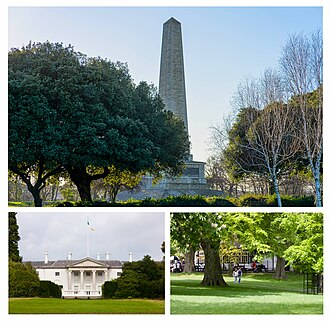
Phoenix Park After-Dark Encounters: Riders, Strange Lights & Visitor Guide | Ghost Tour Dublin Experience
Phoenix Park after dark draws attention for the same reasons it always has: scale, history and the space left for imagination when paths fall silent. Reports of lone riders, unexpected lights and odd sounds circulate in pub conversation, online forums and the slow oral tradition of local storytelling. This guide separates documented history from folklore and legend, examines plausible explanations for what people see, and gives practical, safety-first advice for visitors who want to explore the park responsibly after sunset.
Book an after-dark Phoenix Park tour with Ghost Tour Dublin Experience
A brief, documented history of Phoenix Park
Documented history provides context for why Phoenix Park engenders stories. As a large, managed open space at the heart of an expanding city, the park has hosted residences, institutions and public events for centuries. Institutional buildings, old walls, broad avenues and enclosed groves create a patchwork of quiet corners and sightlines that change dramatically after dark.
When people talk about the park’s past, it helps to separate what is recorded—where official residences, sporting grounds and the zoo sit—from the folklore that springs up around those places. For anyone interested in Dublin’s dark corners, there are related walks and essays such as Nightwatch Tales: Lamplighters and Ghostly Beacons of Dublin that explore how civic lights and watchmen shaped nocturnal narratives in the city.
Riders in the park: folklore, recurring accounts and recorded incidents
Riders are among the most persistent subjects of after-dark reports. Folklore often paints them as solitary, mounted figures in obsolete uniforms or as phantom horsemen tied to tragic stories. Legend amplifies these images—ghostly officers, doomed couriers, or medieval apparitions—because the park’s avenues and historic associations provide a rich setting for such tales.
Recorded incidents are different: they are the accounts that can be corroborated by police logs, witnesses, or contemporary reporting. In Phoenix Park those incidents more commonly involve cyclists, joggers, equestrians from nearby stables, or groups exercising at night rather than supernatural cavalry. When you hear a claim about a rider, ask whether it is framed as folklore (a retold story with variations) or as a contemporaneous report that could be checked.
How to tell myth from recorded incident:
- Folklore: usually lacks verifiable time-stamped evidence, grows with retelling, contains symbolic details (old regimental colours, impossible behavior).
- Recorded incident: has specific times, locations, witness statements or official reports and often a mundane explanation (a cyclist on a dark path, a rider training before dawn).
Strange lights explained: natural and human-made sources versus folkloric interpretation
Strange lights are another common theme. Folkloric interpretations treat lights as omens, will-o’-the-wisps or supernatural signals. Natural and human-made explanations are often more prosaic.
Plausible sources include:
- Vehicle headlights and tail-lights viewed through corridors of trees, which can appear as moving or hovering lights.
- Reflections from urban lighting—street lamps, security lights from institutions bordering the park, or the distant glow of the city—filtered by mist.
- Atmospheric conditions such as low cloud, mist or insects that scatter light and create halos or floating patterns.
- Recreational activity: flashlights, helmet lights, camera LEDs, and the glow from smartphones carried by evening walkers.
When someone labels a light “strange,” the simplest test is repetition and context: does it move like a vehicle? Is it tied to a known path? Are there changes when people approach? Many reports reduce to ordinary sources once you observe with a notebook, or in a group where more eyes can check angles and distances.
Where to go and when: practical spots, best times for after-dark visits and safety considerations
Choosing where and when to go matters. The park is large; some areas are more trafficked and better lit, others are remote and pitch dark. For a first after-dark visit, pick a route that balances atmosphere with visibility and access to roads and public transport.
Recommended approaches:
- Stick to main avenues and areas near well-known landmarks—these give long sightlines and easier navigation.
- Visit in the window after sunset but before very late hours; twilight retains enough light for safer movement while still allowing evening atmosphere.
- Weeknights are quieter than weekends; however, quieter doesn’t always mean safer—bring a friend or join a guided tour.
Safety considerations:
- Tell someone your intended route and estimated return time.
- Carry a reliable torch, phone with charged battery, and a small first-aid kit.
- Wear reflective clothing or a light for visibility to cyclists and drivers.
- Be aware of park rules—some areas close at specific hours, and enforcement can change seasonally.
Responsible visiting and recording: photography, drones, trespass and animal etiquette
Recording encounters is part of modern curiosity, but legal and ethical boundaries matter. Photography is generally permissible in public areas, but avoid intrusive behavior near homes, official residences or wildlife enclosures.
Drone use is sensitive: many parks have strict restrictions near institutional buildings and over dense public spaces. Always check current rules before flying a drone; unauthorized use can lead to fines and confiscation.
Respect for animals matters, too. If you encounter horses—whether ridden or at exercise yards—give them space, approach calmly, and follow instructions from handlers. Do not feed wildlife or attempt to approach them for photos.
If your interest is technical, advice like kit lists and field practices can help you gather better, non-invasive recordings—see resources such as Budget Gear for Dublin Ghost Podcasters: Essential Field Kit for Haunted Sites for practical tips on lighting, audio capture and discretion in urban sites.
Joining a guided after-dark experience: what Ghost Tour Dublin Experience offers
A guided tour changes the experience. Guides provide safe routes, historical context, and a shared vantage point that helps separate the atmospheric from the explainable. With Ghost Tour Dublin Experience you can expect local knowledge about the park’s documented history, informed discussion of folklore and a safety-first approach to after-dark exploration.
Guided tours also help with access and timing: guides know where to stand for the best sightlines, when to pause for low-light photography and how to manage group movement around stables, residences and wildlife. If you want a deeper dive into wider Dublin hauntings after your Phoenix Park walk, related routes like Vanished Streets & Phantom Pedestrians of Old Dublin or the Hellfire Club Ruins guide offer thematic continuations.
Book an after-dark Phoenix Park tour with Ghost Tour Dublin Experience
Practical tips for photographers and recorders
If you intend to photograph or record lights or movement, prioritise safety and respect. Use a tripod for long exposures to reduce blur and avoid bright flash in areas where animals may be startled. Tune exposure settings to capture low-light scenes rather than relying on flash; it produces more atmospheric results and is less intrusive.
When you think you’ve captured something unusual, consider simple verification steps: check timestamps, compare notes with other observers, and map the sighting’s location. Many apparent anomalies dissolve under clear documentation and multiple viewpoints.
For a focused night recording session, keep equipment minimal and mobile. If you plan longer stays or specialised recording, discuss permissions in advance; some areas near official residences or activity hubs may demand prior approval.
Final notes: keeping legend alive—responsibly
Legends and folklore are part of Phoenix Park’s cultural fabric. They add colour and invite curiosity, but mixing story with observation responsibly makes for a richer experience. Distinguish between documented history (what is recorded and verifiable), folklore (community stories and oral tradition) and legend (narratives that have evolved into archetypal forms). This helps protect the park, its wildlife and the people who use it.
For private groups, school visits or bespoke experiences, we can arrange tailored after-dark walks with additional access considerations—please inquire for private-group bookings.
Book an after-dark Phoenix Park tour with Ghost Tour Dublin Experience
FAQ
Are the riders and strange lights in Phoenix Park real?
Reports are real in the sense that people experience events they cannot immediately explain. Many rider sightings align with cyclists, equestrians or joggers; many lights are vehicles, reflections, or atmospheric effects. Some accounts remain unverified and fall into folklore. Distinguishing between a sincere witness report and an unverified legend is part of after-dark exploration.
Is it safe to visit Phoenix Park at night and what precautions should I take?
Visiting after dark is possible, but take standard precautions: travel in groups, tell someone your route, carry a torch and mobile phone, use reflective clothing, and stay on known paths. Avoid isolated areas if you are alone and respect closures and posted rules.
Can I photograph or record sightings in the park—are there permissions or restrictions?
Photography in public areas is usually permitted, but check park rules for specific restrictions, especially near official residences or the zoo. Drone use often requires prior permission. Always avoid harassing wildlife or entering private or restricted zones to get a shot.
Will a guided tour guarantee that I’ll see riders or strange lights?
No tour can guarantee paranormal sightings. What a guided tour does guarantee is context, safer routes, local knowledge and a higher chance of understanding what you see. Guides help separate folklore from likely explanations and offer a shared, secure experience for exploring Phoenix Park after dark.