
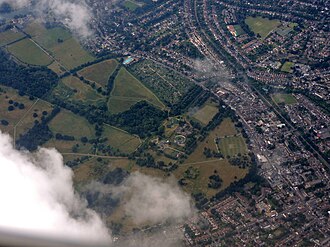
Ranelagh Evening Ghost Trail offers a different way to know Dublin’s Ranelagh: not as a daytime café strip but as an intimate patchwork of narrow streets, Victorian terraces and quiet squares that take on a new character after sunset. This guide is written for visitors who want a practical, credible experience—how to get there, what you’ll see, which stories are supported by records and which belong to neighbourhood folklore, plus sensible safety and accessibility notes so your night walk is enjoyable and secure.
Book the Ranelagh Evening Ghost Trail — Ghost Tour Dublin Experience
Why Ranelagh after dark?
Ranelagh feels like a small village inside a city. By night the streetlights pick out cornices, doorway steps and the uneven paving of older lanes; shops close and the buzz of daytime commerce gives way to a quieter, more intimate ambience. That contrast—familiar domestic architecture and the hush of evening—makes it an ideal setting for a short ghost trail. The stories here are often domestic and local in scale: lost loved ones, school memories, unexplained sounds in back alleys, and the echo of Dublin’s suburban growth over the last two centuries.
Quick logistics: best start times, route length, meeting point and transport links
Best start times are typically between 19:30 and 21:00, depending on the season. Earlier starts suit families and those who prefer a less late finish; later starts create a moodier atmosphere for adult groups. A typical guided walk lasts 75–90 minutes and covers roughly 1.5–2 kilometres at an unhurried pace with stops for stories.
We meet in Ranelagh Village near the main Luas Green Line stop (Ranelagh), which gives direct city-centre connections. Several local bus routes also serve the area; if you plan to drive, be aware that parking is limited in the core village after early evening. The trail uses public pavements and quiet residential streets—no off-road hiking gear is needed, but comfortable shoes and a light jacket are advisable.
Mapped evening route: step-by-step walk with notable stops and timings
-
Meeting point: Ranelagh Village (0:00–0:10)
Introductory briefing, safety notes and a short history of the area’s development from farmland to a Victorian suburb. This is where you’ll meet the guide and ensure everyone is comfortable with the route.
-
Terraced streets and parish edge (0:10–0:25)
We move along tree-lined terraces and discuss housing patterns, municipal improvements and the kinds of lives long-term residents led. You’ll see examples of period architecture and hear stories connected to former residents; our guide will flag which items are documented and which are oral tradition.
-
Former school building (0:25–0:40)
A pause outside a former school site to talk about education in the suburb and the persistent schoolhouse tales that appear across Dublin. For context on classroom-related folklore elsewhere in the city, see our piece on Haunted Schoolhouses: Dublin Classroom Legends and Where to Visit.
-
Almshouse or charitable housing (0:40–0:55)
Many Dublin suburbs have almshouses and philanthropic institutions; the stop focuses on the social history of housing and the sometimes melancholy stories attached to charitable residences. For a deeper look at such sites elsewhere, consult Haunted Almshouses of Dublin: A Visitor’s Guide.
-
Old trade fronts and a village pub façade (0:55–1:10)
We finish with a short stretch through the heart of the village, recounting working-class histories, trades that have vanished and a few reputed hauntings tied to commercial premises. After this stop you’ll receive signposting for nearby post-walk refreshments.
Documented history along the trail: verified events, buildings and sources to consult
We make a clear separation between archival fact and oral tradition on every stop. Documented history on the route includes verifiable items such as property records, maps showing suburban expansion, period directories and entries in local newspapers. Examples of verifiable material you can consult include municipal archives, historical Ordnance Survey maps and contemporary press reports for incidents that made local news.
When a story refers to a recorded event—an accident, a court record or a building’s construction—our guide will point to the type of source that confirms it. If you want to research further after the walk, local history societies, the National Archives and digitised newspaper archives are reliable places to begin; academic local-history journals and conservation reports also help confirm architectural attributions.
Local legends and ghost stories: what’s folklore, what’s recorded — how we separate them
The Ranelagh trail includes many tales found across Irish urban folklore: spectral figures at windows, recurring footsteps in empty houses, and the sense that a child’s laughter belongs to a long-ago tenant. These are valuable as part of the area’s intangible cultural heritage but are often undocumented beyond oral retelling.
How we separate them on the walk:
- Documented: Anything supported by a contemporaneous record—newspaper reports, legal notices, property deeds—is described as documented history.
- Folklore: Recurrent stories shared by neighbours and recorded in oral-history collections are presented as local legend. These are not treated as verified facts but as part of the community’s storytelling tradition.
- Speculation: We explicitly label anything speculative or based on personal testimony without corroboration.
We respect both types: documented history for its evidential value, folklore for the way it conveys communal memory. If you’re curious about comparable suburban legends, take a look at our visitor guides to nearby areas such as Leopardstown Suburban Apparitions and Rathfarnham Village Hauntings.
Safety, accessibility and practical tips for evening walkers
Safety and comfort are priorities. The route sticks to lit pavements and avoids narrow, poorly surfaced alleys. Still, take these precautions:
- Wear comfortable shoes with good grip; pavements can be uneven.
- Bring a small torch during darker months; while the route is lit, a handheld light helps with steps.
- Stay with the group—guides keep an eye on all participants and will advise on any short detours for accessibility.
- If you have limited mobility, tell us when you book so we can plan a route that minimises steps and kerb crossings. Not every street is fully step-free, but alternative paths are usually available.
For operators and organisers reading this, insurance and operational planning are important for running nocturnal tours. Our practical guide to insurance for Dublin night-time tour operators explains the considerations relevant to small-group, evening walks and can help you prepare responsibly: Insurance Options for Dublin Nocturnal Tour Operators: A Practical Guide.
After the walk: recommended nearby pubs, cafés and where to continue your Dublin night
Ranelagh Village has a compact selection of pubs and cafés within a short walk of the meeting point. Traditional pubs offer a cosy end to the evening for those who want to discuss what they heard; there are also several late cafés for lighter options. If you want to carry on with themed walking experiences, nearby neighbourhoods host their own evening trails—see references above for Leopardstown and Rathfarnham—or consider combining a Ranelagh walk with an extended city-centre tour on another night.
Book the Ranelagh Evening Ghost Trail — Ghost Tour Dublin Experience
For private groups, corporate events or bespoke timings, we offer tailored bookings to suit groups and special requirements. To arrange a private tour, including adjusted start times or exclusive routes, please use our private bookings page: Book a private Ranelagh ghost trail — Ghost Tour Dublin Experience.
FAQ
How long is the Ranelagh evening ghost trail and what time does it start?
The guided trail typically lasts 75–90 minutes and covers about 1.5–2 kilometres. Typical start times are between 19:30 and 21:00 depending on season and group preference; check the booking page for scheduled departures or request a different time for private groups.
Is the trail suitable for children, older walkers or people with limited mobility?
Yes, the trail is family-friendly in content and scale, but some parts of the village have steps and uneven pavements. If you have limited mobility, please indicate this when you book so we can plan the most accessible route and ensure a comfortable experience for everyone.
Are the ghost stories on the route based on historic records or local legend?
We distinguish clearly on the walk. Some anecdotes are drawn from documented records—property histories, newspaper reports and municipal archives—and are presented as verifiable history. Many tales are oral local legends and are presented as such; these reflect communal memory rather than archival proof. Guides will always flag which is which.
How do I book the guided Ranelagh evening ghost trail and what’s the cancellation policy?
You can book online via our booking page: Book the Ranelagh Evening Ghost Trail — Ghost Tour Dublin Experience. Cancellation and refund policies are displayed at checkout; for private-group bookings or special arrangements, contact us directly via the private bookings link on the same page to discuss terms.