
Wood Quay Spectres: River Workers’ Legends, Archaeology & Where to See Them
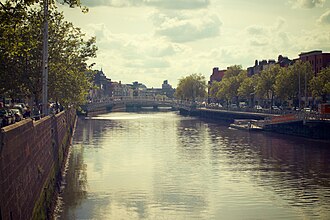
The phrase “Wood Quay spectres” brings together two Dublin stories in one: the tangible, documented archaeology of a key riverside settlement and the oral world of Liffey river workers whose lives, accidents and losses accumulated into local tales. For visitors today, the site and nearby quaysides are both an archaeological landscape and a living place where stories—some verifiable, some folkloric—still shape how people remember the river.
Book a guided Wood Quay Spectres walk with Ghost Tour Dublin Experience — join an experienced guide who links archaeology and oral history safely and responsibly while walking the riverbank where these stories originated.
Wood Quay in the record: archaeology and civic history
Wood Quay sits on the north bank of the River Liffey and has long been a focus for archaeologists because of the layers of human activity preserved in its soils. Excavations revealed timber structures, post-holes and artefacts that point to intense riverside use in the Viking and medieval periods. These remains document boatyards, quayside workshops and settlement activity tied to the river economy.
In the more recent past Wood Quay became the focus of a civic controversy when modern development plans met public interest in preserving archaeological remains and Dublin’s urban character. That 20th‑century dispute helped make the site a symbol of how cities choose between heritage and new construction. These are documented aspects of Wood Quay’s story: tangible finds in the ground and recorded public debates about the site’s future.
Lives on the Liffey: the river workers
The people who gave rise to the “spectres” were real: dockers, lightermen, bargemen, boatmen and assorted waterside tradespeople who moved goods, handled cargo and kept small craft afloat. Their work required physical strength, local knowledge of tides and an acceptance of steady occupational danger.
River work involved loading and unloading barges, guiding vessels through tidal currents, and working on slippery timber at night or in poor weather. These were often informal or seasonal arrangements, with crews forming tight social networks. Injuries, drowning and sudden disappearances were occupational hazards, and funerals or local columns sometimes recorded those losses in ways that fed later storytelling.
Reported sightings and local tales: what people say
Oral tradition around Wood Quay includes accounts of figures seen at dawn or along the shadowed quays—men in flat caps hauling invisible ropes, the sound of creaking timbers where no boat is tied, or a lantern bobbing past an empty quay. Some tales describe repeating apparitions tied to particular stretches of river; others are clustered around the memory of a lost dockyard lane or a lane that once led to the water.
It is important to flag these accounts clearly as folklore: they are the products of storytelling, memory and community imagination. Oral history often preserves emotional truth—grief, nostalgia, warning—without being a literal record. Local storytellers, family legends and pub recollections shaped how such sightings were told and retold.
How folklore and memory interact
Folklore around river workers uses sensory detail—sound of ropes, smell of tar, sudden chill—to create a believable scene. Over time, small incidents and repeated retellings become consolidated into “types” of spectres: the late shift lighterman, the drowned apprentice, the fogbound bargeman. These bear cultural meaning even when their factual basis is uncertain.
Plausible origins of the spectres
When you separate documented fact from story, several plausible origins for the Wood Quay spectres emerge. First, accidental death: the Liffey has always been dangerous, and drownings or workplace fatalities were sadly common. Such deaths leave social memory—funerary notices, family stories and sometimes a place-name that preserves the event.
Second, workplace accidents and precarious employment created communities with strong oral networks. A single dramatic accident can generate a cluster of tales that spread through relatives and colleagues. Third, “archaeological memory”: visible traces in the streets—old mooring posts, cobbled surfaces, building lines revealed in excavations—prompt people to imagine the activities that once took place there, turning archaeological clues into narrative flesh.
Finally, there is the broader human tendency to ascribe agency to places where loss occurred. A riverside associated with hardship becomes a stage for stories that help communities process risk and change. None of these origins requires invoking the supernatural; they can all be understood as natural cultural processes that produce legends.
Where to go today: a short, walkable route
Wood Quay sits within easy walking distance of central Dublin and is suitable for a short, atmospheric outing that avoids any risky terrain. A compact route that highlights archaeology and riverside life begins at the Wood Quay Civic Offices (where some interpretive signage can be found), continues eastwards along the quays toward the historical core of the city, and loops back via the medieval precincts near Christ Church and Dublinia.
Safe vantage points for evening visits include the wide pedestrian paths along the north quays, the plazas around civic buildings and well-lit bridge crossings. Avoid standing on narrow river ledges, private jetties or any construction zones. The quays are public but busier at certain times; choose daylight or early evening hours for comfort and safety.
How to experience these stories with a guide
A guided walk with Ghost Tour Dublin Experience links the archaeological record, street-level clues and oral narratives so visitors can see how fact and folklore intersect. Guides point out timber imprints, old quay lines and place-names while recounting the stories of river workers—clearly indicating when a detail is from the excavation record and when it comes from oral tradition.
Best times for atmosphere are late afternoon into early evening, when the light slants across the water and the streets quiet down. Bring comfortable shoes for cobbles, a warm layer for riverside breezes, and a compact torch if you plan on darker sections. Photography: use a stabilised camera or a tripod for long exposures near the water, and be mindful of private property and safety when composing shots.
Responsible visiting and further research
Respect the riverside as a living place where people work, commute and live. Keep to public paths, avoid disturbing memorials or fenced archaeological areas, and leave no trace. If research interests you, consult local archives and library catalogues in Dublin for excavation reports and municipal records—archives will have the primary material that underpins the documented history.
For broader context on Dublin’s darker urban stories, consider other themed walks and articles that link to related topics, such as the Playground Ghost Trail, regional tales of markets and fairgrounds, and medical‑period scandals that shaped urban fear and folklore. See our pieces on Playground Ghost Trail: Exploring Dublin’s Abandoned Parks and Folklore, Ghostly Fairgrounds & Lost Dublin Market Vendors — Folklore, History & Where to Visit and Body‑snatching Scandals in 19th‑Century Dublin: Hospitals, Law & Legends.
Practical tips and low‑cost props for evocative but respectful experiences are covered in our guide to Low-Cost Atmospheric Props for Dublin Ghost Readings — Budget Guide for Guides & Visitors. If you prefer routes focused on crossings and bridges that carry spectral associations, our Bridges of the Liffey: Spectral Crossings Trail offers an extended option.
Book a guided Wood Quay Spectres walk with Ghost Tour Dublin Experience to explore these layers with a guide who separates archaeology from folklore and gives you safe, well-informed access to riverside stories.
If you are organising a private or corporate visit, we can design a tailored walk that focuses on archaeology, oral history or a balanced mix for your group. Book private group tours with Ghost Tour Dublin Experience for bespoke itineraries and scheduling.
FAQ
Are the Wood Quay spectres real or just stories?
The “spectres” are best understood as a mixture. The archaeological record and written documents provide verifiable facts about riverside activity and occasional tragedies. The sightings and apparitions belong to oral tradition and folklore. Both are real in different senses: one documents events and structures, the other expresses community memory and emotion.
Can I visit Wood Quay at night, and is it safe to do so?
Wood Quay and adjacent quaysides are public and accessible after dark, but safety depends on the hour and conditions. Stick to well-lit paths, avoid isolated or unmaintained areas, and travel in company if possible. A guided tour offers a safer, informed evening experience with local knowledge of where it’s appropriate to stand and photograph.
Do guided tours cover both the archaeology and the river workers’ legends?
Yes. Our guided Wood Quay Spectres walk is designed to link documented archaeology and urban history with oral legends. Guides explicitly distinguish recorded finds and civic history from folklore, so visitors understand what is archaeological fact, what is documented social history, and what belongs to oral tradition.
Where can I find primary sources or records about Wood Quay excavations and Liffey dock labour?
Primary sources are held in local archives, museum records and municipal collections in Dublin. For introductory context and related local themes, see the internal articles linked above which point toward archival topics; for detailed primary material, consult Dublin’s libraries and archaeological reports in archive catalogues or speak to our guides who can suggest starting points for archival research.