
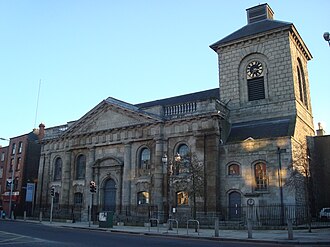
Dublin’s 18th-century execution sites are striking places where legal history, public spectacle and human tragedy intersect. For modern visitors they offer a tangible link to how justice was enacted, how communities responded, and how stories—both documented and imagined—have accumulated around particular streets, prison walls and churchyards. This guide maps traceable sites, separates archival evidence from folklore, and gives a practical, respectful walking route so you can see the traces of Dublin’s justice hauntings for yourself.
Why these 18th-century execution sites matter to modern visitors
The 18th century was a formative period for Dublin’s legal institutions. Public executions were not only punishment but also a form of civic theatre intended to deter crime and enforce social order. Today the physical city has changed: streets have been repaved, buildings replaced, and many execution sites are now occupied by modern properties. Yet the landscape still holds markers—old prisonyard walls, cathedral precincts, and burial plots—that anchor documentary records and oral traditions.
Visiting these places gives perspective on legal history, urban development and the ways communities remember trauma. It also raises ethical questions about memorialisation and the appropriateness of tourist curiosity—issues addressed later in this guide.
How justice worked in 18th-century Dublin: courts, prisons and public executions
Documented sources—court minutes, gaol registers, and contemporary newspapers—show that justice in 18th-century Dublin operated through a network of magistrates’ courts, the city’s assizes, and several prisons where people awaited trial or execution. Sentences ranged widely; capital punishment was applied for offenses considered severe at the time. Executions were commonly carried out publicly, often adjacent to the prison or at conspicuous urban sites.
Prison records from the era record names, charges and outcomes in uneven detail. Newspaper accounts and broadsides provide contemporary descriptions of executions and crowd behaviour, though they carry the editorial slant of their publishers. When reconstructing events, historians triangulate such documents rather than relying on any single source.
Verified sites and their legacies — what’s documented and what physically remains
Below are sites that can be visited today and what to expect in terms of documentary evidence and surviving fabric.
Newgate prison site (city centre)
Documentary evidence identifies the former Newgate prison as a focal point for trials and executions in the city. The exact prison structures are gone, but the location is traceable within the historic core of Dublin. What remains now are street patterns and later buildings that mark the area where detainees were held and where executions were witnessed by the public.
Dublin Castle precincts
Dublin Castle was an administrative centre and sometimes a place of confinement. Court proceedings connected to the Castle appear in the archival record, and the precincts retain medieval and later structures that give a sense of the administrative geography. The Castle’s public-facing spaces now invite visitors rather than the crowds that once gathered for grim spectacles.
Kilmainham and earlier gaol locations
Kilmainham has a long penal history. While the gaol most commonly visited today dates largely to later rebuilding phases, the site and surrounding precincts have roots in earlier seventeenth- and eighteenth-century incarceration practices. Records indicate prisoners were held and executed in the broader area; surviving walls and museum interpretation on site help connect physical remains to archival stories.
Historic burial grounds and churchyards
Victims of public executions, unclaimed prisoners and persons of limited means were often interred in nearby churchyards or designated burial grounds. Many of these burial places survive as churchyards or parkland, though headstones and markers may be fragmentary or later replacements. These spaces are crucial for researchers tracing names in burial registers and for visitors seeking a quieter site of remembrance.
Folklore and hauntings: separating legend from archival evidence
Haunting narratives are a powerful part of Dublin’s urban imagination. Ghost stories associated with execution sites typically involve sightings of figures, unexplained sounds, or sensations of being watched near old gaol walls and cathedral precincts. These accounts are valuable cultural materials: they tell us how communities process violent pasts.
However, folklore and archival records are different kinds of evidence. Archival documents—court records, gaol logs, burial registers—provide names, places and legal outcomes. Folklore preserves memory, emotion and moral lessons. A reported apparition does not equate to a documented execution, and a documented execution does not guarantee a linked ghost story. This guide keeps the two categories distinct: documented history where archives support it; folklore and legend where oral tradition and later retellings are the primary sources.
If you want to explore nearby legends after your justice-walking route, consider complementary themed walks such as the Temple Bar Hidden Alleys Night-Walk or the atmospheric St Stephen’s Green After‑Dark Legends walk. For churchyard shadow lore, read our Shadow Sightings at Whitefriar Street Church: A Visitor’s Guide.
Suggested walking route and practicalities
This route is designed to be walked in a half-day (2–3 hours) at a moderate pace. It focuses on traceable sites and avoids private property. Start in the city centre and move westward, following public streets and accessible churchyards.
- Begin at the Dublin Castle precincts — read plaques and observe the administrative layout.
- Walk toward the approximate site of Newgate prison in the city centre; use the street grid and interpretive markers to contextualise the location.
- Visit a historic churchyard nearby for burial-register context and quiet reflection.
- Finish with a visit to the Kilmainham precincts (allow transit time); view surviving walls and museum interpretation.
Timing: late morning or early afternoon avoids the evening rush and allows access to sites with daytime information displays. Accessibility: many streets are cobbled or uneven—wear comfortable shoes. Check access details for churchyards and museum opening times in advance. Photography: be respectful—avoid photographing mourners, memorial services, or sensitive gravestones up close without permission.
Visitor safety and ethical touring
These places are sites of real suffering. Consider these practices:
- Keep conversations subdued near burial grounds and memorials.
- Do not climb walls or enter restricted areas to get a better view.
- Avoid sensationalising remains or human tragedy in social media posts.
- Follow local rules posted at historic sites and obey site stewards’ instructions.
Memorialisation matters. If you encounter plaques, names or listed graves, treat them as focal points for reflection rather than props for entertainment. Ethical touring enhances understanding and respects descendants and local communities.
Further reading, archival sources and guided options
For researchers, primary sources include court minutes, gaol registers and contemporary newspapers held in local archives. Published local histories and museum displays often summarise these records for visitors. If you prefer an interpreted experience, expert-led walks provide context, read archival traces aloud and separate verified facts from folklore.
For private or group bookings—events, school groups or specialised research walks—contact our team for tailored routes and rate options at our private groups page: https://www.ghosttourdublin.com/
FAQ
What kinds of crimes led to public executions in 18th-century Dublin?
Contemporary court records show capital sentences for a range of offenses deemed serious at the time. Documentation is uneven, but felony-level crimes and offences against property or person were among those that could result in capital sentences. Archival sources—assize records and gaol registers—are the best place to confirm specifics.
Can I visit the exact locations where executions took place today?
In many cases the exact buildings no longer survive, but the street locations and precincts are traceable. Some execution sites are now under modern buildings; others survive as open spaces or churchyards with interpretive signage. Use this guide and on-site plaques to orient yourself.
Are the ghost stories at these sites backed by historical records?
Ghost stories and archival records serve different purposes. A documented execution provides the factual basis that a death occurred at a place; hauntings are matters of oral tradition and personal testimony. Both are meaningful, but they should be treated separately: archives for facts, folklore for cultural memory.
Is this walking route suitable for families or visitors with mobility needs?
Families can find the route educational, but some sections involve uneven surfaces and cobbles. Visitors with mobility needs should plan for alternative access: several sites have nearby paved approaches, but not all areas are wheelchair-friendly. Contact us for tailored routes and advice on accessible options.