
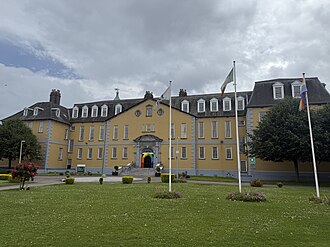
The Royal Hospital Kilmainham invites more than architecture and landscape; it invites the stories of the people who kept it running. For visitors drawn to history and to the uncanny in equal measure, understanding the lives of staff and gardeners matters: it grounds ghost stories in human labour and helps separate what is recorded from what has been embroidered in the dark. This article pairs archival realities with local lore so you can visit informed, curious and respectful.
Book a guided Royal Hospital Kilmainham ghost walk with Ghost Tour Dublin Experience
Documented history: the hospital’s staff, gardeners and day-to-day life (what archives tell us)
The Royal Hospital Kilmainham began as an institutional complex with many ordinary roles that sustained it: ward attendants, cooks, laundresses, craftsmen, maintenance hands and gardeners. While I will not invent names or precise dates here, surviving administrative records for buildings of this age typically include ledgers, payroll lists, maintenance orders and maps that show staffing patterns and routine tasks.
From those sorts of documents we learn the rhythms of daily life: food procurement and kitchens, laundry and infirmary care, fuel and heating, and the regular maintenance that large stone buildings demand. Equally important are estate maps and planting records, which reveal how gardens were tended, where paths were maintained and which parts of the grounds were cultivated versus left as lawns or meadow.
Visitors interested in archive-driven detail can often consult local repositories or published guides to the site to see how staff roles evolved. These are the materials historians rely on when they reconstruct the non-sensational, workaday life behind the facades.
The gardens and grounds: roles, layout changes and how staff shaped the landscape
The formal and informal planting around the hospital was not accidental. Gardeners and grounds staff designed, planted and maintained beds, hedges, lawns and service paths according to both aesthetic fashions and practical needs. Over decades, fashions and budget decisions altered the layout: orchards could be converted to lawns, kitchen gardens phased out, or decorative parterres reinstated.
Work records and estate plans — the kinds of documents most archives hold — can show changes in layout without requiring speculative leaps. More revealing are the small, human traces: maintenance orders for greenhouse repairs, payrolls that list gardeners, and visitors’ descriptions noting particular features such as a herb plot, a formal avenue or a seasonal bedding scheme.
Those practical decisions shaped how people moved through the grounds and where staff spent the most time — valuable context for anyone trying to imagine who might be associated with particular places when eerie stories arise.
Folklore and oral tradition: the spectral gardeners and staff apparitions (legend vs evidence)
Local oral tradition supplies the vivid imagery: spectral gardeners bent at phantom spades, apparitions seen at dusk by the riverbank, or a staffing figure glimpsed in a service corridor. These accounts are part of an oral landscape that overlays the factual one.
It is important to distinguish between folklore and evidence. Folklore is the body of stories passed between people, often over generations, and it explains the emotional life of a place. These tales may have kernels of memory — an accident, a notable dismissal, a well-known character — but they tend to expand in retelling.
By contrast, documentary evidence — payrolls, correspondence and maintenance logs — does not confirm apparitions. It does, however, confirm who worked where and when, which helps historians and guides root legends in the human realities that produced them. The most reliable approach acknowledges folklore’s cultural value while making clear where the paperwork stops and the storytelling begins.
How historians separate fact from folklore: records, testimonies and responsible storytelling
Good historical practice is cautious. Researchers combine archival searches with contemporary testimony, then assess reliability. Work ledgers and maps anchor the narrative. Eyewitness accounts and oral histories are treated as valuable but filtered: who reported the event, under what circumstances, and how many independent witnesses corroborate similar details?
Responsible public storytelling — like the tours we offer on Ghost Tour Dublin Experience — labels material clearly. Statements like “archival records show” or “local tradition says” are not rhetorical flourishes but signposts. When interpretations are uncertain, they are presented as possibilities rather than facts.
If you are interested in methodology, practical guides to ethical collection and presentation of oral history can help. For example, our resources on Ethical Oral-History Collecting for Dublin Ghost Bloggers — A Practical Guide explain how to record memories with respect and reliability.
On-site visitor guide: best times, viewing spots, respectful behaviour, and photo tips
Best time to visit depends on your aim. For clear photographs and close reading of architectural and landscape features, mid-morning to early afternoon light is ideal. If you are seeking atmosphere, late afternoon and dusk lend long shadows and a quieter site — but check access times before you plan a solitary dusk visit.
Suggested viewing spots: the formal facade and axial views for architectural context; areas of the gardens where service paths indicate staff work; and discreet spots near former service entrances where staff would have entered and exited. These locations help you visualise the staff’s daily routines without trespassing into restricted areas.
Respectful behaviour matters. Stick to public paths, obey signage, and keep voices low in areas of reflection. If you join an organized walk, follow your guide’s instructions about safe vantage points and permitted photography. For tips on managing payments and contactless procedures while on a ghost walk, see our practical piece on Contactless Payments for Dublin Ghost Walks — Practical Guide.
A short tour script: how to present these stories on a Ghost Tour Dublin Experience walk
Below is a concise script adaptable to small groups. Use it as a structure, not a performance text. Keep the tone atmospheric, but flag the line between record and story for your listeners.
Start at the main approach: “As we stand here, notice the symmetry and the service doors that once admitted staff more than visitors. The records we rely on show a workforce that kept kitchens warm, laundry turning and paths maintained.”
Move to a garden vista: “Here, gardeners would have worked behind screens and hedges. Local tradition tells of late-night figures continuing to tend the beds after hours — a tale that speaks to how much of this place’s identity rests on labour.”
Conclude with a reflective note: “We balance two kinds of evidence tonight: documents that tell us who worked here and oral stories that reveal how the place felt to people over time. Both are worth our attention, but only one can be verified on paper.”
For advice on shaping short narratives for audiences in relaxed settings, consult How to Structure a Short Pub Storytelling Session for Dublin Audiences.
Practical details and booking: accessibility, ticketing tips, and where to book a guided visit
Accessibility varies across historic sites. Some pathways are uneven and may not be suitable for wheelchairs. If accessibility is essential to your visit, contact the site in advance and confirm accessible routes. Our guided walks also aim to be inclusive; contact us directly if you have specific requirements.
Ticketing: buy in advance during busy seasons or on event evenings. Consider weekday visits for fewer crowds. Ask about combined tickets or guided options that focus on staff and gardens if that is your interest.
Book a guided Royal Hospital Kilmainham ghost walk with Ghost Tour Dublin Experience
For private groups and tailored walks — schools, corporate teams, or family gatherings — we can arrange specialist content and times. Learn more about private bookings and group options on our private groups page or contact us directly to discuss a tailored itinerary: Private group bookings.
Further reading and related sites
If you want to expand your exploration of Dublin’s labour-linked legends and burial ground lore, our guide to Glasnevin Cemetery: Gravedigger Legends and Night Tales — A Visitor’s Guide offers related context. For subterranean atmospheres and settings shaped by workers and forgotten spaces, see Dublin underground vaults and forgotten cellars: A visitor’s guide.
FAQ
Are the spectral gardener stories at Royal Hospital Kilmainham true?
“True” depends on the category. As paranormal events, they are part of local oral tradition and personal testimony. As empirically verifiable incidents, they are not supported by archival records. Both forms of truth — emotional and documentary — matter to how people experience the place.
Can I visit the grounds of Royal Hospital Kilmainham after dark?
Access rules change by season and event. The site sometimes hosts evening events and private hires; public after-dark access is limited and may require a ticket. Always check official opening times and event schedules before planning a nocturnal visit.
Do guided tours focus specifically on staff and gardener stories?
Some guided walks do focus on staff histories and landscape labour; others emphasise architecture or broader hauntings. If you want a tour that prioritises staff and gardener stories, request that focus when you book so the guide can prepare tailored material.
Are there restrictions on photography or filming inside the hospital grounds?
Photography policies vary. General exterior photography for personal use is usually permitted, but tripods, commercial filming, drones or flash in sensitive areas may be restricted. Follow signage and guide instructions, and ask permission for organised or commercial filming.