
Casino at Marino at Midnight: Statues, Legends & Night Visitor Guide
The Casino at Marino, a compact neoclassical folly tucked into a quiet Dublin suburb, has long attracted evening strollers and ghost-walkers because of its elegant stonework, hidden details and the curious myths about statues that appear at midnight. This guide separates the documented 18th-century architecture from local folklore, explains what you can realistically see after dark, and gives practical advice for including the site in a commercial ghost tour or history walk.
Book the Ghost Tour Dublin Experience — Night Tours & Casino at Marino Visits
Why Casino at Marino fascinates night walkers — what to expect
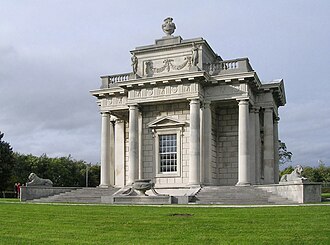
The Casino at Marino reads like a miniature temple dropped into a Dublin streetscape. By day it rewards careful inspection: carved capitals, classical proportions, and optical tricks. By night those same precise lines and shadowed niches trigger imagination. Expect quiet streets, low-level park lighting, limited viewing points, and a building that looks different as light and shadow shift.
Verified history in brief
Documented facts about the Casino at Marino are mainly architectural. It is an 18th-century neoclassical garden building built for the Earl of Meath as part of the Marino estate. The structure is renowned for its classical vocabulary and compact elegance.
Architectural attributions and influences are discussed by historians rather than settled with a single name. Thomas Ivory is associated with Georgian Dublin architecture and appears in the wider context of the period. The neoclassical approaches visible at the Casino also reflect the general influence of prominent architects such as James Gandon on Dublin’s late-Georgian appearance. When planning a tour or interpretive script, present these connections as stylistic context rather than as a definitive claim of single authorship unless you rely on primary archival evidence.
The documented record focuses on craftsmanship: carved stonework, classical ornament, and the building’s role as an architectural curiosity rather than a residence. For visitors, this means the site’s significance is visual and material rather than literary or famously political.
The statues at midnight: description, placement, and the real architectural purpose
Close inspection reveals several sculptural elements and reliefs positioned around the Casino’s exterior: small figures, masks, and ornamental pilasters set in niches or on pedestals. By daylight these elements are part of the building’s coherent classical decoration.
Architecturally, these figures serve decorative and proportional purposes. They break up flat surfaces, balance fenestration, and add literal focal points for a compact building that borrows from temple-like models. Many such statues on garden follies were carved to reflect classical themes or to demonstrate the patron’s taste for antiquity.
At night, under streetlamps or torchlight, those same carved figures throw long shadows and take on unfamiliar silhouettes—this is the plain reason they figure in ghost stories.
Midnight legends vs documented record
Local stories about the Casino at Marino fall into two categories. First are the atmospheric, sensory tales told by night-walkers: figures that seem to shift in the corner of your eye, whispered footsteps, or an odd breeze near a niche. Second are more specific claims sometimes repeated on tours: statues that move, figures that appear at a particular hour, or ghostly processions.
What the documented record shows is different. There is no verified archival or physical evidence of statues moving on their own, nor of repeatable supernatural phenomena tied to a specific hour. The building’s history is architectural; most claims of apparitions are oral traditions or recent folklore amplified by night-time imagination. That does not make them uninteresting—folklore has value for cultural interpretation—but it does change how you present the stories.
How the legends arise: visual ambiguity in low light, the building’s classical iconography, the thrill of a quiet overnight landscape, and the human habit of telling stories that conflate sensation with agency. For tour operators and visitors alike, the responsible approach is to label these stories as folklore or legend when there’s no empirical support, while still using them to enhance atmosphere and engagement.
Visiting after dark: permissions, opening hours and preservation
The Casino sits within a protected context. As a heritage structure—not a public, open museum—access after dark is constrained by park and site regulations. In most cases you can view the Casino from public pathways after hours, but you cannot enter the building without permission from the custodial authority.
If you plan to include the Casino at Marino on a commercial night tour, secure permissions in advance. That may involve local council or heritage body approvals, especially if you intend to lead groups onto estate grounds, use amplified narration, or deploy lighting and tripods. See Securing Permits and Funding for After‑Dark Dublin Tours for guidance on permits and funding pathways.
Preservation considerations matter: avoid touching sculpture, do not use strong direct lighting that could heat or damage stone, and discourage leaning on or climbing the structure. Conservation rules may restrict close-up photography, tripod use, or large gatherings—always confirm current conditions with the responsible heritage authority.
Practical tips for a night visit
Lighting: Bring a small, warm-toned torch to read plaques or examine details; avoid bright white flash that conceals nuance and upsets other visitors.
Photography: Use a stable camera platform if allowed; long exposures capture details without requiring flash. Check local rules—tripods and professional equipment are sometimes restricted without permits.
Safety and visibility: Wear reflective clothing and good footwear; paths may be uneven and signage minimal after dark. Keep groups to manageable sizes to avoid path-blocking and to preserve atmosphere.
Weather: Dublin evenings can be damp and windy. Layered clothing, waterproofs, and footwear with grip are sensible. If rain is heavy, consider rescheduling — wet stone and low light reduce the visitor experience and increase risk.
Group sizes: For interpretive quality and minimal site impact, groups of 10–20 people work best. For private or commercial tours, consider a runner or assistant to manage traffic and safety while the main guide narrates.
How to include Casino at Marino in a commercial ghost or history tour
Logistics: Confirm start and end points, parking or public-transport links, and permissions for any operational equipment. Position the Casino as a focused stop rather than the sole attraction to reduce pressure on the site and to allow for rotational scheduling of groups.
Narrative hooks: Use three layers in your script—documented architectural facts, documented social context (the Marino estate and Georgian Dublin), and local folklore or legend clearly labeled as such. An effective sequence: introduce the architecture, invite close observation (what to look for), then offer a short, atmospheric folktale framed as tradition rather than fact.
Ethical storytelling: Be transparent with audiences about what is documented and what is oral tradition. This preserves your credibility and respects heritage professionals. For operators wanting to develop deeper programming, see How to Apply for Heritage Grants for Dublin Dark Tourism Projects and Merchandising Ideas for Dublin Ghost Blogs for ideas on funding and products that can extend the visitor experience.
Accessibility and inclusivity: Offer clear content warnings and alternatives for those who prefer purely historical walks. Consider daytime educational offerings or audio-only night routes for visitors with sensory sensitivities.
Further resources and suggested next stops
Pair a Casino at Marino stop with nearby evening attractions that balance architecture and folklore. The Iveagh Gardens offer a quieter, garden-based contrast—see Iveagh Gardens After-Dark Whispers: Folklore Walk, History & Visitor Guide for a complementary route. For more ecclesiastical atmosphere and bell-tower lore, St Audoen’s Church bell-tower apparitions: A visitor’s guide to history, sightings & tours is a useful next stop.
For operators planning product lines around night tours and blogs, consult Merchandising Ideas for Dublin Ghost Blogs: Products, Pricing & Tour Tie‑Ins. And if you are building a funded after-dark project, Securing Permits and Funding for After‑Dark Dublin Tours and How to Apply for Heritage Grants for Dublin Dark Tourism Projects are practical starting points.
If you want to experience a guided night tour that blends careful history with atmospheric storytelling, consider booking a professional tour. Book the Ghost Tour Dublin Experience — Night Tours & Casino at Marino Visits for scheduled public tours and evening departures that include sensitive, research-based narration of sites like the Casino at Marino.
Private groups and corporate bookings are available—contact our private events team to arrange a tailored evening that respects permissions, conservation and the narrative balance between history and legend. Book the Ghost Tour Dublin Experience — Night Tours & Casino at Marino Visits
FAQ
Is Casino at Marino open to visitors at night?
The Casino itself is not generally open for unsupervised entry after hours. You can view it from public paths at night, but interior access and close-up approaches may require prior permission from the custodial authority or be part of an organised visit.
Are the ‘midnight statues’ described in ghost stories real, and do they move?
The statues and sculptural elements at the Casino are real architectural features. Claims that they physically move are folklore without documented evidence. Low light and shadow create illusions that fuel such stories, which are best presented as local legend rather than verified phenomena.
Do I need permission to include Casino at Marino on a commercial night tour?
Yes. If your tour plans to congregate near the building, bring equipment, or lead groups onto estate grounds after hours, obtain the appropriate permits and approvals. For guidance on funding and permits see Securing Permits and Funding for After‑Dark Dublin Tours.
Is night photography allowed and are there restrictions to protect the site?
Photography from public paths is generally allowed; however, restrictions may apply to tripods, professional lighting, or intrusive equipment. Check with the site’s custodians before bringing professional setups to avoid damaging stonework or contravening conservation rules.