
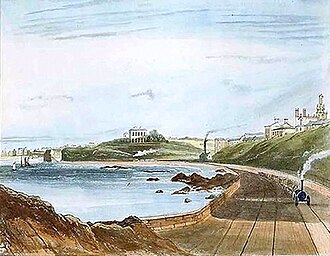
Blackrock Village sits where sea, suburb and old village meet — a compact stretch of harbourfront, narrow lanes and long-lived pubs that changes character as the light softens. At twilight the usual commuter rhythm eases and the village’s maritime past, community memory and whispered tales become easier to hear. This guide blends verifiable elements of Blackrock’s darker past with the folklore that grew around them, then gives a practical evening route, safety notes and booking details for those who prefer a guided Ghost Tour Dublin Experience.
Book your Blackrock twilight walk with Ghost Tour Dublin Experience
Why Blackrock at twilight?
Twilight accentuates edges — the meeting of land and water, the line between carved stone and modern glass. In Blackrock that liminal quality amplifies both history and story. The village is compact and walkable, with public transport links close by, which makes it an ideal dark-history stop for a short evening walk.
The atmosphere is not just theatrical. Low light softens the modern interventions and highlights older materials: harbour walls, stone church foundations, and narrow streets where generations of local life took place. For visitors interested in maritime incidents, community memory and how living places collect stories, this is a setting where the two strands — fact and folklore — are easy to distinguish if you know what to look for.
Documented past: maritime roots, 19th–20th century community life and verifiable incidents
Maritime roots
Blackrock’s identity has long been tied to the sea. Harbour structures, quays and records of shipping activity point to a village connected to coastal trade and small-scale fishing. Verifiable evidence for maritime life comes from contemporary newspaper reports, port logs, parish records and historic maps — the kinds of sources historians consult to reconstruct incidents without relying on oral retellings.
19th–20th century community life and verifiable incidents
Like many Dublin suburbs that grew into villages and commuter towns, Blackrock has archived records of births, deaths, local governance and occasional incidents reported in the press. These records document drownings, storms that damaged harbour infrastructure, and industrial shifts that altered employment patterns. Historians and archivists corroborate such facts through newspapers, parish registers and municipal minutes rather than memory alone.
How historians source these facts
When we describe the documented past we rely on primary sources: contemporary newspapers, parish and civil registers, Ordnance Survey mapping and municipal archives. These materials give clear evidence of events where available; where records are missing, historians note the absence rather than invent a narrative. That is why in this guide we separate named records from local folklore.
Where folklore fills the gaps
Communities develop oral traditions to explain loss, to mark danger or to entertain. In Blackrock the coastline and the village’s compactness have produced a set of repeating motifs: ghostly figures near the water, inexplicable lights on stormy nights, and stories of grief-struck locals who haunt particular lanes.
These tales are valuable cultural material. They tell us what mattered to people — safety, loss at sea, and the authority of certain places (churchyards, harbours, pubs). But they are not the same as documentary evidence. We flag them as folklore or legend when they derive from oral tradition and local retelling rather than archival record.
Examples you may hear on the street include accounts of a lamenting figure seen near the shore or a “lantern” that appears before bad weather. These motifs are common in maritime communities across the British Isles and show how shared fears and imaginations find local forms. We present such stories as part of the living culture — not as historical certainties.
Evening highlights — a suggested 45–75 minute walking route
This route is timed for a deliberately slow twilight pace. Wear sensible shoes, bring a light jacket and a small torch if you prefer. The loop is designed to be adjustable between 45 and 75 minutes depending on stops.
- Start: Harbourfront promenade. Begin where the village meets the sea. Pause at the water’s edge to consider documented accounts of harbour incidents and how the sea shapes community memory.
- Pause: Lookouts and old quay walls. Move along the quay to where older stonework meets newer railings. This is a good spot to compare archival descriptions of coastal works with the present fabric.
- Main Street stroll. Head into the village centre, following the main pedestrian route. Take time to notice building lines and surviving shopfronts that hint at nineteenth‑century life.
- Edge of the churchyard. Approach the parish church perimeter (observe visiting hours and respect any services). Church registers and burial markers often anchor verifiable local histories; just outside the gates is where many folkloric accounts locate boundary apparitions.
- Historic pub frontages. End the route by passing a cluster of long-established pubs. These are living repositories of oral history where community memory is kept and reshaped.
At each pause, contrast what is documented (harbour repairs recorded in council minutes, parish registers, newspaper reports) with the stories you hear from passersby or in the pubs. That contrast is the point of a twilight visit: to see how history and storytelling inhabit the same places.
Pubs, oral histories and living memory: responsibly engaging with storytellers and proprietors
Pubs are not museums. They are workplaces and social spaces where memory is shared. If you want to record or expand on a story, ask permission before photographing, recording or publishing someone’s recollection. Proprietors may be happy to chat but also value discretion and respect for privacy.
Oral history projects require consent and context. If you are thinking of a deeper research project — or a community heritage initiative — see resources on funding and heritage support such as How to Apply for Heritage Grants for Dublin Dark Tourism Projects for practical guidance.
Practical visitor information: getting there, best twilight hours, safety, weather, and accessibility
Getting there: Blackrock is served by local buses and suburban rail routes that bring you within easy walking distance. Parking exists but can be limited during evenings and weekends.
Best twilight hours: Aim to arrive about 30–45 minutes before sunset so you can use daylight to orient yourself, then let the first hour of twilight frame the walk. In summer this can be late; in winter it will be earlier in the afternoon.
Safety and lighting: Main routes and the harbourfront are lit, but some alleys and older lanes may be dim. Bring a torch and wear shoes suited to uneven surfaces. Keep to populated routes if you prefer well-lit paths. If you plan to wander off the suggested loop, tell someone your plan.
Weather: Coastal evenings are often chillier and windier than inland areas. Layers, windproof outerwear and water-resistant footwear are sensible. Check local forecasts before you go.
Accessibility: The village has accessible sections, but the harbour edge and older lanes may include steps, cobbles or narrow footways. If mobility is a concern, consider a shorter route confined to main streets or book a guided tour where the guide can tailor the route to needs.
Joining a guided experience: what Ghost Tour Dublin Experience offers, booking tips and what to expect
Ghost Tour Dublin Experience runs focused twilight walks that blend documented local history with folklore in a way that clearly separates the two. Guides draw on archival knowledge and local interviews to offer context, and tours are run in small groups to keep visits respectful and manageable.
What to expect: a personable guide, careful signposting between documented fact and oral tradition, indoor pauses where possible, and safety-minded pacing. Tours are suitable for adults and older children accompanied by guardians; guides can advise on accessibility when you book.
Booking tips: Twilight tours are popular on weekends and during mild-weather months. We recommend booking in advance to secure your preferred date and to let the guide prepare for any accessibility needs.
Book your Blackrock twilight walk with Ghost Tour Dublin Experience
For private groups or tailored walks (companies, schools, or local heritage projects) we also offer bespoke bookings — contact us via our private bookings page for details on group options and custom itineraries: private group bookings.
If you want to explore related after-dark walks in Dublin, we link village-scale folklore to wider city stories: see our guides such as Rathmines Shadowed Terraces, the nighttime look at public sculpture in Casino at Marino at Midnight, and garden whispers in Iveagh Gardens After-Dark Whispers. For churchyard-related accounts see St Audoen’s Church bell-tower apparitions for how local reports are treated alongside archival evidence.
FAQ
Is it safe to visit Blackrock Village at twilight and are the suggested routes well lit?
Yes: main thoroughfares and the harbourfront are generally lit and well used in the evening. However, some side lanes and older quay edges are dimmer. Use common-sense precautions: travel with company, carry a small torch, and stick to populated routes if you prefer more light.
Which parts of the Blackrock stories are documented history and which are local folklore?
Documented history is drawn from newspapers, parish registers, municipal records and maps — for example, reports of harbour damage or recorded deaths. Local folklore consists of oral tales passed between residents (ghostly figures, lanterns on storm nights) and is presented as cultural material rather than archival fact. Guided walks will point out which is which.
How long is a typical Blackrock twilight walk and is it suitable for children or mobility-impaired visitors?
Typical walks run between 45 and 75 minutes depending on stops. They are suitable for older children with guardians, and many segments are accessible. If mobility is a concern, contact Ghost Tour Dublin Experience when booking so the guide can adapt the route and pace.
Do I need to book a Ghost Tour Dublin Experience in advance and what does a guided twilight tour include?
Advance booking is recommended, especially for weekend evenings and group bookings. A guided twilight tour includes an informed guide who separates recorded history from folklore, a paced route that highlights harbour and village features, safety-conscious planning and options for private or tailored groups.