
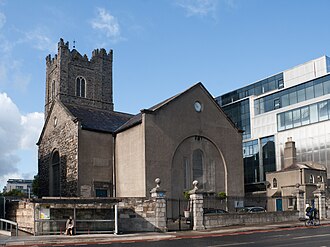
St Audoen’s Church bell-tower apparitions: A visitor’s guide to history, sightings & tours
St Audoen’s Church, tucked beside the bustle of medieval Dublin lanes, is one of the city’s best-known sacred sites—and its bell tower has long been the focal point of whispered stories about apparitions. This guide separates what is documented about the church and tower from folklore, compiles the kinds of eyewitness reports that circulate locally, and gives practical advice for visiting, photographing and experiencing the site with a responsible guide.
At a glance: St Audoen’s Church and its bell tower — documented history and architectural notes
Documented history: St Audoen’s is a parish church with deep medieval roots and an established role in Dublin’s ecclesiastical record. The surviving building shows phases of repair and alteration consistent with churches used continuously over centuries. Parish records, conservation reports and the local civic inventory record the church as an important medieval foundation in the northend of the old city.
Architecture: The bell tower is a prominent vertical element in a compact urban setting. Its masonry, window openings and internal timberwork reflect multiple building phases; repairs and restorations are part of the tower’s visible fabric. Visitors should expect a building that combines original medieval structure with later interventions typical of a working parish church.
The apparitions reported at the bell tower — eyewitness accounts, types and how to evaluate them
What people describe: Eyewitness reports connected to St Audoen’s bell-tower apparitions fall into categories rather than precise, repeatable events. Common descriptions include shadowy human forms seen near tower windows, the sensation of being watched near the tower after dark, unexplained bell-like sounds when the bell is not being rung, and sightings of a robed figure on the tower stair or landing.
Sources of reports: These accounts come from a mix of oral tradition, local walking-tour anecdotes, personal blogs and occasional media pieces. Many are first-person recollections passed between locals and visitors rather than detailed archival testimonies. That doesn’t make them irrelevant—it does mean each claim needs corroboration.
How to evaluate an eyewitness claim:
– Consider proximity: Was the witness close enough to identify details clearly?
– Check corroboration: Were there multiple independent observers?
– Look for physical evidence: Are there consistent photographic or audio records? If existing, are they high-quality and repeatable?
– Rule out natural causes: Old buildings creak, stonework cools and heats, and street noise can be misleading. Bells can ring due to wind, mechanical faults or scheduled service practice.
Folklore vs. record: distinguishing legend from archival or parish evidence
What is documented: The church’s foundation, architectural changes and role in parish life are supported by parish inventories and city conservation records. Facts such as the presence of a bell tower, its structural repairs and its place in the urban fabric are part of the historical record.
What is folklore: The more dramatic elements—narratives of a single recurring ghostly bell ringer, apocalyptic portents, or precise spectral identities—are typically part of folklore. They evolve with retelling and often absorb details from wider Dublin legends. Folklore explains how communities process old places and can be culturally valuable without being historically verifiable.
How Ghost Tour Dublin Experience treats both: Our approach is to present documented history clearly and to frame folklore as cultural narrative. When guides tell the bell-tower stories, they clarify which elements are supported by parish records and which belong to oral tradition. That distinction gives visitors the full flavour of the site while keeping claims transparent.
Visitor access: opening hours, entry points, permissions and what you can actually see
Public access: St Audoen’s is an active parish church. Like many such sites, public access varies with services, maintenance and parish schedules. The nave and churchyard are usually viewable during daylight when the church is open; interior access and tower visits depend on staffing and safety checks.
Bell tower access: Entry to the bell tower is generally restricted. Tower stairways are narrow and can be unsafe for unsupervised public access. If you wish to see the tower interior or the landing associated with reported sightings, contact the parish office in advance or book a guided visit where access has been cleared.
Permissions and courtesy: Respecting rules protects both visitors and heritage fabric. Do not attempt to climb or enter the tower without express permission. For operators planning after-dark visits, formal permission and permits are essential—see resources such as our notes on Securing Permits and Funding for After‑Dark Dublin Tours for guidance on responsible practice.
When to go and what to expect on a guided visit — including how Ghost Tour Dublin Experience approaches St Audoen’s
Best time to visit: For general sightseeing, daytime hours when the church is open are best for architectural appreciation and photography. For atmospheric storytelling, evening tours can be evocative—but require confirmed permission and a reputable guide.
What a Ghost Tour Dublin Experience visit includes:
– Historical context: We present the documented record of St Audoen’s alongside parish and civic history.
– Clear sourcing: Guides explain which elements are verifiable and which are local legend.
– Responsible storytelling: Folklore is shared with respect for the site and its community.
– Access where possible: We can often arrange closer views of the tower or interior with parish agreement; however, access cannot be guaranteed and is always subject to safety checks.
Expect honest framing: If a claim is purely folkloric, your guide will say so. If there is recorded parish or civic evidence, that will be pointed out too. This is part of what makes the Ghost Tour Dublin Experience suitable for visitors who want atmosphere without losing the historical thread.
Practical tips for visitors: safety, respectful behaviour, photography and recording etiquette
Safety first: The church and tower are old structures—follow posted instructions, avoid restricted areas, and do not attempt to climb stairs or openings that are closed. Wear sensible footwear for narrow steps and uneven floors.
Respectful behaviour: St Audoen’s is an active place of worship. Keep noise to a minimum, avoid disrupting services, and be mindful of parishioners and nearby residents. If you encounter clergy or staff, ask politely before taking photos inside.
Photography and recording: Exterior photography is straightforward. Interior and tower photography may require permission. Use silent camera modes and avoid bright flash during services. For paranormal investigators: bring a clear brief of intentions to the parish and obtain written permission; ad hoc probing is not appropriate and can lead to access being withdrawn.
Equipment tips: If you hope to capture low-light images, bring a tripod only if permitted and compact LED lighting rather than flashes. Always ask before positioning equipment that might block a doorway or aisle.
Nearby sites and suggested walking route to extend a haunted-church themed visit in Dublin
Suggested short route: Start at St Audoen’s, then walk to the nearby medieval quarter to visit other historic ecclesiastical sites and ruins. A compact themed route could include St Audoen’s, the nearby monastic remains at St Mary’s Abbey and the historic civic lanes that link to the cathedral quarter.
Extend your exploration: From the church you can continue to St Mary’s Abbey Ruins: Monastic Echoes and Sightings — Visitor Guide for context on monastic Dublin. For a longer atmospheric walk that reaches the coast at twilight, consider the Dun Laoghaire Pier Twilight Apparitions Walk — Visitor Guide & Tour Info as an extension by public transport.
Contextual reading: For visitors interested in how place and story intersect in Dublin, our pieces on Decoding Dublin Street Names Linked to Crimes and Hauntings and merchandising ideas for sharing ghost stories responsibly with visitors can be useful follow-ups.
For private groups or bespoke visits, including after-dark arrangements where permitted, contact us to discuss options and requirements: Book the Ghost Tour Dublin Experience for private-group enquiries and specialised access.
FAQ
Are the bell-tower apparitions at St Audoen’s Church historically documented or just legend?
Short answer: both. The church and tower are historically documented in parish and civic records. The apparitions themselves are primarily part of local oral tradition and visitor reports; some accounts are consistent in theme, but the specific, repeatable phenomena are generally folkloric rather than established historical fact.
Can visitors enter St Audoen’s bell tower and see the locations associated with sightings?
Generally, tower access is restricted for safety. Interior or tower visits may be possible by arrangement with the parish or as part of an authorised guided visit, but you should not assume open access. Contact the parish or book a guided tour in advance to request permission.
Is it safe to visit St Audoen’s at night and are guided tours available?
Daytime visits are straightforward; after-dark visits require permits and prior agreement. Walking around the church exterior at night is similar to any urban area—use caution, stay in well-lit public areas and avoid trespassing. Guided tours that operate after dark do so under permit and with safety protocols; check with the tour operator before booking.
Will Ghost Tour Dublin visit St Audoen’s Church and include stories about the bell-tower apparitions?
Yes. The Ghost Tour Dublin Experience visits or points out St Audoen’s as part of relevant routes and includes both documented history and the bell-tower folklore. Where parish permission allows, guided visits may include closer inspection of the church and, occasionally, arranged access to areas not normally open to casual visitors. Book in advance to confirm what is included.