
Blackpitts Old‑Brewery Apparitions and Industrial Echoes — A Visitor’s Dark History Guide
Blackpitts is a pocket of Dublin where industrial past and present-day repurposing meet in narrow streets, leftover brick façades and the rhythm of traffic that now replaces horse‑drawn carts. For visitors curious about “industrial echoes” — the residual sounds, smells and atmospheres that linger where heavy trades once clustered — Blackpitts offers a compact but layered experience. This guide separates what is documented in archives from what belongs to oral tradition, and gives practical advice for experiencing the area safely, respectfully and with an informed eye.
Book the Ghost Tour Dublin Experience to explore Blackpitts after dark
Introduction: Why Blackpitts matters — industrial Dublin and modern day atmosphere
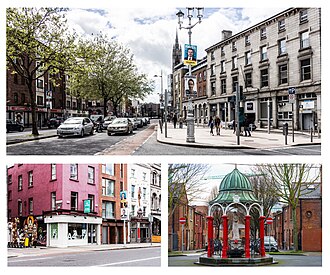
Blackpitts was part of Dublin’s working-industrial fabric: breweries, cooperages, small factories and workshops that serviced the growing city. Many of those trades are gone or transformed, but their spatial imprint remains. Cobble patterns, yard entrances, and tall brick walls still read as an old production landscape. At night, with shopfronts closed and modern lighting softened, the area can feel like a stage set for the past — and it’s this twilight transition that attracts walkers seeking atmosphere more than spectacle.
Documented history: The brewery, workers’ lives, maps and archival traces
The core of Blackpitts’ story that is verifiable comes from business and municipal records, historic maps and newspapers. These documents record commercial activity: breweries and related trades occupied large plots, and the streets served as logistical arteries for goods and labour.
Employment patterns, complaints about working conditions, planning notices and reports of industrial accidents appear in archival holdings. Those records help reconstruct the scale of activity and the human labour behind it, even when individual names or stories are scarce. Looking at historic maps and property registers clarifies which yards and buildings were part of brewing and allied industries, helping to orient present-day visitors to the layout of past operations.
When you walk the area with that documentary frame in mind, the remnant footprints — loading doors, small side alleys, and former warehouse façades — begin to make sense as practical structures rather than merely picturesque ruins.
Physical remnants today: What to see on the streets, surviving buildings and urban archaeology
Much of what survives is architectural and infrastructural: stout brick buildings with narrow windows, larger warehouse frontages converted into apartments or studios, and the alleyways that once linked yards. Surface evidence of industrial use — scuffed stone thresholds, marked brickwork, patched walls — speaks to heavy activity.
Urban archaeology in a working city like Dublin is often piecemeal. You may spot sealed cart entrances, loading bays repurposed as garages, and traces of signage embedded in masonry. These are the kinds of details to look for on foot: they tell a factual, material story about how goods moved through the neighbourhood.
Public access varies. Many attractive features are visible from the street, but some inner yards and private courtyards are on private property. Respect clear signage and fenced-off areas; intrusive entry both breaches property rights and risks unstable surfaces.
Recorded incidents vs. legend: Distinguishing archival records (accidents, fires, labour disputes) from oral tradition
There are two separate—but interrelated—threads to what people point to as “evidence” of Blackpitts’ darker side. The first is the documented record: workplace accidents, fire reports, and labour disputes that appear in municipal or press records. These are part of the hard history of industrial life and are verifiable in archives.
The second thread is oral tradition: stories passed between workers, residents and later visitors. Legends often grow out of facts — a serious fire or a tragic workplace death can become a ghost story over time — but the folklore frequently adds sensory and personal detail that the records do not provide.
As a visitor, it is useful to keep the two categories separate. A gas explosion or a documented fatality is different in kind from a recurring tale of a solitary brewer’s shadow seen near a back door. Both are meaningful: one anchors the site in social history, the other reveals how communities have remembered and reinterpreted that history.
Apparitions and industrial echoes: Reported sightings, sensory folklore (sounds, footsteps, machinery) and how folklore evolved
Accounts of apparitions at Blackpitts tend to emphasize sensory phenomena as much as visual sightings: the imagined clank of machinery, phantom footsteps in an empty yard, the trace smell of malt or yeast on a windless night. These “industrial echoes” are a category of folklore where memory, atmosphere and expectation combine.
In many retellings, the setting itself is a character. Narrow alleys amplify footsteps; blank brick walls store sound differently than domestic interiors; heat moving through a former furnace room can create subtle drafts that people notice at odd moments. Sensory expectations — the idea that a place once noisy with industry should still feel noisy — prime witnesses to interpret ordinary urban sounds as something uncanny.
Over time, tales have accumulated local variants: a figure in a flat cap near a specific loading bay, or repeated reports of a rhythmic tapping that correlates with a particular night. These details rarely appear in archival files, but they are valuable cultural material that tells us how the past is lived in memory. When guides or storytellers repeat these accounts, they are sharing folklore, not new documentary evidence.
Visiting tips for tourists: best times, routes, safety, permissions and photography advice
Best times: twilight and early night are when atmospheric cues are strongest, but plan visits on well-lit evenings and avoid unlit alleys alone. Weekdays can be quieter and more contemplative; weekends may be busier with late-night traffic.
Routes: follow streets with visible industrial features and avoid private yards unless they are explicitly open to the public. A route that links Blackpitts to neighbouring walking circuits offers context; consider pairing the walk with other themed routes such as the Mountjoy Square Ghost Trail or the Ranelagh After‑Dark Folklore Walk to see different urban layers.
Safety and permissions: stay on public ways, heed signage and never force entry. Some façades may look enticing but are structurally unsound. If you want to photograph or record, make sure you are not blocking access or intruding on private property.
Photography and audio: low-light photography benefits from a tripod or stabiliser and modest external lighting; the practical guide to lighting for night tours offers straightforward recommendations. Be mindful of other visitors’ privacy and the neighbourhood’s residents when using bright flashes or extended recording sessions.
How to experience it with Ghost Tour Dublin Experience: what our guided night walk emphasizes and what visitors can expect
Our guided night walk focuses on interpretation that separates documented history from folklore. Guides point out verifiable industrial features and explain their function, then offer contextualised folklore — reported apparitions and sensory accounts — while clearly labelling them as oral tradition. The aim is to give visitors both factual grounding and the chance to experience atmosphere safely.
Expect a measured pace designed for observation: stops at key façades, explanations of archival references where they exist, and time to listen for “industrial echoes” in the quieter parts of the route. Guides carry practical gear for low-light conditions and encourage responsible photography. The walk is atmospheric rather than theatrical: history first, speculation framed transparently.
Final practical notes and responsible visiting
Blackpitts rewards a slow approach. Take time to notice material traces and listen; bring a warm layer and practical footwear for uneven pavements. If you are researching the place further, consult municipal records and historic maps rather than relying solely on repeating oral tales. That approach will help you appreciate both the concrete labour history and the folklore that grew around it.
Book the Ghost Tour Dublin Experience to explore Blackpitts after dark
For private group bookings, tailored walks and corporate or educational visits, we can arrange bespoke tours. Contact our bookings team to discuss routes and access for groups: Private groups & bookings.
For further reading on related themes, guides and equipment, see our quick reference on urban ghost motifs, lighting recommendations for night tours, and other local trails. These include Cataloguing Dublin’s Urban Ghost Motifs: A Quick Reference for Guides & Visitors, Affordable Lighting Gear for Dublin Night Tours — Practical Guide for Guides & Visitors, Mountjoy Square Ghost Trail — Georgian Squares After Dark, Ranelagh After‑Dark Folklore Walk: Village Legends, History & Visitor Guide and Gaiety Theatre phantom performer stories: History, legends & visitor guide.
FAQ
Can I visit the old brewery remains at Blackpitts on my own or are guided tours recommended?
You can view many features from public streets and sidewalks, but guided tours are recommended for context, safety and access to interpretive knowledge. Guides can point out archival details you might otherwise miss and will keep the group on safe public routes.
Are the reported apparitions at Blackpitts documented in historical records or mainly folklore?
The apparitions and sensory reports belong mainly to folklore and oral tradition. Documentary records do show industrial accidents and disputes, which sometimes become the kernel of later ghost stories, but the apparition accounts themselves are not part of official archives.
Is it safe to explore Blackpitts after dark and are there access restrictions?
Exploring after dark can be safe if you stick to well-lit public routes, travel in a group and avoid fenced or private areas. Some yards and buildings are private and closed to the public; always respect signs and barriers to avoid trespass or hazards.
Can I take photos or record audio during a night walk to capture the ‘industrial echoes’?
Yes, but be respectful. Use steady equipment for low light, avoid intrusive lighting that disturbs residents, and get permission if you enter non-public spaces. Guides can advise on good vantage points and photography etiquette.