
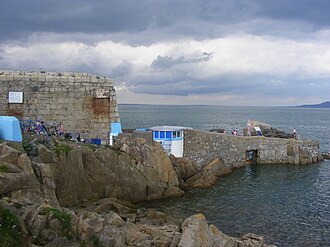
Forty Foot, Sandycove — Shoreside Apparitions and Swimmer Tales
Forty Foot at Sandycove is more than a rocky promontory and a sea‑cut bathing spot; it is a shoreline of memory where community rituals, near‑miss rescues and generations of storytelling meet the Atlantic weather. Walk the carpark and you’ll see swimmers, families and visitors pausing to look out over Dublin Bay — and you’ll hear stories that mix verifiable seaside history with folklore, spectral sightings and the ribald humour of local tradition. This guide separates what is documented from what lives in oral legend, gives practical visiting and safety advice, and explains how to experience Forty Foot’s layered stories with a guided Ghost Tour Dublin Experience.
Documented history: bathing traditions, community use, and maritime incidents
Documented history at Forty Foot centers on its long association with open‑sea bathing. For well over a century the place has been used by local swimmers — individuals, clubs and informal groups — who maintain a seasonal rhythm of early‑morning and weekend swims. The site’s physical features (a deep natural cut in the rock and easy access from nearby roads) have made it a reliable spot for sea bathing even in colder months.
Local records, newspaper reports and community memory record both the social life of the spot and occasional maritime incidents: dramatic rescues, boats in trouble off the headland and drownings further along the bay. Many such incidents were attended by local fishermen, volunteer rescuers and, where appropriate, official agencies. These events are part of the public record in regional archives and newspapers and remain in the living memory of families who frequented the shore.
The bathing tradition has also produced a set of accepted customs — quick, brisk entries into cold water, a respect for incoming weather, and an etiquette among regulars. That social history is verifiable through community accounts, oral histories and press coverage that describe Forty Foot as a place of local identity as well as recreation.
Local legends and apparitions (labelled as folklore)
Folklore grows where a place is repeatedly visited at liminal hours: dawn, dusk and night. At Forty Foot a number of recurring themes appear in oral accounts — shadowy figures on the rocks, the sense of being watched from the water, and stories of solitary swimmers encountering inexplicable currents or voices. These accounts form a vivid local narrative but belong to the realm of folklore unless corroborated by verifiable evidence.
How did these legends arise? Common mechanisms include:
- Atmosphere: low light, spray and the sound of waves make the human eye and ear prone to misinterpretation.
- Transmission: visitors tell an evocative story and it becomes part of the place’s identity, repeated and embellished over time.
- Association: nearby historical hotspots with darker reputations (such as the Hellfire Club ruins on Montpelier Hill) shape expectations about other sites; readers interested in related dark-history routes can find guides like Hellfire Club ruins on Montpelier Hill: folklore, history & night visits.
Label these stories as folklore: they tell us about how people experience Forty Foot, not necessarily about provable supernatural events. That distinction is important for visitors who want the spooky atmosphere without confusing narrative with historic fact.
Reported incidents and how to check them
If you encounter a contemporary claim — a named incident, an odd photograph or an account of a rescue — there are straightforward ways to investigate without relying on hearsay. Start with local newspaper archives and community history projects, where recorded rescues and municipal responses are commonly documented. Local historical societies and archives hold press cuttings and reports; municipal meeting minutes sometimes note safety interventions near public bathing spots.
Official records (for example, lifeboat service statements, coast guard logs and local authority incident reports) are the most reliable sources for verifying maritime incidents. Public libraries and regional archives can advise on accessing these items. Be cautious of social‑media posts that amplify unverified claims: they reflect felt experience but not proof.
For those interested in corroborating local legends within a broader Dublin context, our tours explore intersecting histories — from the city’s institutional past in Victorian Asylum Legends: Touring Dublin’s Former Psychiatric Wards to the river workers’ narratives found in Wood Quay Spectres: River Workers’ Legends, Archaeology & Where to See Them.
Where to feel the atmosphere: vantage points, times of day and photography tips
Forty Foot’s atmosphere shifts with light and weather. For a cinematic, brooding mood, aim for an hour before sunset or the pale blue hour after sunrise. Low tide exposes more rock and creates long reflections; a rising tide narrows the visible band of sea and heightens the sense of enclosure.
Best vantage points:
- The upper carpark: good for panoramic views and arriving visitors, with the promontory and pool visible below.
- The cliff path east toward Salthill: quieter stretches and dramatic silhouettes at dusk.
- The concrete platform at the traditional “Forty Foot” cut: close to the water and ideal for listening to the sea’s textures.
Photography tips:
- Use a tripod for long exposures at dawn/dusk to capture mist and silky water; be mindful of spray and salt on equipment.
- Underexpose slightly in mixed light to preserve highlight detail in waves and clouds.
- Respect swimmers’ privacy; avoid intrusive close‑ups without consent and use longer lenses for candid, atmospheric shots.
Swimmer etiquette and safety: sensible precautions and seasonal conditions
Forty Foot is a beloved open‑water site but it is not without risk. Practical precautions help both visitors and regulars keep the place safe and hospitable.
Simple safety steps:
- Check conditions before you enter: wind, swell and water temperature matter more than the calendar.
- Swim with a buddy and let someone onshore know your plans; many incidents are avoided when companions remain vigilant.
- Wear a bright cap or towfloat if you plan to swim further from the cut; these increase visibility for boats and shore watchers.
- Avoid entering after dark unless you are with an experienced group familiar with the site’s hazards. Rip currents, submerged rocks and boats can pose hidden dangers.
Etiquette for visitors:
- Respect the regulars — they carry practical knowledge about tides and local hazards that is invaluable to newcomers.
- Keep dogs under control and respect signage; wildlife and local users share the shoreline.
- Take litter home and leave the rocks undisturbed; the place is kept inviting by community care.
Joining a guided experience: what a Ghost Tour Dublin visit covers
A guided Ghost Tour Dublin Experience adds context to the place. Tours that include Forty Foot couple recorded seaside history with the local folklore you’ll hear on the rocks: the social customs of bathing, the stories of rescues and the oral traditions that grew from them. Guides point out verifiable events and consciously separate folklore from fact, so you leave with both the atmospheric tales and the documented history that underpins them.
Tours often combine Forty Foot with other dark-history stops in and around Dublin, letting you see patterns of urban and rural legend. If you want to broaden the route, consider pairing a visit to Forty Foot with stops like the Hellfire Club ruins on Montpelier Hill or the urban narratives explored in Wood Quay Spectres: River Workers’ Legends, Archaeology & Where to See Them. For those interested in institutional histories, the themes overlap with Victorian Asylum Legends: Touring Dublin’s Former Psychiatric Wards and the grim medical folklore discussed in Body‑snatching Scandals in 19th‑Century Dublin: Hospitals, Law & Legends.
Booking advice: small, guided groups offer the best combination of storytelling and local knowledge. Book in advance for evening tours in summer and for private group slots that can be tailored to quieter times of day or to particular interests.
Book a guided Ghost Tour Dublin Experience and hear the shoreline tales of Forty Foot: https://www.ghosttourdublin.com/
We can also arrange private group visits for special occasions or focused historical interests. For private bookings and tailored itineraries, contact our private groups page at: https://www.ghosttourdublin.com/
Final practical notes
Forty Foot rewards slow attention. Listen to the sea, speak to regular swimmers if they are amenable, and treat stories — whether ghostly or mortal — as part of a living culture. If you want evidence, follow the record trail; if you want atmosphere, come at dawn or dusk and allow the place to make its quiet impression.
When planning an outing, combine curiosity with caution: the shoreline’s legends are best experienced with a clear head, comfortable clothing, and respect for those who use the place every day.
FAQ
Are the apparitions at Forty Foot real or just local stories?
Most accounts of apparitions at Forty Foot are part of oral tradition and folklore. They reflect real experiences — moments of fear, surprise or wonder — but lack corroborative evidence. Guides and local historians distinguish between documented incidents (rescues, accidents, community events) and the spectral narratives that enrich the place’s identity.
Is it safe to swim at Forty Foot, especially after dark?
Open‑water swimming always carries risk. Swimming with others, checking sea conditions, and using visibility aids reduce danger. After dark risks increase: currents, submerged hazards and reduced visibility make night swimming inadvisable for most visitors. If you are set on an evening swim, go with experienced locals and clear plans for safety.
When is the best time to visit if I want to experience the ghost stories and shoreline atmosphere?
Dawn and dusk produce the most atmospheric light and sound. Early morning swim groups and late‑afternoon walkers both contribute to the place’s mood. Evening tours in summer draw on storytelling under fading light, but temper the romance with practical safety guidance from guides.
Do you offer guided tours that include Forty Foot and its ghost lore?
Yes. Ghost Tour Dublin runs guided experiences that pair the documented seaside history of Forty Foot with the local folklore and swimmer tales that animate the site. Book a guided Ghost Tour Dublin Experience and hear the shoreline tales of Forty Foot: https://www.ghosttourdublin.com/