
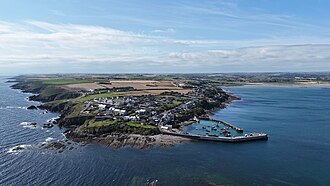
Howth Head Ghost Stories and Coastal Apparitions: A Visitor’s Guide
Howth Head is a promontory of clifftop wind, broken stone and long sightlines across Dublin Bay. Its geology, shipping lanes and long history of human presence have combined to make it a natural stage for coastal ghost stories and reported apparitions. This guide separates documented history from folklore, points you to the most atmospheric viewpoints, and offers practical safety and photography tips so you can experience the mood of Howth Head responsibly.
Why Howth Head inspires coastal ghost stories
Where land meets sea, people have always used story to explain loss, danger and the weather. Howth Head’s steep cliffs, hidden coves and shifting tides create dramatic scenery that encourages storytelling. Add navigational hazards and the human cost of shipwrecks and rescues, and you get a fertile environment for tales of phantom lights, grieving figures and spectral crews.
It helps to be clear about terms: documented history refers to official records, newspapers and archaeological evidence; folklore and legend mean oral traditions, personal testimonies and storytelling that evolve over time. Both are valuable: history anchors the past in verifiable events, while folklore shows how communities remember and interpret those events.
History that feeds the legends
Documented history: Howth Head sits at the entrance to Dublin Bay, a busy and sometimes treacherous waterway. Records of shipwrecks, rescue efforts and the construction of navigational aids like lighthouses are part of the public record and have shaped local memory. Lighthouses and lightkeepers were once vital. Incidents at sea, often reported in newspapers, provided the kernels that storytellers later embellished.
These real risks—fog, shifting shoals, strong currents and heavy storms—are why people onshore looked for meaning in lights and silhouettes. The work of lighthouse keepers and harbour crews is documented elsewhere on our site for those wanting to explore similar maritime traditions at home: see our Poolbeg Lighthouse Keeper Ghost Tales for comparable history and legend.
Common coastal apparition themes on Howth Head
Folklore around Howth Head tends to favour a handful of recurring motifs. Presenting them as motifs makes clear that these are cultural patterns rather than factual claims.
Phantom ships and lights
Stories of ships seen offshore with strange lighting or crewless hulls are widespread in coastal folklore. On Howth Head such narratives often reflect the real fear of wrecks and the imagination of people who watched the bay at night.
Mourning figures and shorebound apparitions
Figures seen walking the cliff paths or waiting at the waterline—often described as wearing period clothing—are common. These tales can be understood as expressions of grief, loss and the human habit of personifying tragedy.
Spectral fishermen and crew
Accounts of fishermen who vanish or reappear at sea echo the lived dangers of a coastal livelihood. These stories honor the memory of those who worked the bay while also dramatizing the hazards they faced.
Top viewpoints and trails for atmosphere
Atmosphere depends on light, weather and vantage point. Below are places on and around Howth Head that deliver mood by day and mystery by night.
Baily Lighthouse area
Baily Lighthouse sits on the northern edge of Howth Head and offers long views across shipping lanes. By day it’s a place of stark coastal engineering; at dusk the low light and open sea create strong silhouettes. Stick to marked paths and keep a safe distance from cliff edges.
Howth Summit and cliff path sections
Howth Summit provides panoramic outlooks over the headland and bay. The cliff path sections—where rock faces drop to the sea—are especially atmospheric. Coastal fog, gull-call and the thud of waves are sensory cues that enhance storytelling, but they also increase the need for caution.
Harbour approaches and piers
The harbour and piers are human-scale contrasts to the wide cliffs. At night they can feel intimate and strangely isolated, especially when town lights are reflected on the water. These areas have practical access and are easier to navigate in the dark than remote cliff tops.
Practical night-walk route and safety checklist
Plan a route you can complete within the time you have, and always allow extra time for turning back in poor weather. Below is a straightforward night-walk route suitable for moderately fit visitors, plus a checklist.
Suggested night-walk route (moderate)
Start at Howth village near the harbour, follow the coastal trail north toward the Baily Lighthouse area, pause for views, then return via the Cliff Path and finish at Howth Summit for a wide panorama. This loop avoids the most exposed promontories while keeping the walk atmospheric.
Safety checklist
- Check tides and weather forecasts before you go; coastal fog and wind can develop quickly.
- Wear sturdy footwear with good grip; ankle support is useful on uneven ground.
- Carry a headlamp (not just a handheld torch) with spare batteries; a red filter preserves night vision and prevents blinding group members when used briefly.
- Stay on marked paths; cliffs can have undercut edges and loose stone.
- Bring a charged phone and share your route with someone staying ashore.
- Respect private property and local access rules; some areas require prior permission for after-dark visits.
Photography and storytelling tips
Photographing coastal mood at night is rewarding but challenging. Use a tripod, a wide-aperture lens and long exposures to capture faint light. A low ISO with longer exposure reduces noise; experiment with light painting sparingly to highlight foreground features.
When framing folklore for visitors, label stories clearly as oral tradition unless you can verify details. Invite participants to reflect on the difference between historical record and the way people remember events—this preserves credibility while keeping the atmosphere.
Responsible ghost tourism and conservation
Respect for wildlife, residents and archaeology should shape any night-walk. Seabirds nest on cliffs and are sensitive to disturbance; avoid climbing on ledges or approaching nesting sites. Keep noise low in residential approaches and do not leave litter.
If you’re exploring areas with visible ruins or earthworks, do not remove artifacts or dig. These sites are part of the archaeological record and must be treated with care. For practical advice on permits and safety when running or joining night tours, see our Budgeting for Safety and Permits on Dublin Night Tours guide.
How to join a Ghost Tour Dublin Experience on Howth Head
Ghost Tour Dublin Experience offers guided walks that combine local storytelling, folklore interpretation and safety-aware routes on Howth Head. Tours are led by guides familiar with both the documented history and the oral traditions of the area. Expect explanation of maritime hazards, discussion of popular apparition motifs and curated viewpoints chosen for atmosphere and access.
Booking options typically include public night walks, private group bookings and tailor-made itineraries focused on maritime legend, photography or combined walks that include other haunted Dublin sites such as the Dublin Castle or the Phoenix Park narratives. For broader Dublin ghost walks and urban art themes you might also enjoy our Haunted Murals of Dublin piece and our overview of Dublin Castle: Haunted Rooms and Spectres.
For private groups and bespoke experiences—school groups, corporate events or extended private night walks—contact our private bookings team to discuss timings, route adjustments and safety arrangements. Private groups can book through our dedicated page: Private groups and bookings — https://www.ghosttourdublin.com/
Final practical notes
Night walks on Howth Head are about mood as much as mystery. Approach stories with curiosity rather than expectation, keep safety at the forefront, and be mindful of the living landscape and community around you. Whether you come for history, folklore or photography, a guided experience will increase both your enjoyment and your safety.
FAQ
Are the Howth Head ghost stories based on real events or purely folklore?
Many stories derive from real events—shipwrecks, rescues and well-documented maritime hazards—but the storytelling process often embellishes and transforms those events into folklore. Treat documented incidents as history and oral accounts as cultural memory that reveal how communities make sense of loss and danger.
When is the best time to experience Howth Head’s atmosphere for ghost‑story walks?
Dusk and early night provide strong atmosphere while keeping visibility reasonable. Winter evenings are long and moody; spring and autumn offer milder conditions. Avoid nights with extreme weather and check tide and forecast information before you go.
Is it safe to walk the cliffs of Howth Head at night and do I need a guide?
Walking cliffs at night carries hazards—poor visibility, steep drops and loose rock. A guide improves safety by choosing proven routes, managing group pacing and providing local knowledge. If you go independently, follow the safety checklist above and stay on marked paths.
How can I book a guided Howth Head night walk with Ghost Tour Dublin Experience?
Visit our booking page to see available tours and dates: https://www.ghosttourdublin.com/. For private or bespoke walks, contact the private bookings team through the same site to arrange tailored itineraries and group logistics.