
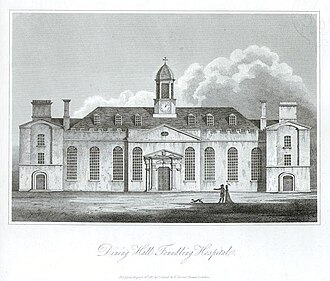
Victorian workhouses occupy a particular place in Dublin’s dark-history landscape: institutions of last resort for the poor, often sites of illness, death and family separation, and later, settings for ghost stories and local lore. Separating what archives actually record from the layers of legend that accumulated afterward helps guides, visitors and communities to remember the human realities without sensationalising trauma.
The workhouse system in Victorian Dublin — what the archives actually record
The Victorian workhouse system was administered under poor law structures and created extensive administrative paperwork. Surviving records most commonly include admission registers, daily logs, medical or infirmary reports, poor law guardians’ minutes and burial registers. These documents record names, ages, occupations, reasons for admission, illnesses, internal discipline and, at times, mortality details.
Archives and municipal collections tend to preserve factual layers: who was admitted, the capacity of institutions, correspondence about funding and policy, and statistical returns. They rarely provide the emotional detail that later oral storytelling supplies, but they do give a documentary backbone that lets us understand institutional practices and human numbers rather than relying on hearsay.
Documented incidents vs later legend — how to tell historical fact from folklore
Documents offer a measurable, verifiable record: an entry in an admission register is a fact; a death recorded in a burial roll is a fact. Folklore, by contrast, emerges in newspapers, memoirs, family stories and later guidebooks that blend memory, imagination and local humour or outrage.
To distinguish the two on a tour, a useful approach is to label your material visibly: “This is a documented record” and “This is a local story.” Where possible, quote the source: “Admission register, 19XX, lists…” (or simply “admission registers show…”) and then separate that from “local testimony remembers…” Doing this preserves factual integrity while acknowledging how emotional memory and myth-making operate in communities.
Eyewitness testimony and oral histories: strengths, limitations and patterns
Eyewitness testimony and oral history collections are invaluable for adding human voice to dry records. They capture attitudes, emotions and small-scale practices that official forms do not. Testimonies recorded by community groups, family memoirs and recorded interviews can reveal how workhouses were experienced and remembered across generations.
However, oral testimony has limitations. Memory alters over time, narrative details shift, and traumatic events can be reframed as symbolic stories. Patterns you’ll repeatedly find include: an emphasis on enforced separation, shorthand descriptions of “hunger” or “cold” without precise dates, and conflation of multiple institutions into a single remembered site. These patterns are meaningful in themselves but should be presented as memory rather than documentary fact.
How to access archival materials and credible secondary sources as a visitor or guide
Start with local archive catalogues and librarians. Many municipal archives hold poor law and workhouse material; national collections may hold related administrative correspondence. Ask for admission registers, minute books of guardians, infirmary and burial records, and contemporaneous newspapers if you are researching a particular institution.
Digital catalogues and finding aids often indicate what has been digitised and what must be consulted in person. If you cannot visit, contact archive staff — they can confirm holdings, advise on copying policies, and sometimes provide scanned extracts. Secondary sources written by historians and local history groups can provide context, but treat them as interpretation and check their references back to primary records where possible.
For context and complementary evening walks, consider our featured routes that explore related urban memory: Iveagh Gardens dusk trail and whispered histories — an evening walk in Dublin, or explore local urban hauntings on Blackpitts Late-Night Alleys.
Ethical interpretation: treating trauma, poverty and death with respect on tours
Workhouses were institutions where people experienced suffering, loss and the indignities of poverty. Ethical interpretation is crucial: do not reduce real hardship to entertainment. Always foreground lived experience and avoid lurid embellishment. Use archival testimonies and registers to give names, numbers and circumstances when available, and give space for silence rather than filling it with invented drama.
Practical ethical guidelines for guides and tour operators:
- Label material clearly as documented fact or as folklore.
- Use person-centred language; avoid sensationalist adjectives that dehumanise.
- Invite reflection and questions rather than applause for “scary” stories.
- Obtain permission when sharing family stories or recent memories from living descendants.
Visiting today: practical tips, suggested routes, what to expect on a guided experience
Many former workhouse buildings survive in altered form or have been demolished and commemorated with plaques or memorials. Expect a mix of visible remnants, later adaptations (hospitals, housing, community centres) and more nebulous memory landscapes where the physical trace is thin.
Practical visitor tips:
- Check access in advance: many sites are on private property or have limited opening hours.
- Wear sensible shoes and weather-appropriate clothing; some memorial sites are small outdoor spaces.
- Respect signage and any requests from local communities about photography and behaviour.
- Use a guided tour to get archival context and a respectful narrative that avoids exploitation.
Suggested routes that pair archival storytelling with atmospheric urban walking include our guided experiences that connect historical sites with other memory-rich stops like Hidden Cellar Spirits or the gardens and manor stories covered in Foxrock Manor Garden Ghost Lore.
If you have a private group or are booking an educational visit, we can create bespoke tours tailored to research interests or community commemorations — please enquire via our private groups booking page.
Supporting preservation and community memory: how tourists can help responsibly
Tourists can play a positive role in preserving memory without exploiting it. Simple actions include visiting sites during official hours, donating to local archives or heritage groups, supporting community-led storytelling projects, and buying locally produced zines or publications that document oral history. If you’re creating or funding material, consider ethical guidelines and, where applicable, look into community crowdfunding best practices such as those outlined in Crowdfunding for Dublin Folklore Zines.
Consider also supporting local heritage initiatives that focus on conservation, transcription of archival material, and producing interpretive material that centers the voices of people who lived through these institutions. Small acts — reporting vandalism, staying on paths, and amplifying community voices — add up.
Conclusion
Victorian workhouse hauntings exist in three overlapping registers: the documentary record preserved in archives, the memories carried in oral testimony, and the folklore that grows from those two. Responsible visiting and interpretation means using archives to ground narratives, treating testimony with care and context, and avoiding the commodification of suffering. With careful research and ethical presentation, tours can illuminate difficult histories while honoring those who lived them.
FAQ
Are the reported hauntings at Dublin workhouses documented in official records?
Official records — admission registers, medical reports, burial rolls and guardians’ minutes — document admissions, illnesses and deaths but do not record paranormal activity. Reports of hauntings are typically found in later newspapers, oral histories and folklore collections rather than in administrative archives. Distinguish factual records from tales by checking the primary sources cited by any author or guide.
Can visitors access workhouse archives or original buildings in Dublin?
Many archival materials are publicly accessible through municipal or national archives, though some items may require appointments or special permissions. Original buildings vary: some survive repurposed, some are private, and some exist only in records and maps. Always check access restrictions and respect site rules; guided tours can often provide access and context that independent visits cannot.
How do guides distinguish folklore from documented history on tours?
Responsible guides make a clear, audible distinction during the tour: they state when they are speaking from a primary source or archive and when they are repeating a local story or legend. Good tours cite the type of source (e.g., “admission register,” “newspaper report,” “oral testimony”) and, where feasible, provide references or follow-up reading suggestions.
Is it appropriate to include workhouse sites on a ghost tour?
Yes — if they are handled sensitively. The key is ethical framing: avoid sensationalism, prioritize factual context and human dignity, and work with local communities and archives. When done well, such tours can educate visitors about social history, commemorate victims, and support preservation efforts rather than exploiting suffering for entertainment.