
How Dublin’s Street Names Hide Ghost-Story Hooks
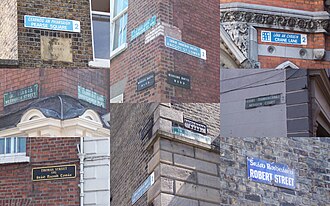
Street names are compact stories written into the city: they point to vanished markets, former gallows, lost rivers and prominent families. In Dublin those names are especially rich—layers of Gaelic, Norman, English and modern urban change sit side by side. For visitors and guides looking to craft atmospheric but credible ghost tales, street names offer ready-made prompts that combine documented origins with local lore, turning ordinary walks into a sequence of haunted possibilities.
Reading Dublin street names: layers of etymology, history and urban change
When you look at a Dublin street sign you are usually seeing three things at once: an original name or Irish-language root, later anglicisations or renamings, and sometimes commercial or civic rebranding. Each layer can feed a ghost-story hook.
Documented name origins—such as a street once known for a trade or a parish—give anchors around which believable stories can be built. Folklore and urban myths supply moods and characters, but they need to be flagged as such. Good ghost storytelling in a city is a constant flip between what can be corroborated and what is atmospheric conjecture.
Common name-types that inspire spooky narratives
Saints & churches
Church-related names point to parishes, burial grounds and ecclesiastical power. They invite stories of restless parishioners, lost grave markers, and processions that become spectral. When using these, note whether the church remains, is repurposed, or entirely absent—each condition suggests a different flavour of haunting.
Executions, crossroads & boundary names
Names that recall gallows, crossroads or borders evoke liminal spaces—precisely where ghost tales thrive. Crossroads are traditional meeting points between worlds; boundary names such as “Gate” or “Bridge” can be turned into stops where the living and the dead meet, but always be careful to separate legend from recorded penal history.
Trades & shambles
Trade-related names—Shambles, Market, Fishamble—carry sensory details: blood, salt, carts, and early-morning cries. These details translate well into vivid narration and short dramatic set-pieces on a walk.
Rivers & quays
Waterplace names imply both life and danger: drownings, lost cargo and liminal fog. Quays and strands are natural twilight stops on a ghost walk, where tides and weather add atmosphere without needing much invention.
Landlords & houses
Surnames and “House” names remind listeners of private power and private tragedies—upstairs servants, abandoned mansions, or top-floor tenants who vanished. These stories often blend verifiable ownership with imagined domestic dramas.
Case study — Fishamble Street
Fishamble Street is a textbook example of how a documented origin supplies evocative material. The street name preserves its association with a fish market or shambles—a place where fish were brought, cleaned and sold. That documented trade origin gives you concrete sensory anchors to use in narration: the smell of the tide, crates stacked against doorways, the slippery cobbles.
From those facts you can responsibly build a haunting: a market-worker who died in suspicious circumstances, the echo of late-night carts, or a grief-struck fisher whose cries are said to linger at the river-edge. Make clear to listeners what is documented (the market origin) and what is local folklore or imaginative inference (a specific ghost). The balance maintains credibility and enriches the mood.
Case study — Grafton & Capel Streets
Grafton and Capel Streets carry the imprint of aristocratic planning and commercial evolution. Their names function as social signposts—addresses for town houses, shops, and later urban renewal. As such they prompt a different family of stories: lost inheritance, a servant’s testimony, the ghost of a rival suitor, or echoes of protests and riots when urban life changed around these streets.
Use these streets to talk about urban change as haunting: the city itself is the character that remembers. Emphasise the documented facts you can verify—names reflecting ownership or redevelopment—and treat more sensational details as local legend or plausible fiction designed to illuminate the place.
Turning boundary names into liminal ghost-walk stops
Quays, bridges, lanes and gates are inherently liminal. A bridge crosses, a quay borders water, a lane squeezes between buildings—each becomes a theatrical point on a walk. Plan these stops to use natural soundscapes (traffic, water, gulls) and sightlines (fog, reflected lights) to heighten atmosphere without inventing history.
For seaside liminality, consider routes that include piers or strands; our coverage of Dun Laoghaire East Pier — Spectral Footsteps, Pier Lore & Visitor Guide and the Sandymount Strand Twilight Sightings Walking Trail — Guide & Tour Tips shows how boundary landscapes supply recurring motifs. Inland, small lanes near major streets make ideal short stops for a single, focused legend.
Build your own route: research tips, distinguishing verified history from folklore, and practical visitor notes
Start with the name itself: look for official plaques, parish records, and authoritative street-name surveys. Local libraries and municipal archives are invaluable. When online sources are cited, prefer digitised maps and reputable institutional collections. Where you cannot verify, label stories as tradition, folklore or a working hypothesis.
Tip list for route-building:
- Choose a thematic thread (maritime, market-trade, ecclesiastical) and stick to it for coherence.
- Mix documented anchors with one or two atmospheric legends per block—too many legends dilute trust.
- Plan stops where the physical environment supports the tale: a covered alley, a riverbank, a graveyard wall.
- Keep walking distances modest; visitors engage better with short, memorable vignettes.
Practical visitor notes: wear comfortable shoes—many old streets are cobbled or uneven—check opening hours for any buildings you want to reference, and be mindful of private property.
Quick checklist for guides and visitors: ethical storytelling, commercial opportunities, and safety
Ethical storytelling strengthens your tour’s reputation. Clearly flag when a story is speculative, avoid sensationalising real tragedies, and respect living descendants. Commercially, street-name themed mini-tours or themed evenings can be attractive extras—use a clear mix of fact and folklore to differentiate your product.
Safety checklist:
- Plan well-lit routes for evening walks and know alternative paths if streets are closed.
- Keep group sizes manageable; urban pavements can become bottlenecks.
- Respect local businesses and residents—avoid blocking doorways or staging loud performances in front of private homes.
Putting it into practice on a Haunted Ghost Tour Dublin walk
On tour we layer documented origins onto atmospheric performance: a verified market name provides a factual hook; a local anecdote gives texture; the street’s physicality supplies the payoff. If you’d like to experience this approach in person, book one of our scheduled tours and let our guides demonstrate how names become stories.
Planning a private group? Ask about tailored routes and behind-the-scenes access for your party: Private groups & bespoke tours.
FAQ
How can I tell if a street-name ghost story is based on documented history or later folklore?
Look for primary documentary anchors: official name surveys, parish registers, old maps and civic records. If a detail appears only in oral retellings, newspapers, or guidebook anecdotes, treat it as folklore. A clear guide will label which is which and explain the evidence for each claim.
Which types of Dublin street names are most likely to yield good ghost-story hooks?
Names referencing markets, churches, execution sites, quays, bridges and named houses are particularly rich. They naturally suggest sensory details and liminal spaces where ghost narratives feel plausible. Names tied to vanished trades or natural features work especially well because they hint at vanished ways of life.
Can I create a self-guided ghost walk just from street-name clues, or should I join a tour?
You can absolutely create a rewarding self-guided route using street-name clues, public records and a little local research. However, joining a guided tour adds local insight, verified context, and the theatrical timing that brings stories to life—plus the safety and logistics handled by an experienced operator.
Are there any legal or safety considerations for exploring Dublin streets after dark?
Yes. Stay on public thoroughfares, avoid trespassing, and be mindful of private property and local residents. Choose well-lit routes for evening walks, keep groups compact, and check local advisories. For organised after-dark tours, licensed guides are familiar with safe routes and permissions.