
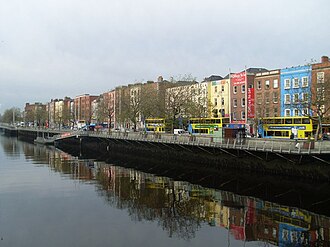
Bachelor’s Walk — Massacre Site: Echoes and Sightings on Dublin’s North Quays
Bachelor’s Walk is a short, unassuming stretch of Dublin’s North Quays where the city’s civic memory and modern curiosity meet. Once the scene of an abrupt late‑summer confrontation between civilians and soldiers, the place now draws historians, walkers and night‑time wanderers alike. For visitors interested in Dublin’s darker layers, Bachelor’s Walk offers a compact lesson in how a single violent episode can ripple through politics, popular memory and local folklore—producing both sober memorials and vivid stories of echoes and sightings that linger on the riverbank.
Join a guided Ghost Tour Dublin Experience to visit Bachelor’s Walk and hear both the documented history and local sightings. Our guided walks pair archival facts with local testimony so you can decide where history ends and legend begins.
Documented history: what happened at Bachelor’s Walk
The incident at Bachelor’s Walk occurred in July 1914 when British soldiers, returning to barracks after disturbances elsewhere in the city, engaged with a crowd on the north bank of the River Liffey. Contemporary newspapers and later historical accounts describe soldiers firing into a group of civilians; several people were killed and many more injured. Contemporary reports and later historians commonly cite four fatalities, though numbers in different accounts can vary.
The immediate aftermath was chaotic: victims were carried from the quays, inquiries were demanded by Dublin civic leaders, and the episode was absorbed into a tense prewar atmosphere. Unlike formal military engagements, what happened on Bachelor’s Walk was a brief, localized outburst whose documentation comes from newspapers, witness statements and municipal records collected in the weeks that followed.
Political and social context: how the incident influenced Dublin in 1914
1914 was a fraught year for Ireland. Debates over Home Rule, the presence of British troops in Irish cities, and wider European tensions all affected public mood. The Bachelor’s Walk episode did not happen in a vacuum; it came at a time when the visibility of troops on Dublin’s streets was a flashpoint for political grievance.
While the event did not single‑handedly reshape Irish politics, it fed into broader narratives of grievance and distrust that intensified after 1914. Commemorations in years following the massacre, and ongoing references in local history, show how the incident remained part of civic memory. Today, the site is remembered both through occasional plaques and through the stories Dubliners tell about the riverfront’s darker past.
From history to legend: how and why ghost stories and ‘echoes’ grew around the site
Folklore often gathers where strong emotions once played out. The sudden violence at Bachelor’s Walk—its public setting beside the Liffey, the dramatic images in contemporary newspapers and the presence of military uniforms—created fertile ground for memory to morph into legend.
It is important to distinguish documented fact from later anecdote. Official records establish that civilians were shot and wounded, and press coverage confirmed the event. Stories of spectral soldiers, repeated gunshots heard at midnight or of solitary figures staring out across the river are part of oral tradition and contemporary testimony rather than archival proof. These narratives, passed down and embellished, explain why visitors may encounter resonant descriptions of “echoes” when they walk the quays after dusk.
Where visitors report echoes and sightings today
Reports cluster along the section of the north quays adjacent to Bachelor’s Walk—roughly the stretch between O’Connell Bridge and Capel Street. People who come at twilight or after dark describe a variety of experiences: sudden chills, the sense of being watched, faint footsteps that stop when you turn, and, in a few accounts, the vision of uniformed figures moving along the riverbank.
These descriptions are anecdotal and subjective. Common themes—auditory echoes like distant shouting or the imagined crack of gunfire—reflect how memory can overlay sensory impressions, especially in an atmospheric place beside a flowing river. If you are visiting specifically to seek these phenomena, late evening and the hour just after sunset are when most reports are made, but such times also come with practical safety considerations.
Practical visiting guide
Getting there: Bachelor’s Walk is in central Dublin and is easily reached on foot from O’Connell Street and nearby tram and bus stops. The area is part of the city centre’s riverside walkway, so it is well connected but can be busy by day.
Safety and access: the quays run beside the Liffey, so watch for uneven paving and wet surfaces, particularly after rain. At night, stick to well‑lit areas and avoid standing on the river’s edge. Keep personal belongings secure: the area is generally safe but, like any city centre, benefits from basic precautions.
Respectful behaviour: this is a site where people were wounded and killed. Treat memorials, any plaques and the space itself with quiet respect. Photography is common, but be mindful of other visitors and avoid flash photography if a small commemorative service is taking place.
Guided options and what to expect on a Ghost Tour Dublin Experience
Guided walks vary in focus. Historical tours emphasise archival accounts, contemporary press reports and the political context; they aim to present a measured narrative grounded in sources. Paranormal or ghost‑led walks lean into oral testimony, local lore and the kinds of sightings that visitors report today.
Our Ghost Tour Dublin Experience blends both approaches: you will hear the documented history of the Bachelor’s Walk incident and then explore the local folklore and reported sensations in situ. Guides point out specific spots on the quays where witnesses have described echoes or apparitions and discuss how atmosphere, memory and the river’s soundscape shape such reports.
If you prefer a private group experience, we also offer tailored walks for small groups that can focus more intensely on either historical detail or the paranormal side—ideal for those coming with specific research or personal interest. Book private groups and tailored experiences here.
Preservation, remembrance and further reading
There are modest memorials and local references to the Bachelor’s Walk incident around the north quays. For those who want to learn more from reputable sources, local history centres and university libraries maintain collections of contemporary newspapers and civic records that document the 1914 incident without conjecture.
To place Bachelor’s Walk within a broader Dublin context of folklore and darker sites, you might explore other guided articles and tours that investigate different corners of the city’s haunted heritage. For example, accounts of caretaker legends at Rathfarnham Castle and after‑dark stories make an interesting companion piece to riverside narratives: Rathfarnham Castle After‑Dark Stories and Caretaker Legends: A Visitor’s Guide. Other articles compare shoreline apparitions at Forty Foot, historical asylum legends and night visits to hilltop ruins: Forty Foot, Sandycove — Shoreside Apparitions and Swimmer Tales, Victorian Asylum Legends: Touring Dublin’s Former Psychiatric Wards and Hellfire Club ruins on Montpelier Hill: folklore, history & night visits.
Whether you come for history, folklore or both, you can deepen your visit by reading contemporary reporting and by considering how community memory shapes what we perceive. For guided context and on‑the‑ground exploration, Join a guided Ghost Tour Dublin Experience to visit Bachelor’s Walk and hear both the documented history and local sightings.
FAQ
When did the Bachelor’s Walk incident take place and is it a documented historical event?
The incident took place in July 1914 and is documented in contemporary newspapers, municipal records and later historical accounts. While narratives around the event have evolved over time, the core fact—that soldiers fired on civilians on the north quays on that summer day—is supported by the historical record.
Are the reported echoes and sightings at Bachelor’s Walk based on verified evidence?
Reports of echoes, apparitions and unusual sensations are anecdotal and not verified in the way an archival record is. These accounts reflect personal experience and oral tradition rather than empirical proof. They are valuable for what they say about local memory and atmosphere, but they should be treated as testimony rather than documented evidence.
Can I visit Bachelor’s Walk at night and is it safe for solo visitors?
You can visit at night, but exercise common‑sense precautions: stay in well‑lit areas, avoid the river edge when it’s slippery, and consider joining a guided walk if you are alone or unfamiliar with the city. Guided tours offer both company and context, and they can be a safer, more informative way to experience the site after dark.
Does the site have a memorial or plaque, and are guided visits available?
The area is marked in local memory and there are modest commemorations nearby. Guided visits are available through organised tours such as the Ghost Tour Dublin Experience, which combines historical background with accounts of local sightings. For private group bookings and tailored walks, see our private options on the booking page.