
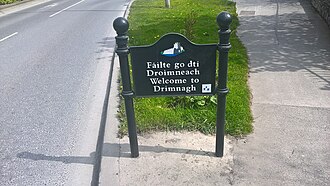
Drimnagh Canal sits in a quieter sweep of Dublin where water, industry and suburb meet. It has become the focus of ghost tales because canals collect stories—of work, of accidents, of lonely nights—and those stories are easy to turn into legends. This guide explains what we can verify, what local folklore says, and how to explore the canal after dark responsibly. It will not claim to prove or disprove supernatural events; instead it gives a practical visitor’s route, safety advice and clear distinctions between recorded history and oral legend.
Book the Ghost Tour Dublin Experience to explore Drimnagh Canal and other haunted Dublin routes
The recorded history of Drimnagh Canal and its environs
Documented history around Drimnagh Canal is mainly industrial and social. Like many Dublin waterways, the canal was developed to support transport of goods and raw materials, shaping nearby suburbs with mills, warehouses and workers’ housing. The presence of bridges, towpaths and remnant industrial buildings reflect that working past.
Locally important sites include fortified residences and community buildings that pre-date the industrial era. These structures provide continuity between medieval, Georgian and industrial Dublin, showing how rural land became woven into a growing port city.
When researching incidents, official records tend to be held in municipal archives, newspaper archives and Garda (police) or coroner records. Where such documentation exists you will find factual accounts of accidents, crimes or urban change; where it does not, oral tradition fills the gaps.
Common Drimnagh canal ghost tales and local folklore
Below are the most commonly told ghost stories tied to the Drimnagh Canal area. These are presented as folklore: compelling, recurrent narratives that tell us about local fears, memory and identity rather than proven events.
The lonely canal walker
Folklore: A figure is said to walk the towpath late at night—sometimes described as a mill worker in period clothing, sometimes as a pale woman whose footsteps vanish at the bend. Variants place the figure near old bridges or close to the canal’s quieter stretches.
Origin: Tales likely arise from the canal’s history of shift work and from the uneasy solitude of towpaths after dark. The story functions as a cautionary narrative and as a way to explain unexplained sounds or shadows.
Boat bells and vanished crews
Folklore: On certain nights people report hearing a bell from a boat not visible on the water, or seeing lantern light that disappears. Stories suggest a barge lost at work or a crew that never reached shore.
Origin: The canal’s working past included barges and towlines; echoes and the play of artificial light on water frequently create sensory illusions. Such tales often grow from misperceptions and the atmospheric quality of fog over water.
The child at the lock
Folklore: A small child is said to appear near one of the locks, pointing toward the canal and then vanishing. Some versions say the child asks for help; others make the sighting a prelude to a sudden cold breeze.
Origin: Stories about children near water are common in places where accidents occurred historically or where parents warned children to stay back. The tale likely has roots in collective anxiety about canal safety rather than a single documented incident.
Separating legend from documented incidents
Folklore and legend are valuable cultural material but they are not the same as documented fact. Here are practical steps for evaluating claims about the canal.
- Look for archival records: local newspapers, municipal records and coroner inquests are primary sources for reported incidents. If an event made the paper or required an inquest, there will usually be a record.
- Compare multiple accounts: if a story appears only in oral retellings, note when, where and by whom it is told. Variants often point to evolving narrative rather than a single event.
- Understand environmental causes: reflections, fog, animal movements and old infrastructure can explain many sensory experiences reported as supernatural.
- Respect testimony: witness reports matter even when they cannot be independently verified. They tell us about what people saw or felt, not necessarily about a paranormal explanation.
When there are documented incidents, municipal archives or newspaper reports are the right place to start. For contextual reading about how Dublin’s other haunted spaces mix record and myth, see our pieces on Smithfield Ghost Stories and Historic Night Walk, Heuston Station After-Hours and Wood Quay at Night.
Mapped night-walk: a recommended route along the canal
This mapped night-walk is designed for safety, photographic opportunity and atmosphere. It follows public paths and well-used crossings; it avoids private property and known no-go areas.
Start: Drimnagh Road bridge
Begin where the canal is easiest to access. The bridge offers an elevated viewpoint for broader shots and for orienting yourself. Early evening light works best for palette-rich photos; after dark switch to long exposures on a tripod for water reflections.
Towpath stretch toward the old mill site
Follow the towpath keeping to the side of the water. This stretch captures industrial architecture and rusted fittings that make compelling foregrounds in low light. Use a wide aperture and low ISO for balanced exposure.
Lock area and narrow bends
Locks are focal points for folklore and for photography. Look for textures: lock ironwork, wooden gates and mossy stone. Respect barriers and refrain from climbing structures that can be unstable at night.
Turn at the small footbridge and return
Crossing at a known footbridge gives you a contrasting vantage point for backlit shots. Retrace your steps on the opposite bank if the towpath continues, or return the same way if access is limited.
Photography tips: use a headlamp with a red filter to preserve night vision, bracket exposures for HDR, and avoid flash on wildlife. Reflections and moving water look best with exposures from 1/4 second to several seconds depending on available light.
Practical visitor information: safety, lighting, transport and permissions
Canal towpaths are public in many places but ownership and access can vary. Always use designated entrances and avoid crossing private land.
Safety tips:
- Walk with a companion after dark; notify someone of your route and expected return time.
- Carry a reliable torch or headlamp and wear reflective clothing if walking close to road crossings.
- Stick to the main towpath and lit bridges; avoid narrow, overgrown embankments.
- Respect local wildlife and keep dogs on leads—waterfowl and bats are active near canals.
Transport: local bus services connect Drimnagh with central Dublin; the nearest major rail hub is Heuston Station, which is a short bus or taxi ride away—see the Heuston after-hours guide for night-travel context. If driving, use well-lit public car parks and lock valuables; cycle parking is available near main access points.
Permissions: there are no general permits required for walking public towpaths, but special events, group tours or photography shoots may need permission from local authorities or landowners. If you plan a large group or equipment, check with local council offices in advance.
Nearby attractions and where to book
Drimnagh is within easy reach of other historic and haunted Dublin sites. After your canal walk you might continue to sites that illustrate Dublin’s layered past: Smithfield’s market square and courtroom histories, Wood Quay’s Viking-era remains, or student campuses that host their own accommodation stories. See our features on Student Halls & Campus Sightings for more visitor anecdotes.
For a guided experience that situates Drimnagh Canal stories within the broader haunted topography of Dublin, Book the Ghost Tour Dublin Experience to explore Drimnagh Canal and other haunted Dublin routes. Our tours blend documented history, local folklore and safe, interpretable night-walks led by experienced guides.
We also accommodate private groups and bespoke routes for special interest visits. For group bookings and private tours, contact our private bookings desk to discuss tailored itineraries and permissions: Private group bookings available here.
Closing notes
Drimnagh Canal’s ghost tales are part of a living oral landscape. They tell us about industry, memory and the human habit of turning shadows into stories. Whether you seek atmosphere, photography opportunities, or historical context, plan carefully, respect the recorded record where it exists, and treat folklore as an important layer of local culture.
Book the Ghost Tour Dublin Experience to explore Drimnagh Canal and other haunted Dublin routes
FAQ
Are the Drimnagh Canal ghost tales true or just local folklore?
Most widely circulated canal stories are local folklore—recurrent narratives shaped by work histories and sensory experiences. Some accounts may reflect real accidents or events, in which case records will usually exist in local archives or newspapers. Treat tales as culturally meaningful even when they lack documentary confirmation.
Is it safe to walk the Drimnagh Canal at night and what precautions should I take?
Walking at night can be safe with the right precautions: go with a companion, stick to well-used towpaths, carry a reliable light and wear reflective clothing. Avoid isolated embankments, respect signage and do not enter fenced or private areas. If in doubt, join a guided tour.
Do guided tours cover the Drimnagh Canal ghost stories and can I book one?
Yes—guided tours, including the Ghost Tour Dublin Experience, interpret both folklore and documented history and cover safer, accessible routes along the canal. You can book online through our main booking page.
Are there restrictions or permissions needed to explore the canal banks after dark?
General pedestrian access to public towpaths usually does not require a permit, but private land beyond the path does. Large groups, professional photography, or staged events may need permission from local authorities or landowners. When planning a group visit, contact local council offices or a tour operator for advice.