
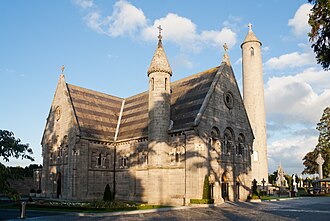
Glasnevin Cemetery: Midnight Legends and Republican‑Era Echoes
Glasnevin Cemetery has a long, layered presence in Dublin’s civic memory; at night its avenues take on a particular charge, where torchlight and low voices meet stone inscriptions and the weight of republican commemoration. This guide separates atmosphere from archival record, laying out what is documented, what is locally told, and how a responsible nighttime visit can be both stirring and respectful.
Why Glasnevin at midnight? Setting the scene
There is a particular logic to visiting cemeteries after dark: the quiet amplifies small sounds, shadows lengthen, and the human urge to listen for stories becomes a kind of shared ritual.
At Glasnevin the appeal is doubled. The site is both a city necropolis and a national pantheon; the stones mark personal bereavements alongside public memorials. That mix makes the cemetery fertile ground for atmospheric storytelling.
Visitors come looking for two different experiences: to encounter evocative folklore that has developed around the graves and to trace the tangible, documented traces of Ireland’s republican past. A well-led after-dark visit can offer both while keeping them distinct.
Glasnevin in facts: documented history and republican associations
Documented history: Glasnevin is one of Dublin’s principal cemeteries and has long been an important site for burials, commemorations and public remembrance. It contains monuments, family plots and sections that reflect the city’s religious, cultural and political histories.
Documented republican associations: The cemetery is a site where families and organisations have memorialised those who died in uprisings, the War of Independence and the Civil War. Plaques, inscriptions and public commemorations are part of the documentary record and can be read as deliberate acts of memory.
What you can confirm on site: look for engraved names, dates, and inscriptions; museum displays and on-site information panels often give context; memorials erected by veterans’ groups and civic bodies are part of the public record and worth close reading.
Midnight legends and ghost stories
Folklore: Glasnevin has generated its share of ghost stories—figures glimpsed at the edge of torchlight, the sense of being watched in quiet avenues, and recurring local tales about particular plots. These stories circulate in oral form and on social media, and they grow with retelling.
Examples of how legends develop: repeated eyewitness claims, connections made between grief and danger, and the cemetery’s public role as a place of mourning all feed into a lively local storytelling culture. Stories accumulate details and become more dramatic over time.
Clear note: these accounts are folklore unless independently verifiable. Treat them as cultural expressions rather than historical evidence. When you hear a ghost story on a tour, it is useful to ask whether the guide is recounting local oral history, a personal experience, or a documented event.
For reading on related local tales and atmospheric writing techniques, you might find context in our pieces on other Dublin sites, such as Ha’penny Bridge late-night sightings, the Grangegorman Infirmary ward stories, and the Old Meath Hospital accounts, which demonstrate how place, memory and rumor intertwine.
Republican‑era echoes: reading memorials and monuments
Documented reality: memorials and inscriptions are deliberate statements. They tell you who erected them, when that act of commemoration occurred, and how communities chose to remember key episodes in modern Irish history.
How to interpret monuments: observe inscriptions closely—names, regiments or organisations, and language choice (commemorative terms, dates, dedications). These elements reveal more about the memorialisers than about unverifiable experiences.
Commemorations are political acts. Memorials reflect contested memories and changing narratives. A monument erected decades after an event can indicate a revival in interest or a new political framing.
When guides point out republican-era graves, they should emphasise documented links—what is recorded on the stone, whether the burial is verified, and how public ceremonies have shaped the site’s meaning.
How professional guides balance legend and history
Ethics and responsibility: reputable guides clearly label what is folklore and what is documented. This distinction respects both the historical record and the emotional truth of local narratives.
Sources and verification: good tours are grounded in primary inscriptions, published histories, museum material and archival documentation where possible. Oral accounts are framed as local memory rather than as verifiable fact.
Responsible storytelling around republican subjects: guides avoid partisan rhetoric, refrain from sensationalising recent family grief, and treat sensitive graves with respect. They explain differing perspectives and invite visitors to read inscriptions themselves.
Training and licensing: a licensed guide will also know local regulations, show awareness of safety and permissions, and carry appropriate public liability coverage for after-hours work.
Practical visitor information
Access and permissions: check Glasnevin’s official opening hours and policies before planning an after-dark visit. Many cemeteries have regulated hours and require permissions for organised after-hours access.
Safety: stay on paths, travel in small groups, use steady lighting rather than flashy beams, and respect any clearly posted notices. Keep noise to a minimum and be mindful of people who may be visiting graves for private reasons.
Photography: use discretion. Some families request privacy, and flash photography can be disrespectful. Ask permission before photographing staff, ceremonies or visitors.
Group options: small, guided groups create a controlled, informative environment. Licensed guides can sometimes arrange private group access or liaise with cemetery management—ask about this when booking.
Suggested midnight‑themed walking route through Glasnevin
Start point: pick a well-lit entrance where orientation plaques or the cemetery office provide a map. Confirm your intended route with cemetery management if you are visiting after hours.
Stop 1 — The main avenue: use this early stage to set context. Explain the cemetery’s dual role as civic burial ground and national memorial. Point out stone styles and common inscription forms.
Stop 2 — Significant memorial cluster: identify a group of public memorials and read inscriptions aloud where appropriate. Highlight their public context and any dedications that speak to republican memory—label interpretation as historical analysis, not personal testimony.
Stop 3 — A well‑known local legend: present the story clearly as folklore. Offer its variants and ask why such a tale might have attached itself to that particular plot or avenue.
Stop 4 — Personal graves that illustrate broader themes: choose a plot that tells a documented story of migration, disease, or political affiliation. Use stones to talk about social history rather than to sensationalise.
Final stop — Reflection point: end in a quieter area where visitors can absorb the material. Invite questions, offer further reading, and remind visitors of cemetery etiquette before dispersal.
Framing stories: alternate between short factual statements and contextual commentary. When offering folklore, preface with a line such as “local tradition says…” Always return to verifiable inscriptions to anchor the narrative.
Book a guided experience
Why take a licensed Haunted Ghost Tour Dublin tour? Our guides balance mood and method: we create atmosphere without substituting rumor for record, and we prioritise safety and respect for the site. A guided walk adds context to inscriptions and monuments and helps you distinguish between documented republican‑era echoes and midnight legends told around them.
If you are organising a private group or special access, we can liaise with management and tailor the route—see our private groups information: Private group bookings and access details.
FAQ
Is Glasnevin Cemetery open at midnight and can I visit alone?
Policies vary. Always check official Glasnevin opening hours and access rules before planning an after‑hours visit. Visiting alone after dark is not recommended for safety and respect reasons. Consider a licensed guided tour that can manage permissions and offer a safer group environment.
Are the ghost stories about Glasnevin true or just folklore?
Most ghost stories circulating about the cemetery are folklore—local narratives that express community memory and emotion. They are valuable cultural material but should not be treated as documented historical events unless corroborated by primary sources.
Can visitors see graves and memorials linked to Ireland’s republican history?
Yes. The cemetery contains many graves and memorials that commemorate those involved in Ireland’s republican struggles. These are public and can be read for names, dedications and dates; a guided visit helps interpret the inscriptions and their commemorative context.
Do you offer guided midnight or after‑hours tours of Glasnevin and how do I book?
We offer guided experiences that emphasise safety, respect and rigorous interpretation. To secure a spot, please book a guided Glasnevin experience with Haunted Ghost Tour Dublin. For private group bookings and special access requests, visit our group page at Private group bookings and access details.