
Heuston Station Midnight Porter — Ghost Story, History & Visitor Guide
The Heuston Station midnight porter story is one of those compact urban legends that draws both the curious tourist and the local who enjoys a shiver. Told in pubs, whispered on walking tours and repeated near the station’s platforms, the tale typically describes a lone porter or night worker glimpsed moving along empty platforms, extinguishing lights, or vanishing through a ticket office door that is locked to the living. For visitors to Dublin, the appeal lies not only in the chill of the tale but also in the theater of the station itself: expansive platforms, late trains, and the hush of a place that alternates between bustle and stillness.
Heuston Station in brief
Heuston Station is one of Dublin’s principal rail terminuses. Its architecture, concourses and long platforms have been the setting for everyday comings and goings for decades. Like many large stations it operates across daytime and night-time schedules, with staff handling late services, cleaning and security after the last trains depart. That ebb and flow — the switch from crowded activity to near-silence — creates the sensory conditions in which ghost stories naturally take root.
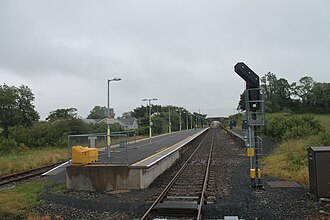
The station’s built environment contributes to atmosphere: long sightlines, pockets of shadow beneath canopies, and the echo of footsteps. For many visitors the idea of a “midnight porter” fits those spaces perfectly, a human figure who belongs to the station at hours when most of the city has quieted down.
Origins and variations of the porter story
The porter legend appears in several forms in local oral tradition. Common elements include: a figure in a uniform, the clink of keys, the extinguishing of lights, a smell of coal or pipe tobacco, and sometimes a gesture toward a closed carriage or locked office. In some tellings the porter is a tired worker doing his rounds. In more spectral versions the figure disappears upon approach, or is seen on a platform where no trains have been for years.
Eyewitness accounts shared on walking tours and in local conversation are central to the story. These accounts vary in detail and emphasis: some are brief and matter-of-fact, others are dramatic and evocative. Oral tradition tends to add flourish over time — a single reported sighting can become a recurring apparition in retellings.
Because this legend has been passed largely by word of mouth, variations proliferate. Some stories place the porter on a particular platform or near a specific entrance; others shift the setting to a waiting room or the forecourt. The key is that these are folklore: living stories that change with each narrator.
Separating fact from folklore
It is important to distinguish clearly between documented station history and the freedoms of folklore. Documented aspects of Heuston Station — its role as a major rail terminus, its architecture, and routine operational practices — are matters of public record and visible reality. The presence of night staff and the station’s nocturnal activity patterns are corroborated by the station’s operational needs.
Folklore elements, by contrast, are not necessarily supported by operational records or contemporary reporting. Many of the more sensational claims attached to the porter story — such as an identified worker who died on duty and then continued appearing to commuters — do not have clear, public documentation to corroborate them. Where possible, tour narratives that present the legend are careful to label these parts as folklore or local tale rather than verified history.
Where to look and what to expect
If you want to experience the atmosphere that feeds the porter story, there are a few practical suggestions. First, approach the station from public areas: the main concourse, forecourt and public platforms are appropriate vantage points. Evening light can be forgiving for photography, but do not expect dramatic apparitions on cue — the experience is as much about mood as it is about moments.
Good vantage points include the main concourse looking down the platforms, the covered walkways where shadows collect, and the outside entrances where sightlines allow you to watch arrivals and departures. If you plan to photograph, use a camera that performs well in low light. Long exposures can capture trace movement, but be mindful that tripods or additional equipment may be restricted at busy times.
Keep your expectations realistic: many reported experiences are quick glimpses, a sense of being watched, or the impression of movement at the edge of vision. Part of the draw is the imagination that fills in what the dim light leaves out.
Safety, permissions and legalities
Respect for staff, passengers and the station’s rules is essential. Access restrictions exist for a reason: tracks, maintenance areas and certain platforms are off-limits for safety and operational integrity. Do not attempt to cross barriers, go onto tracks, or enter areas marked “staff only.”
After-dark curiosity should never turn into trespass. If you wish to explore areas that are ordinarily closed to the public, seek formal permission from station management. Always obey signage and the direction of station staff. If you are in doubt about a permitted vantage point for photography or observation, ask a staff member rather than improvising.
Including the Heuston porter on your walk
On a Haunted Ghost Tour Dublin public walking tour, the porter story is presented as part of the station’s living folklore. Guides give historical context, describe the various versions of the tale, and invite listeners to consider how a station’s architecture and schedules foster such stories. Public tours typically remain in public spaces and share the story from safe, legal viewpoints.
For private groups and bespoke walks there is flexibility. A private Haunted Ghost Tour Dublin tour can craft a route that prioritises Heuston and adjacent sites, and the guide can expand on the legend with additional anecdotes and comparative local folklore. While private groups can request closer approaches or timed visits, any access beyond public areas requires permission from the station. For details about tailored private tours see our group tour page.
Many attendees report that the best part of the experience is the way the guide combines atmosphere, folklore and sensible historical context so you leave knowing what parts are documented history and what parts are local legend. If you want to learn more about how different urban environments generate ghost stories, our tour commentary also connects Heuston to other haunted Dublin narratives such as those at nearby stations and cultural sites.
Nearby haunted stops and next steps
Heuston makes for a strong single-spot visit, but it also pairs well with other Haunted Ghost Tour Dublin highlights. Consider combining the porter stop with tales of station and urban hauntings at Connolly Station, where night-shift spectres are part of a different, equally atmospheric set of stories. For cinematic-era hauntings, our Lost Dublin Cinemas piece explores projection-room legends that complement the station’s nocturnal mood. Literary and scholarly corners of the city figure in our Trinity College Rare Books guide, and for a darker sweep of Dublin’s riverside history the Merchant Quays Ledger walk offers a complementary route.
Want to plan a Halloween-friendly or private experience? Private groups can request tailored routes and bespoke storytelling through our group bookings page, which explains options and how to request permissions for special access.
FAQ
Is the Heuston Station midnight porter story true or documented?
The porter story is a piece of local folklore. While the station’s history and nocturnal operations are documented, the specific supernatural elements of the porter legend are not corroborated by public official records in a way that confirms a single, documented haunting. Guides present the tale as folklore and distinguish that from the station’s verifiable history.
Can I go to Heuston Station at night to search for the porter?
You can visit public areas of Heuston Station at any time the station is open, but searching private or restricted areas after hours is not allowed. Always respect signage and staff instructions. If you want a guided after-dark experience, consider joining a public tour or arranging a private group booking where we can help plan a lawful and impactful visit.
Will a Haunted Ghost Tour Dublin tour stop at Heuston Station and tell the porter story?
Yes. Haunted Ghost Tour Dublin tours include the porter story as part of the city’s nighttime folklore. Public tours will present the legend from safe, public vantage points. Private tours can be tailored to focus more on Heuston and adjacent sites when requested in advance.
Are photography or filming allowed at Heuston Station after dark?
Photography in public areas is generally permitted, but be considerate of other passengers and station staff. Tripods and professional equipment may be restricted, and filming that interferes with operations or access can be challenged by staff. For organised shoots or access to restricted areas seek prior permission from station management and let your tour organiser know if you need assistance with permissions.