
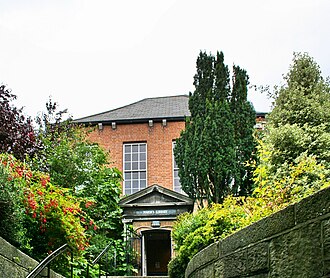
Marsh’s Library Ghost Stories, Dublin — Folklore & Visitor Guide
Marsh’s Library, tucked beside St. Patrick’s Cathedral in central Dublin, draws a particular curiosity after dark: narrow book-lined rooms, gas-lit atmosphere and the sense of centuries pressing close make it one of the city’s most evocative historic interiors. For visitors attracted to folklore, the library offers both an authentic historical setting and a network of rumours and eyewitness tales that flourish in the shadows between shelves.
Book the Ghost Tour Dublin Experience — join our Marsh’s Library night walk
1. Introduction: Why Marsh’s Library fascinates night-time visitors
The appeal is simple: a well-preserved early library, original fittings and an intimate scale that turns routine sounds—footsteps, sighing pages, the building settling—into a charged sensory experience. Unlike modern museums, Marsh’s Library contains objects arranged for reading rather than display; that domestic quality often makes any odd occurrence feel personal and immediate.
2. The building and its documented history — what we know
Marsh’s Library was established in the early 1700s by Archbishop Narcissus Marsh as a public repository of books and scholarship. Its purpose, reflected in surviving inventories and the layout of its rooms, was educational and ecclesiastical rather than funerary or ritualistic.
The physical fabric is an essential part of its story: original wooden shelving, narrow galleries and the compact reading rooms create conditions that have changed little since the library was first in continuous use. Many of the books and fittings are historic and fragile, and curators explicitly limit handling and access for conservation reasons. These are verifiable facts confirmed by the library’s preservation practice and the way visitor access is managed today.
3. Famous legends and ghost stories associated with Marsh’s Library (folklore)
Below are the tales that circulate locally and on many informal visitor accounts. These are pieces of folklore—stories shared and reshaped over generations—rather than documented evidence.
- Footsteps in closed rooms: Several visitors have reported hearing footsteps on the upper galleries when no one is visible. The story appears frequently in local retellings and tour narratives.
- A guardian figure: Some versions of the legend describe a solitary figure seen moving between the stacks or standing momentarily at the end of an aisle. Descriptions vary and the figure is never identified in official records.
- Books out of place: There are claims that volumes have been found moved or slightly ajar in ways that staff did not arrange. This has become a common motif in accounts of “haunted libraries” more widely.
- Chill spots and sudden drafts: Like many ancient buildings, Marsh’s Library has cold corners and draughts. These atmospheric phenomena are often reported as part of ghost narratives.
These stories are valuable as cultural material: they tell us how people experience the building and what aspects of the past they find most resonant. As folklore, they are mutable—details change with each retelling and with the storyteller’s intent.
4. Eyewitness accounts and modern reports — anecdote vs verifiable evidence
When assessing eyewitness reports, it helps to separate direct observation from interpretation. A visitor may correctly report hearing a noise, seeing a shadow or feeling cold; the explanation for those observations ranges from simple physics to misperception.
There is no publicly available, verifiable evidence that proves paranormal activity at Marsh’s Library in the scientific sense. Reports tend to be anecdotal, often collected years after the event, and rarely accompanied by corroborating material such as clear audio recordings or independent witnesses whose statements can be cross-checked.
That said, anecdotal evidence is still culturally significant. Contemporary reports are part of a living folklore that informs how people relate to the site. Responsible guides and historians treat such accounts as stories to be interrogated and enjoyed rather than definitive proof.
5. How ghost tours interpret the site: storytelling, atmosphere and historical context
Professional night-walks approach Marsh’s Library with a blend of theatricality and scholarship. The aim is not to mislead but to use storytelling to illuminate history. Guides set expectations at the outset: some elements are folklore, some are documented history, and the rest are interpretive reconstructions intended to evoke the past.
Good ghost-tour practice includes: framing legends explicitly as folklore, explaining the building’s historical functions and conservation needs, and avoiding sensational claims presented as fact. This approach helps visitors appreciate both the thrill of the stories and the integrity of the site.
When you join an organised walk, such as the Ghost Tour Dublin Experience, you will find narrators who situate colourful tales within documented social history—why a building looked the way it did, who used it, and what events nearby shaped local memory. For context on how other sacred or civic sites are treated in tours, consider related explorations of Dublin’s nocturnal heritage like Christ Church Cathedral Crypt Sightings or the urban narratives traced in the Lost Lanes Night-Walk.
6. Practical visitor advice: opening times, photography, accessibility and etiquette
Opening hours and special evening events vary by season and conservation scheduling. Always check the library’s current visitor information or book a guided night-walk in advance to guarantee access.
Photography: Many historic interiors restrict flash photography and close-up handling of objects. Flash can damage delicate materials and is often disallowed. On organised night-walks you should follow the guide’s instructions—some tours prohibit cameras or ask that phones be on silent to preserve atmosphere.
Accessibility: Marsh’s Library was built in a period before modern accessibility standards. There are narrow stairs and confined spaces that may limit access for some visitors. If you have mobility concerns, contact the venue or the tour organiser in advance to discuss arrangements.
Etiquette: Respect for conservation and other visitors is paramount. Avoid touching bindings and furniture, keep voices low, and follow staff directions. If you plan to attend a night tour, arrive on time and be prepared for low lighting and close quarters.
7. Planning your visit: combining Marsh’s Library with nearby night-walks and tours
Marsh’s Library sits within a dense cluster of historic sites that reward an evening itinerary. A typical plan might combine a focused visit here with a wider walking route that explores ecclesiastical sites, alleys and civic spaces after dark. Thematic pairings—such as death-and-memory routes or architectural night-walks—work especially well.
For those who want a structured experience, organised tours consolidate narrative, context and logistics. Book the Ghost Tour Dublin Experience — join our Marsh’s Library night walk to join a guided evening that balances folklore and facts. If you are organising a group, we also offer private arrangements tailored to school groups, heritage societies and corporate bookings; contact us to discuss private-group options and timings: Book our private groups.
Pairing suggestions: follow a Marsh’s visit with tours that reflect complementary themes—medicine and mortality, urban poverty, or vanished streets. For example, explorations of Dublin’s medical past and civic institutions can deepen the context for library legends; see thematic routes like City Morgues of Dublin or social-history walks such as Workhouse Districts After‑Dark. For organisers and community projects who want to develop night-tour offers, our resources on funding and heritage support may help: How to secure grants and heritage funding for Dublin dark‑tourism projects.
Whether you come for scholarly interest, atmospheric photography (within guidelines), or the pleasure of a good ghost story, planning and respect for the place will make your visit more rewarding.
Book the Ghost Tour Dublin Experience — join our Marsh’s Library night walk
FAQ
Is Marsh’s Library actually haunted or are the stories just legends?
There is no verifiable, scientific proof that Marsh’s Library is haunted. The stories you hear are part of local folklore—memories, sensory experiences and storytelling traditions woven around a historic place. Treat them as culturally meaningful narratives rather than established fact.
Can I visit Marsh’s Library as part of a night-time ghost tour?
Yes—night tours that include Marsh’s Library are offered by organised providers at certain times. Booked tours provide access and contextual interpretation that makes folklore and history clearer. Reserve your place with a reputable operator in advance to avoid disappointment.
Are cameras and flash photography allowed inside Marsh’s Library?
Policies vary, but many historic interiors restrict flash photography to protect delicate materials. On night-walks, guides usually specify whether photography is permitted. Follow instructions from staff and guides to preserve the collection and the visitor experience.
Do I need to book a guided tour in advance to hear the ghost stories?
While some stories can be encountered informally, the most reliable way to hear well-researched accounts and folklore is on a guided night-walk. Advance booking is recommended, especially for evening tours which have limited capacity and may only run on select nights.