
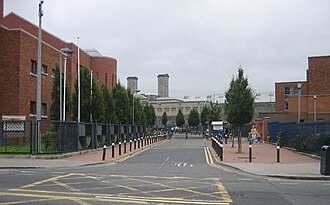
Mountjoy Prison Midnight Sightings: History, Folklore & Night Tours
Mountjoy Prison sits in Dublin’s northern quarter as a place of hard history and persistent stories. By night its stone walls and exercise yards become the focus of whispers: claims of footsteps in empty corridors, shapes at the gate, sudden drops in temperature. This visitor-focused guide separates the prison’s documented record from the folklore that has grown up around it, examines why midnight sightings continue to be reported, and explains how tourists can responsibly and respectfully explore those stories on guided night walks.
Mountjoy Prison — documented history and notable events
Mountjoy is primarily a correctional institution and its history is rooted in penal practice, overcrowding and the politics of incarceration. The current structures are nineteenth-century in origin and were designed to house a growing urban population and manage criminal justice by the standards of the time. Over the decades Mountjoy has held a wide range of prisoners—common-law offenders, political detainees and, at times, those awaiting more severe sentences.
Executions and enforced solitude are a recorded part of many prisons’ histories, and Mountjoy has similarly difficult chapters in its institutional record. The facility also features in Ireland’s political history; during periods of political unrest and rebellion it housed republican prisoners and was a site of hunger strikes, protests and transfers. These are matters of public record and parliamentary debate, and they shaped the experiences of inmates, staff and local communities.
As with any long-serving prison, Mountjoy’s operational history includes reforms, riots, and changes in policy. Those documented events—disciplinary measures, building extensions, legal inquiries—are the backbone of what historians can verify when reconstructing the site’s past. Distinguishing that verified material from the oral narratives that later developed is essential when discussing “sightings.”
The sightings: common types of midnight reports
Reports associated with Mountjoy at night typically fall into a few recurring categories:
- Apparitions or human-shaped figures seen at windows, along walkways, or in yard shadows.
- Unexplained sounds—footsteps on empty landings, clanging doors, or voices that seem to fade with distance.
- Cold spots or a sudden lowering of temperature reported by individuals standing near particular walls or gateways.
- Feelings of unease, disorientation or the sense of being watched while passing the prison at night.
Such claims originate from a mixture of sources: oral histories from former staff and residents, secondhand stories told in pubs and neighbourhoods, occasional media features, and the testimonies of visitors on after-dark walks. In many cases the specific sighting is not accompanied by corroborating records; instead it becomes part of the local oral landscape and is reiterated by successive narrators.
Fact vs. folklore: assessing eyewitness accounts and oral tradition
When evaluating a midnight sighting it’s useful to consider three categories: documented fact, credible eyewitness testimony, and folklore.
Documented fact includes material found in official records—prison logs, court documents, contemporary newspaper reports or government inquiries. These can confirm events like executions, riots, or prisoner movements.
Credible eyewitness testimony consists of first-hand accounts from named individuals who are able to describe an incident in a verifiable context. Even strong eyewitness claims can be complicated by time, memory, and suggestion: human perception is fallible, especially at night and in stressful settings.
Folklore encompasses stories that have accumulated detail through retelling. These narratives often fill gaps left by formal records and provide a moral, symbolic or emotional reading of a place. Folklore is valuable for understanding social memory and community identity, but it is not the same as documentary proof.
Separating these strands requires patience: check for verifiable records where they exist; treat vivid personal stories with respect while acknowledging the limits of memory; and appreciate legend as cultural material rather than literal history.
Why the stories persist: architecture, memory and dark-tourism appeal
Prisons by design concentrate emotion. Narrow corridors, high walls, barred openings and the echoes of stone create an environment conducive to heightened feeling. Architectural features—recessed windows, stairwells and small, ventilated cells—can distort sound and light, and these sensory oddities are often interpreted as supernatural by those passing close by at night.
Memory plays a role too. Families, former staff, and local communities carry stories of suffering, protest and resilience. Over time those stories crystallise into narratives that emphasize the dramatic or uncanny. In Dublin, such narratives intersect with a broader appetite for dark-history tourism: visitors seek visceral encounters with the past, and guides—when responsible—frame difficult history in ways that are honest and educational rather than sensational.
Visiting at night: what to expect on a guided Mountjoy-related night walk
A guided night walk that incorporates Mountjoy-related stories typically blends historical context with folklore, and a careful operator will clearly label which is which. Expect a route that pauses at viewpoints rather than attempting entry; active prisons and secured sites are not open for casual nocturnal exploration.
Guides will usually start with documented history—how the prison was used, notable incidents, and social context—before introducing oral histories and reported sightings. They will point out architectural details that affect acoustics and sightlines, and they may recount anonymised testimony from former staff or local residents. The aim is atmosphere balanced by credibility.
Photography policies vary. For general night walks you can usually take photos from public pavements and viewpoints, but tripods and intrusive lighting may be restricted out of respect for residents and for safety. For practical advice on lighting for night tours, see our guide on Budget Lighting & Props for Dublin Night Tours: Practical Tips for Haunted Walks.
Etiquette for dark-history and ghost-themed walks
Respect is paramount. Remember that prisons were and are places of real human suffering. Avoid mocking or sensationalising the experiences of former inmates and bereaved families. Follow the guide’s instructions about where to stand, when to speak, and when to keep voices low. If a route passes close to private homes or active institutional entrances, give way and maintain distance.
Photography etiquette: keep flash to a minimum, do not linger blocking sightlines, and never attempt to enter secure areas. Guides will usually advise on what is acceptable; if unsure, ask before you take a photo.
Safety, access and legal considerations for nighttime visits
Mountjoy is a functioning facility in parts and has restricted access for obvious reasons. Trespass on prison property is illegal and dangerous. Night tours operate from public routes and licensed pathways and are designed to show the exterior, explain the history, and share stories without breaching security.
Guide operators should carry public liability insurance and be able to demonstrate good knowledge of local regulations. Tours are generally conducted in small groups to reduce disturbance and to keep everyone safe. If you have mobility concerns, ask in advance about route surfaces and meeting points.
How to join a tour and other nearby haunted spots to include on your itinerary
To explore Mountjoy-related stories with a knowledgeable guide, book a Haunted Ghost Tour Dublin night tour to explore Mountjoy and other after-dark stories (reserve now). Our walks are designed to be informative and respectful, combining verifiable history with the oral traditions that make Dublin’s nights so storied.
If you are planning a broader haunted-Dublin itinerary, consider combining a Mountjoy-focused walk with nearby features: the water lore and evening ambience of Blessington Street Basin, the seaside echoes at the Martello Tower (James Joyce Tower), and neighbourhood legends along the Ranelagh Back-Lanes. Seasonal planning tips can be found in our Samhain-to-Winter Dublin Ghost Feature, and practical gear advice is in the Budget Lighting guide mentioned above.
If you are organising a private or corporate group and want a tailored evening experience, we can offer specialised routes and scheduling—see our private groups information for details: Private and group tours: enquire here.
FAQ
Are Mountjoy Prison midnight sightings documented in historic records or are they mostly legend?
Much of Mountjoy’s operational history—incidents, protests, disciplinary records and notable prisoners—is documented in official archives and contemporary reports. Midnight sightings, as sensory or supernatural claims, are primarily part of oral tradition and local storytelling. That does not make them without value: they reflect communal memory and how people process difficult history—but they should be treated separately from archival fact.
Can I visit Mountjoy Prison at night and take photos?
You can view Mountjoy’s exterior from public routes and take photographs from public pavements. However, the prison itself is a restricted site and night entry without permission is illegal. Use discretion with lighting and equipment; avoid intrusive flashes and tripods that might alarm residents or obstruct pavements. Guides will advise on acceptable photographic conduct during organised walks.
Are guided night tours safe and suitable for families?
Licensed, experienced guides run safe night tours with clear routes and group-size limits. Families with older children often find these walks engaging, but consider the subject matter: prison histories and ghost stories can be intense. Check the tour’s age recommendations and notify the operator of any mobility needs.
What should I bring and how should I behave on a dark-history or ghost-themed walk?
Bring comfortable footwear, a small torch with subdued light, and clothing appropriate for weather. Be punctual, listen to the guide, and keep noise to a minimum near residential areas. Ask before photographing, and respect any guidance about where to stand or not stand. Above all, listen to the historical context as well as the stories—both matter on these walks.