
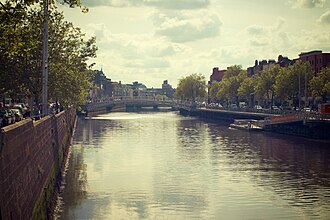
The River Poddle threads through Dublin’s lesser-known corners, half-hidden in culverts and daylighted runs, and it has long been the setting for whispered stories told after dark. Some tales lean on documented history — the Poddle’s role in powering mills and feeding parts of the medieval city — while other stories belong firmly to folklore: water‑spirits, phantom footsteps on bridges, and unexplained splashes heard on moonless nights. This guide separates the documented record from local legend, explains likely natural and man‑made sources of the eerie sounds people report, and offers practical advice for anyone who wants to explore Poddle lore safely on foot after sunset.
Why the Poddle’s Nighttime Reputation Endures
The Poddle’s reputation owes much to its physical nature: it appears and disappears from view, runs under older streets, and flows past quiet backyards and forgotten industrial sites. Darkness amplifies uncertainty; a trickle behind a wall or a distant clatter becomes atmospheric, and stories passed between neighbours gain a life of their own.
Another factor is how quickly urban infrastructure changes the senses. Culverts, sluices and older stonework create echoes and water noises that are unfamiliar to modern ears. When those sounds occur in areas with historical associations — mills, workhouses, taverns — it’s easy for imagination to fill the gaps between fact and feeling.
The River Poddle — A Short Historical Overview
Documented history shows the Poddle was an important working river for Dublin. It supplied water to parts of the medieval city, helped sustain workshops and mills, and shaped early land boundaries. As the city industrialised, stretches of the river were modified — channelled, culverted, or incorporated into drainage systems.
That industrial past left features that influence what you hear today: old stone channels, sluice gates (some now disused), and underground culverts that concentrate and amplify water sounds. These are verifiable physical elements rather than supernatural ones, but they are the reason nighttime noises can feel unusual.
Reported Odd Noises and Sightings: Eyewitness Reports vs. Verifiable Records
Eyewitness accounts collected informally include a consistent set of impressions: sudden splashes with no visible cause, the sound of footsteps where there are no paths, muffled voices or singing, and intermittent mechanical clanks coming from hidden workings.
These reports are real in the sense that people heard or experienced them, but verifiable records — municipal reports, engineering logs, or historical accounts — rarely corroborate paranormal conclusions. Where official records exist they tend to describe structural work, flooding events, or maintenance of drainage that can explain localized disturbances.
In short: the human reports matter and shape local culture. They do not, however, constitute proof of ghosts. Treat personal testimonies as interesting folklore that merits explanation alongside documented facts.
Folklore Around the Poddle: Water Spirits, Local Tales and How These Stories Developed
Folklore attaches to waterways in many cultures, and the Poddle is no exception. Stories of kelpies, banshees, or guardian spirits are part of a broader oral tradition. Locally specific tales often connect misfortune to leaving a crossing unblessed, or they fold in known landmarks — bridges, former mills, or taverns — to give the story a tangible setting.
These narratives developed through generations of storytelling. Before modern lighting and soundscapes, a river’s presence was a daily reality; by night its unknowns were fertile ground for myth. Over time, stories became shorthand for hazards (deep water, slippery banks) and moral lessons (respect the river, be wary of certain places at night).
Natural and Man‑made Explanations for Nighttime Sounds
Wildlife
Bats, foxes, waterfowl and nocturnal birds make noises that can be startling in close quarters. A startled fox, a flapping heron or an owl’s call can be misinterpreted under the cloak of darkness.
Hydraulic effects and culverts
Where the Poddle runs through enclosed channels or passes under bridges, water flow can create resonant tones, gurgles, and splashing that vary with tide, rainfall and blockages. Sudden changes in flow — a discharge from a storm drain or an upstream sluice opening — produce audible and sometimes rhythmic sounds.
Human activity and infrastructure
Nighttime maintenance work, HVAC systems, passing trucks, distant trains and the settling noises of older buildings all add to an urban soundscape. Older pipes and metal fixtures expand and contract with temperature changes, producing taps and clanks that travellers sometimes interpret as footsteps or chains.
Sewer and drainage interactions
Because portions of the Poddle interact with drainage systems, air moving through pipes and pressures equalising can create howls or moans. These are fully explainable by fluid dynamics and are common in cities with mixed surface and culverted waterways.
Practical Nightwalk Advice: Best Stretches to Visit, Safety, Permissions and Responsible Behaviour
Best stretches: Look for the Poddle where it is visible in parks, beside older bridges and in daylighted channels. Guided tours will take you to safe, accessible sections chosen for atmosphere and public access. If you prefer to explore independently, consult local maps or visitor centres to confirm which pathways are public and well lit.
Safety first: walk in groups, bring a reliable torch, wear reflective clothing if you are near roads, and be aware of slippery surfaces near water. Avoid entering fenced or clearly private areas. If you encounter unusual structures or potential hazards, report them to local authorities instead of exploring alone.
Permissions and respect: some parts of the Poddle run near private property or conservation sites. Trespass risks both your safety and the goodwill of local communities. Keep noise levels reasonable, leave no litter, and remember that many of the areas you’ll pass through are residential — respect local residents’ privacy and quiet at night.
For additional atmospheric routes, our coverage links with other evening walks — for example the Grand Canal Twilight Trail and guides to the city’s eerie statues — which explore how waterways and monuments shape after-dark stories. These can offer context and complementary routes for a longer evening of exploration.
How to Experience Poddle Legends on a Guided Night Tour
On a Haunted Ghost Tour Dublin night tour you can expect a small‑group experience led by a guide familiar with both the Poddle’s documented history and the local oral tradition. Guides point out physical features that explain sounds, tell recorded local stories alongside documented facts, and highlight how industrial remnants shaped the river’s behaviour.
Tour elements typically include careful route selection for safety and atmosphere, close reading of the built environment (culverts, bridges, mill-race remains), and discussion about how to recognise natural versus man‑made noises. Guides also explain heritage considerations and encourage responsible behaviour. If you have specific access needs or a private group, we offer tailored options — see our private groups page for details.
Private and group bookings: https://www.ghosttourdublin.com/group-tours-dublin/
Further Reading and How to Check Primary Sources
If you want to move beyond stories, consult local archives, city council records and library collections for maps and engineering reports that document the Poddle’s course and modifications. Local history societies frequently publish walk guides and oral-history compilations that clarify which stories have roots in documented events and which are later embellishments.
Start with municipal planning documents for information on culverts and drainage, and consult historical maps to see how the river’s visible course has changed. Local heritage groups and university geography departments can also point you to primary sources without relying on sensational retellings.
Final Notes
The River Poddle’s nighttime reputation is a blend of real environmental factors, tangible historical remnants, and human imagination. That combination is precisely why a guided nightwalk is the most rewarding way to explore: you gain context, safety and the opportunity to hear the stories that make Dublin’s lesser-known waterways memorable.
FAQ
Is the River Poddle actually haunted or are the stories just folklore?
Most claims rest in folklore and personal testimony rather than verifiable evidence. The sounds and sensations people report often have natural or infrastructural explanations. That said, the stories form an important part of local culture and are worth hearing in a guided, contextualised setting.
What kinds of odd noises have people reported along the Poddle at night?
Reports commonly describe splashes, footsteps, muffled voices, clanking noises and low moans. Many of these can be traced to wildlife, water flow changes in culverts, traffic echoes, or building and pipe movements.
Can I explore the Poddle at night on my own, or is it better to join a guided tour?
You can responsibly explore public stretches on your own, but a guided tour offers route knowledge, safety in numbers, historical context and explanations that help distinguish folklore from physical causes of noises. For an enriched experience, a guided nightwalk is recommended.
Are any sections of the Poddle closed to the public or unsafe after dark?
Yes. Some stretches run through private property or are fenced for safety; others are within construction or conservation zones. Always check local signage and avoid fenced or clearly closed areas. If in doubt, consult tour operators or local authorities before visiting after dark.