
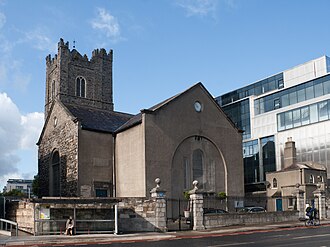
St Michan’s has held an uneasy fascination for Dublin visitors for generations: a medieval church, stonework that smells of lime and time, and a series of remarkably preserved human remains in the vaults below. Whether you come for history, architecture or the promise of a chill, separating what we can document from what we tell as legend makes a visit richer and more respectful. This guide explains the documented facts about St Michan’s crypt mummies and hauntings, the science behind the preservation, practical visitor tips, and how to experience the site on a guided Ghost Tour Dublin Experience.
Book a Ghost Tour Dublin Experience to visit St Michan’s crypt
Documented history of St Michan’s Church and its crypts (what we know)
St Michan’s stands on one of Dublin’s older ecclesiastical sites. The visible structure and the surviving vaults reflect long use, repairs and rebuilding over centuries. The church has served as a parish building and burial place; beneath the floor lie vaults and burial chambers that were used by local families and parishioners.
Archaeological and architectural studies of churches like St Michan’s indicate layers of construction and adaptation rather than single dramatic events. What we can say with confidence is that the crypts were used for burials and that the vault designs and building materials contribute to the conditions that preserved some remains unusually well.
The mummies: preservation, notable burials and the science behind them
The human remains in St Michan’s crypt are best described as naturally mummified rather than deliberately embalmed. Mummification here is a product of environment: dry air, good ventilation within stone vaults, and the chemical properties of the limestone and mortar that draw moisture away. Those conditions slow decay and can produce preserved skin, hair and some clothing traces.
Visitors may see several distinct remains: full and partial bodies and isolated elements such as heads. Their preservation varies depending on position, coffin construction and whether the vault was sealed. For conservators and scientists, these remains are important for study because they offer insights into burial practices, diet and health in past centuries without the intervention of chemical embalming.
Legends, reported hauntings and how folklore differs from recorded fact
Stories of weeping, footsteps, cold spots and disembodied voices have long clung to St Michan’s. These tales are part of Dublin’s living folklore and feature in the city’s ghost-tour tradition. Folklore often amplifies the uncanny: a well-preserved face becomes a sentinel; the echoing of footsteps in stone becomes the passage of a restless spirit.
It is important to distinguish three things: documented history, eyewitness reports, and legend. Documented history is built on records and physical evidence. Eyewitness reports are subjective experiences—real to those who report them, but not proof of supernatural activity. Legend is the cultural layer that grows around a site, shaped by mood, media and repeated storytelling. While many visitors report feeling unsettled, there is no widely accepted scientific evidence that identifies paranormal causes at St Michan’s.
What to expect on a visit — tour formats, timings, photography and atmosphere
Visits to the crypt are typically short, focused experiences. Entry may be ticketed and time-limited. Some visitors reach the vaults on a self-led visit with an attendant or as part of a themed ghost walk run by local guides. Ghost Tour Dublin Experience offers guided options that combine the crypt visit with wider after-dark routes, pairing atmosphere with context so you leave having heard both the history and the stories.
Expect steep, uneven steps, low-light conditions and narrow passages. The atmosphere is inevitably damp and cool, with the heavy stone contributing to a sense of enclosure. Guides often set a respectful tone that emphasizes conservation as well as storytelling.
Photography rules can vary. Flash photography can damage fragile surfaces and is sometimes prohibited; always follow staff instructions. If photography is allowed, keep distances, avoid touching displays and respect other visitors’ experience.
Practical tips: tickets, best times to visit, nearby transport and seasonal considerations
Buy tickets in advance for peak seasons or for specific guided tours. Early-morning visits tend to be quieter for those who prefer a less atmospheric experience, while evening tours heighten the sense of mystery. Dublin’s city centre transport network and city footpaths make St Michan’s reachable from many central points; if you plan to combine the crypt with other after-dark walks, consider routes that minimize transfers.
Seasonally, winter evenings are longer and colder, which can enhance the mood but require warm clothing. Summer offers more daylight for surrounding exploration but may mean larger crowds. If you want a broader haunted-walk evening, Ghost Tour Dublin Experience pairs St Michan’s with other atmospheric routes — consider complementary walks like the Dublin City Walls After-Dark Trail or the Grafton Street After-Dark Apparitions walk for a fuller night out.
Etiquette, conservation and safety in a fragile heritage site
Respect is the single best practice when visiting. The remains in the vaults are human; they are also fragile. Do not touch the coffins, bones or any display elements. Oils from skin, repeated handling and environmental changes can accelerate deterioration.
Follow posted rules about food, drink and flash photography. Keep noise to a minimum—both to maintain the visitor experience and to avoid disturbing staff and volunteers who care for the site. If you have mobility issues, check accessibility details in advance; vaults commonly include narrow stairs and limited handrails.
Emergency access can be constrained in older buildings. Take care on stone steps, wear shoes with good grip, and listen to staff instructions during the visit.
How to experience St Michan’s with Ghost Tour Dublin Experience (booking, meeting point, tour extras)
Ghost Tour Dublin Experience runs guided tours that place St Michan’s in cultural and historical context. Tours typically cover documented history, conservation concerns and the origins of the most persistent legends—balancing atmosphere with accuracy. Booking online is recommended, especially for evening slots and weekends.
Meeting points vary by tour; confirmations from the operator will specify where to assemble. Tours often include additional after-dark sections such as wall fragments and medieval streets, and may reference broader haunted-site options like the Kilmainham Gaol Midnight Apparitions route or the Hellfire Club Montpelier Hill guide for those planning longer excursions.
If you are organising a private group, Ghost Tour Dublin Experience offers tailored bookings for closed groups; details are available through the booking link below. For information on community and volunteer models that sustain local walks, see the discussion on Volunteer-Run Dublin Ghost Tours.
Book a Ghost Tour Dublin Experience to visit St Michan’s crypt
If you need a private or bespoke group booking for friends, family or a corporate event, visit our private groups page to enquire about tailored times and meeting arrangements.
FAQ
Can I go down into St Michan’s crypt to see the mummies?
Yes — the crypt is accessible to visitors as part of a ticketed visit or guided tour. Access is typically supervised and sometimes time-limited to protect the site and manage visitor flow. Check opening times and booking requirements before you go.
Are the mummies preserved naturally or were they embalmed?
The remains are best described as naturally mummified. Preservation is largely the result of environmental conditions in the vaults — dry air, ventilation and the stonework — rather than deliberate embalming practices.
Have there been verified paranormal investigations or confirmed hauntings at St Michan’s?
Many visitors and investigators have reported unusual experiences, but there is no scientific consensus confirming paranormal activity. Reports remain anecdotal and are part of the site’s folklore. For visitors seeking an atmospheric experience, guided tours provide context without presenting unverified claims as fact.
Is photography allowed in the crypt and are children welcome on tours?
Photography rules vary; flash photography is often discouraged or banned to protect fragile surfaces. Children are generally welcome but must be supervised at all times due to low light, narrow steps and the sensitive nature of the displays. Check the tour operator’s age guidance and photography policy when booking.