
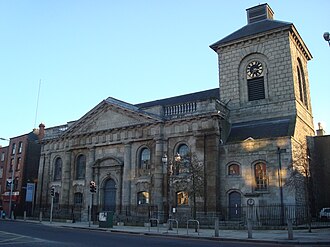
St. Catherine’s Church sits where narrow lanes and old parish streets meet, a compact stretch of masonry and muted light that invites close listening. For visitors drawn to Dublin’s quieter, shadowed corners, the church’s alley, its low crypt entrance and the soft rumours that travel on a cold wind create a powerful mix of architecture and story. This guide separates what survives in parish records and archives from the oral tradition known locally as the “alley whispers”, offers practical advice for visiting, and explains how a guided Ghost Tour Dublin Experience can add context while keeping visits safe and respectful.
Introduction: What draws visitors to St. Catherine’s Church alley and crypts
The immediate appeal is a sensory one: the alley narrows to a human scale, the church façade feels older than the street around it, and the crypt entrance interrupts the sidewalk with a deliberate gravity. For many, that physical intimacy encourages imagining the lives and deaths that passed through here. For others, the alley is a setting for stories — half-remembered conversations, footsteps at the edge of hearing, and neighbourhood tales that have accumulated over generations.
Visitors often say they come for two things: tangible history you can verify in registers and archives, and the intangible atmosphere of oral culture — the “alley whispers” — that colours everyday memory. Both have value, and both reward a careful approach that distinguishes documented fact from legend.
Book your Ghost Tour Dublin Experience at St. Catherine’s
Documented history: parish origins, known events, and the church’s changing role in Dublin
St. Catherine’s is first and foremost a parish place: a building associated with recorded services, baptisms, marriages and burial arrangements. Parish registers, surviving vestry minutes and city maps show how the church served its immediate neighbourhood, acted as a waypoint for parish business, and adapted as the surrounding streets were rebuilt or repurposed.
Architectural features visible today — the massing of the nave, the materials used, and evidence of repairs — reflect phases of maintenance and renovation rather than a single uninterrupted original fabric. Those features are a record of changing needs: congregation size, local wealth, and municipal works all leave physical traces without necessarily producing dramatic headline events.
Where archive entries exist they tend to be procedural: lists of names, notes about repairs, accounts of burials and payments. Those documents are useful for confirming who was associated with the parish and for establishing patterns of use over time, but they rarely provide the vivid individual narratives that appear in storytelling.
The crypts and burial practices: architecture, surviving records, and what is verifiable
The crypt beneath St. Catherine’s is modest when compared with cathedral-scale vaults. Structurally it functions as a burial and interment space built to serve the parish. Physical features—low ceilings, arched supports, drainage considerations—reflect practical responses to handling burials in an urban site rather than theatrical design intended to invite spectacle.
What is verifiable comes from parish registers and municipal burial records: names entered for interment, payments recorded for vaults, and occasional notations about removal or reburial when urban redevelopment required it. Surviving records can confirm that certain families maintained vaults or that specific interments took place in the church grounds.
It is important to note that not every name in tradition corresponds to a currently accessible stone or marker. Urban churchyards have often been disturbed, re-used, or reconfigured, and records sometimes indicate removal or loss rather than continuous preservation. If you are researching a particular burial, starting with parish registers and Dublin City Archives is the most reliable route.
Alley whispers and oral tradition
Folklore: The alley whispers associated with St. Catherine’s are part of Dublin’s living oral tradition. These tales include accounts of unexplained footsteps, a faint voice heard around the crypt entrance, and memories of a shadow seen pacing where the lane bends. Such stories are frequently transmitted through neighbours, market vendors, and late-night pub conversations.
Oral tradition also attaches moral or cautionary layers to the alley: warnings to children about staying out late, symbolic stories of lost lovers meeting by moonlight, and tales that link a particular stone or doorway to a dramatic personal event. These narratives evolve; details change between tellers, and embellishment is common. That mutability is characteristic of folklore.
When folklore names particular incidents or persons, the trail often begins in communal memory rather than in written records. For visitors interested in how stories form and spread, our piece on Verifying Dublin Oral Legends: Pillars of Folklore Methods for Visitors offers practical approaches for distinguishing likely origins from later accretions.
Fact vs. folklore: how archival evidence supports or contradicts popular tales
Many of the most arresting stories associated with St. Catherine’s hinge on specific individuals or dramatic deaths. Parish registers and municipal records are the tools that can confirm or refute such claims. Where the archives show routine burials and routine parish business, dramatic supernatural accounts are likely to be embellishments layered over quiet facts.
Conversely, there are occasions when records corroborate unexpected elements of a story: a listed burial might match a name preserved in local memory, or a vestry minute may mention a disruptive event that later became exaggerated into legend. That interplay — a documented kernel around which narrative accretes — is common in the life of any urban folklore.
Understanding the difference is about proportionality. Archives provide anchors; oral tradition provides colour. Both matter for a full appreciation of a place like St. Catherine’s.
Practical visitor information: access, opening hours, photography, safety and respect on-site
Practicalities change, so check current opening times before you visit. Many parish buildings maintain limited public hours and may restrict access to the crypt area for safety or conservation reasons. If you are arriving as part of a guided tour you will typically be advised in advance about specific access points.
When moving through the alley and around the church, be mindful of private property and residents’ routines. The lanes near St. Catherine’s are still part of daily life for people who live and work there; low-impact behaviour is appreciated. Keep noise to a minimum, avoid obstructing passageways, and show respect for any memorials you encounter.
Photography for personal use is usually acceptable in outdoor areas, but rules can vary for interior or crypt spaces. Night photography can be atmospheric, but if you plan long exposures or lighting setups, obtain permission and take extra care with tripods and cables where foot traffic is narrow.
For after-dark walking in the wider area, consider related guided experiences such as the South Circular After-Dark Lanes Trail or the Mount Jerome Cemetery After-Dark Walk — Headstone Stories Trail, each curated to balance atmosphere with safety and context.
Experiencing it with Ghost Tour Dublin Experience: what our guided visit includes and why a guided walk adds context
A guided Ghost Tour Dublin Experience is designed to pair verifiable history with the living oral tradition of places like St. Catherine’s. Our guides reference parish registers and city records where appropriate, point out architectural features that explain how a crypt functions, and flag which stories are documented and which belong to local folklore.
Guided groups are briefed on respectful behaviour, and we manage access to narrow alleys so that residents and other visitors are not inconvenienced. Guides can also suggest nearby resources and further reading for visitors who want to pursue archival research after the walk.
Book your Ghost Tour Dublin Experience at St. Catherine’s
If you are travelling with a private group or planning a special research visit, private bookings are available. Contact our team to arrange a tailored experience that can focus more closely on archival context or folklore interpretation: Book your Ghost Tour Dublin Experience at St. Catherine’s
Further resources: where to consult parish registers, Dublin City Archives and local reading for deeper research
For visitors who want to move beyond impressions, start with the parish registers and Dublin City Archives. These institutions hold the primary records that provide verifiable information about baptisms, marriages, burials and local administration. Librarians and archivists can advise on how to request documents and on any privacy restrictions that apply.
Complementary reading includes local history studies and thematic walks that place St. Catherine’s within a wider urban fabric. Two practical articles we recommend for visitors are Insurance basics for small Dublin ghost tours: a practical guide, which is useful for anyone planning small guided activities, and the Henrietta Street: Tenement Residents, Dark History and Ghost Stories piece, which offers context on how urban housing history can give rise to persistent stories.
FAQ
Is the crypt at St. Catherine’s Church open to the public?
Access to crypt spaces varies. Some areas are viewable from public walkways while interior access is often limited for safety and conservation reasons. If you wish to enter any restricted space, check with the parish or join an organised visit where permission and safe procedures are in place.
Are the alley whispers and ghost stories based on documented events?
Many stories originate in oral tradition rather than documentary records. Occasionally a record may corroborate a detail preserved in memory, but most “whispers” are communal narratives that reflect local memory, atmosphere and social history rather than confirmed events.
What is the best time to visit if I want a guided experience?
Guided tours are scheduled seasonally and by demand. Evening walks capture the atmospheric qualities many visitors seek, while daytime visits offer easier access to archives and a clearer view of architectural detail. Check our booking page for current schedules and recommended times.
Is it safe to photograph the church, alley and crypts at night?
Night photography can be safe if you follow basic precautions: remain aware of traffic and pedestrians, use small, unobtrusive lighting, and obtain permission for tripod setups if they obstruct a walkway. For interior or restricted areas, always confirm access rules before photographing.