
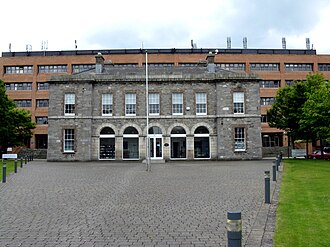
Beggar’s Bush Barracks: Ghost Lore and Military History for Haunted Dublin Tours
Beggar’s Bush Barracks sits at the intersection of Dublin’s civic memory and its darker imaginings. Once a living garrison, later adapted and erased in parts by redevelopment, the site is now a compact collection of stories — some recorded in archives, others reproduced in pub conversation and late‑night ghost tours. This guide pairs what is documented with what is local lore, and offers practical routing and storytelling tips for guides and curious visitors exploring Beggar’s Bush Barracks ghost lore on a Haunted Ghost Tour Dublin walk.
Book a Haunted Ghost Tour Dublin walking tour
Where Beggar’s Bush Fits in Dublin’s Dark History
The story of Beggar’s Bush belongs to a cluster of Dublin sites where military, prison and civic histories meet folklore. It lies close to river and residential quarters that have generated their own twilight tales — for example, see our write‑up on Ballsbridge at Dusk: Legends and Odd Sightings. That proximity helps explain why tales from nearby Richmond Barracks, Mountjoy Prison and other institutional sites bleed into Beggar’s Bush narratives.
Documented History: The Barracks from 18th‑Century Garrison to Modern Site
Beggar’s Bush began life as a military presence in Dublin during the 18th century, functioning as a small barracks within the city’s defensive and policing framework. Historically it was seen as a local garrison rather than a large fortress, housing detachments responsible for public order and rapid response within the city.
Over the 19th and 20th centuries the role of Beggar’s Bush altered with military reforms and urban development. Buildings were adapted, repurposed and eventually partially demolished as Dublin modernised. Today the area contains surviving structures and archaeological traces that testify to its military past, but much of the original footprint has been overbuilt.
Confirmed Incidents and Archival Records — What the Sources Say
When we talk about confirmed incidents we mean events documented in newspapers, military returns, or municipal records. For Beggar’s Bush that typically includes unit movements, musters, disciplinary records and occasional involvement in public order operations. These items appear in official paperwork rather than in sensational eyewitness accounts.
Researchers and guides should look to municipal archives and military listings for verifiable facts: which regiments were stationed, the barracks’ logistical role, and its later administrative uses. There are fewer records of dramatic combat or mass casualties at Beggar’s Bush compared with larger garrison complexes, so many of the barer archival entries relate to daily garrison life and property changes.
What is reliably documented
– The site functioned as a military installation from the 18th century onward.
– Personnel records and administrative correspondence show routine garrison activity and gradual decline in military use as Dublin’s needs changed.
– Redevelopment in the 20th century altered the site significantly; surviving buildings are fragments of a larger original complex.
What is NOT well documented
– Sensational claims of repeated large‑scale violence or well‑documented mass deaths specific to Beggar’s Bush are not supported by strong archival evidence.
– Many of the haunting narratives attached to the location have their roots in oral tradition rather than in official records.
Ghost Lore and Local Legends — Clearly Marked as Folklore
Beggar’s Bush Barracks ghost lore is rich on atmosphere. Stories told by locals and repeated on tours include glimpses of spectral soldiers on night patrol, a lonely sentinel seen near old gateways, and occasional reports of disembodied footsteps or muffled music that people attribute to the barracks’ past.
These tales are part of Dublin’s storytelling ecology. They thrive because of the barracks’ military associations and because the site’s altered architecture — fences, old walls, and recessed courtyards — invites the imagination. However, it is important to label these accounts clearly as folklore: anecdotal, often inconsistent, and built up over time by retelling.
Examples of recurring motifs in the folklore:
– Phantom soldiers keeping watch along former perimeter lines.
– Voices or music with no clear source, often heard at night near remaining structures.
– Sudden sensations of cold or being watched in otherwise quiet alleys adjacent to the site.
None of these motifs equate to archival verification; they are best presented as local narrative traditions that connect people to the place emotionally rather than historically.
On‑the‑Ground Tour Stops: Best Vantage Points and Story Anchors
When you plan a walking tour, choose vantage points that maximise visual context and atmosphere without sensationalising. Good stops include surviving façade lines, original gates or plinths, and any plaques that explain the site’s civic role.
Recommended anchors for a Beggar’s Bush‑focused route:
– A stop at the main surviving building or facade: use it to explain the garrison’s daily life (logistics, drills, guard routines) before transitioning to a folklore vignette.
– A vantage point where the layout of the old compound can be imagined: invite visitors to picture troop movements and the flow of people through the space.
– A quiet alley or courtyard adjacent to the site for a short folklore piece — make clear you are shifting from documented history to local stories.
For comparative context on wartime apparitions and institutional hauntings nearby, guides often include references to Richmond Barracks Wartime Apparitions and Mountjoy Prison Midnight Sightings as part of a broader historical route.
Storytelling Tips for Guides: Sensory Details, Timing, and Legal/ethical Notes
Effective storytelling balances atmosphere with accuracy. Start with firm historical anchors before moving into folklore so listeners can judge what is verified and what is evocative legend. Keep language precise: use “documented” or “archival” for verifiable facts and “local tradition” or “legend” for oral accounts.
Use sensory detail sparingly but evocatively — a faint metallic clink, rhythmic bootsteps, or the smell of damp stone — to help visitors imagine the past without inventing events. Short, vivid descriptions are more powerful than long, speculative narratives.
Timing matters: place folklore pieces at the end of a factual stop, giving listeners space to digest the history first. Legally, avoid implicating private individuals or accusing documented people of wrongdoing without evidence. Ethically, be transparent about what is folklore; do not present unverified tales as fact for theatrical effect.
Practical gear and safety: for night tours, consult our tips on Budget Lighting & Props for Dublin Night Tours to ensure clear paths and good atmosphere without compromising visitor safety.
Visitor Info, Access, and How to Experience These Stories on a Haunted Tour
Beggar’s Bush is accessible on foot and fits naturally into a nighttime or dusk walking tour that moves between several military and civic sites. Sturdy footwear and weather‑appropriate clothing are recommended; much of the storytelling works best at dusk or after dark when the city’s lights and shadows enhance mood.
Respect private property and follow public signage. Some surviving structures are on private land or have restricted access; you can narrate the history and folklore from a respectful distance. Where plaques or interpretive signs exist, use them as factual anchors for your commentary.
For a fuller themed route, consider linking Beggar’s Bush with nearby water‑linked legends at the Blessington Street Basin and other civic sites that carry twilight stories. Sequencing these sites allows you to contrast bureaucratic records with oral tradition across the city.
Book a Haunted Ghost Tour Dublin walking tour
If you are organising a private group or a specialised research visit, we also offer bespoke options tailored to schools, historical societies and private clients. For group bookings and customised routes, please see our private tours page: Book a Haunted Ghost Tour Dublin walking tour.
FAQ
Is Beggar’s Bush Barracks actually haunted or just legend?
Beggar’s Bush is rich in local legend. While people report experiences they interpret as hauntings, these accounts are mainly anecdotal and not substantiated by archival records. Present hauntings as folklore — valuable for atmosphere, but distinct from documented history.
Can I visit Beggar’s Bush Barracks on foot and see the sites mentioned?
Yes. Much of the area is accessible by foot and works well on a walking tour. Some structures may be on private land or partly redeveloped; in those cases you can narrate from public vantage points and point out surviving features.
How do you separate historical fact from folklore when touring?
Always introduce a clear transition: mark the difference verbally (“what we know from records” vs “what local people tell”). Use documented sources for factual claims and frame personal stories as oral tradition. This transparency builds trust and enriches the visitor experience.
Do you offer guided tours that include Beggar’s Bush Barracks stories?
Yes. Our Haunted Ghost Tour Dublin walking tours include Beggar’s Bush stories as part of broader routes that explore military history and ghost lore. To join a public tour, Book a Haunted Ghost Tour Dublin walking tour. For private groups, see our group booking page: Book a Haunted Ghost Tour Dublin walking tour.