
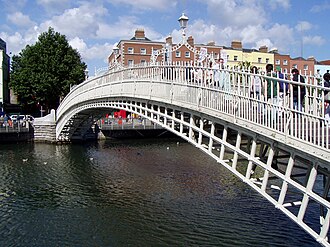
The River Liffey slices through Dublin like a spine of memory: a working river, a trade route and, for centuries, a place where lives and tragedies accumulated. Walk its bridges after dusk and the city’s practical crossings take on a liminal quality — ledgered histories meet whispered tales. This guide pairs documented history with the local folklore clustered on the Liffey’s bridges, offering a visitor-focused walking route that helps you feel the city’s past without mistaking legend for fact.
Book the Haunted Liffey Bridges tour with Ghost Tour Dublin Experience
Why the Liffey and its bridges inspire ghost stories
Bridges are thresholds. They concentrate footfall, commerce and conflict; they are where river currents and human dramas intersect. On the Liffey, every rebuild, widening and rerouting brought new names, new headlines and new rumours. That mix of recorded incidents — accidents, drownings, wartime damage, public executions near the quays — and decades of oral recollection makes the river crossings fertile ground for ghost stories.
How to use this guide: mapped route, timing and safety
Suggested walking route (approx. 90–120 minutes at a leisurely pace): start at Ha’penny Bridge near Temple Bar, head west along the south quays to Grattan Bridge, continue to O’Connell Bridge and the northern quays, then walk further west toward Rory O’More Bridge and the older docklands. This loop keeps you close to the river and offers clear sightlines for atmospheric stops.
Plan for an early-evening walk to catch the city in the twilight when lamps and reflections sharpen the mood but there is still pedestrian traffic. Allow extra time for pauses, photos and listening. Accessibility varies: most bridges have level approaches but some quays have stairs or narrow pavements — check local maps if mobility is a concern. Always stay behind railings and avoid leaning over the river; keep to well-lit areas at night and travel in a group if possible.
Ha’penny Bridge (Liffey Bridge)
Documented history
The Ha’penny Bridge has long been a symbol of Dublin’s pedestrian life. Built as a toll bridge it linked important commercial and social districts and later became a pedestrian-only crossing. Its distinctive ironwork and central span made it a civic landmark and a regular subject of city photography and painting.
Folklore and common legends
Folklore here centres on small, intimate stories: lovers tossing coins, a bridge that keeps a tally of promises, footsteps that pause when no one stands there. These tales often grow from the bridge’s role as a meeting place. The coin-throwing myth — coins ensuring a lover’s safe return or binding a pair — is a typical example of how ritual and romance can become legend in public places.
How folklore grew around a civic landmark
The bridge’s heavy use by courting couples, commuters and street musicians created a dense web of personal stories. Over time, repeated anecdote becomes part of local lore: an account of a sudden cold patch, a misplaced footstep, or a reflection that looks like a face. Distinguishing an eyewitness report from a story retold with embellishment is part of responsible tour guiding.
O’Connell Bridge and the surrounding quays
Documented incidents
O’Connell Bridge sits at a historic artery in the city and has been the site of major civic events and frequent traffic. As the busiest crossing, it appears in many official records: construction notes, traffic reports and public safety files. Changes to the surrounding quays — widening, embankment works and commercial redevelopment — are well documented in city plans and newspapers.
Linked tales and urban change
Ghost stories here often reference the bridge’s role in protests, parades and sudden tragedies recorded in newspapers: tales of spectral marchers, or figures on the quays repeating a past route. Urban change fuels these narratives — when a street you knew is rebuilt, memories attach themselves to structures that remain, and rumours fill the gaps.
Grattan Bridge, Rory O’More Bridge and the lesser‑told crossings
Docklands memories and working‑class narratives
The lesser-told crossings—those near the old docks and working quays—carry the heft of labour history: bargemen, river pilots, shipbuilders. Documented records show employment patterns and dock incidents; oral history preserves the human detail you won’t find in ledgers. Stories from these bridges often focus on loss at work, sudden disappearances and the superstitions of river communities.
Oral traditions tied to river crossings
Rory O’More and surrounding spans host narratives passed down by generations: tales of a night watchman, of cries heard over fog, of a ghost whose footsteps synchronize with the tide. These accounts can vary considerably between storytellers, which is a valuable feature, not a flaw — oral tradition shows how communities use story to remember and to warn.
Separating fact from folklore
Responsible storytelling means flagging what is documented and what is hearsay. Archives, newspapers and council records offer verifiable events: structural works, fatalities recorded by authorities, and legal proceedings. Oral testimony gives atmosphere, motive and texture but changes with each retelling.
When interpreting a ghost story for visitors, name the source type: “this appears in city records” or “this is a tale shared by residents.” For more on turning local stories into content and how to work ethically with memory, resources like our piece on Monetising a Dublin ghost blog with local partnerships & ads and explorations of coastal spectral narratives like Seaside Shrines & Coastal Folklore can be useful starting points.
Practical visitor information
Best times: early evening for atmosphere, late morning for photography without harsh shadows. Weather: the Liffey’s reflections change dramatically in rain and wind — a still night amplifies sounds and can feel particularly eerie. Bring waterproof layers and sensible footwear; pavements can be slippery near the quays.
Photography tips: shoot low to capture bridge reflections, use long exposures on still nights for silky water effects, and mind other pedestrians. For commercial shoots you may need permission from local authorities or property owners — contact the city licensing office before arranging paid filming. For practical guidance about producing filmed content in the city, our guide How to Budget a Short Dublin Ghost Documentary outlines production considerations that are useful even for small shoots.
How to experience it with Ghost Tour Dublin Experience
A guided tour adds context: a local guide points to archive details, contrasts them with oral accounts and reads the subtle signs people leave on the city. On our Haunted Liffey Bridges route we stop at documented incident sites, explore working-class folklore near the docks, and pause at atmospheric viewpoints where the river seems to remember what the city forgets.
Our tours run in small groups for safety and intimacy. Options include public evening walks, private group bookings and corporate ghost-walk events. Guides tailor commentary to the group’s interests — more history, more folklore, or a blend. Book early for evening slots that sell out in peak season.
Book the Haunted Liffey Bridges tour with Ghost Tour Dublin Experience
For private groups and bespoke experiences — school groups, researcher visits or corporate evenings — we offer tailored routes and additional archival detail. Contact us to arrange a private tour that focuses on specific bridges, dockland histories or oral-archive sessions: Private group bookings with Ghost Tour Dublin Experience
Responsible visiting and storytelling
When sharing stories you’ve collected, credit the people and communities who told them. Avoid sensationalising recent tragedies and be mindful of descendants. For further reading on memorial signs and the symbolism present in the city’s funerary landscape, consider our article Eerie Epitaphs: Decoding Dublin Headstone Symbols and Stories. For self-guided wanderers keen to map other eerie neighborhoods, see our Self‑Guided Map: Dublin Northside Lanes with Eerie Sightings.
FAQ
Are the bridge ghost stories true or just legends?
Many stories combine verifiable facts with oral embellishment. Some incidents are recorded in archives; others exist only in community memory. We separate documented events from folklore when we narrate, so you can appreciate both the history and the myth without confusing them.
Is it safe to walk the Liffey bridges at night?
Yes, many parts of the quays are well lit and commonly used by locals at night. Still, stay on pavements, avoid climbing railings, keep to busier stretches if you are alone, and consider joining a guided group for late walks.
Can I follow this route as a self-guided walk or should I join a tour?
Both are possible. Self-guided walkers will enjoy the flexibility and can follow the mapped loop described earlier, but a guided tour adds archival context, local anecdotes and safety in numbers. If you want deeper detail and curated stories, joining a tour is recommended; for DIY walkers, our self-guided resources and linked articles offer useful background.
Do I need permission to photograph or film on the bridges for commercial use?
Casual photography for personal use is permitted in public spaces. For commercial shoots, equipment setups or anything that impacts public access, you will usually need permission from city authorities and sometimes property owners. Check local licensing requirements before scheduling commercial filming.