
Kilmainham Gaol: Cellblock Echoes and Late‑Hour Tales | Haunted Ghost Tour Dublin
Kilmainham Gaol’s stone cellblocks have a way of compressing time: the narrow galleries, ironwork, and high walls seem to hold both recorded events and quieter impressions passed between visitors. For travellers and local guides interested in the intersection of penal history and haunted reputation, a careful, practical look at the gaol’s “cellblock echoes and late‑hour tales” helps separate what we can verify from what grows in the telling.
Book a Kilmainham Gaol night walk with Haunted Ghost Tour Dublin
Introduction: Why Kilmainham Gaol’s cellblocks draw late‑hour attention
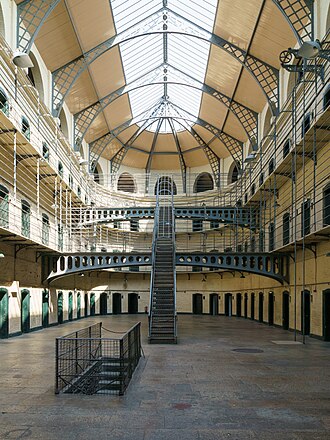
The gaol’s architecture invites atmosphere. Long corridors lined with cells, metal staircases, and sparse lighting create a sensory stage where sound, shadow and memory behave differently than in open, modern spaces. Visitors arriving at dusk often report an immediate change in focus: footsteps echo more clearly, conversations drop in volume, and even the air seems cooler. Those conditions, combined with the gaol’s charged political past, naturally generate stories that persist into late‑hour tours and after‑hours conversations.
Documented history of Kilmainham Gaol: construction, use, and key historical events (what is recorded)
Kilmainham Gaol is a major site in Ireland’s penal and political history. It served as a prison for those convicted of common crimes and for political prisoners; many imprisoned here were held for actions related to Ireland’s long path to independence. The site also housed executions and long‑term incarceration, which are part of the archival record kept by museums, government archives and the historical society that administers the site.
When discussing the gaol with visitors, guides rely on material held in public records and the museum’s own interpretive resources: plans of the prison, lists of inmates, official correspondence and contemporaneous newspaper reporting. These records verify the building’s uses, changes in management, and several high‑profile incarcerations and executions that shaped local and national memory.
Why cellblocks feel haunted: architecture, acoustics and the sensory experience of late visits
The sensation people label as “haunting” is often a combination of physical and psychological factors. Kilmainham’s cellblocks are narrow, echoic spaces of stone and metal. Sound travels along the corridors and reflects from hard surfaces; a dropped key or a distant footstep can ripple like a voice from another time.
Lighting is critical. Reduced, directional lighting in evening tours casts deep shadows and limits peripheral vision, prompting the brain to fill in blanks. Cold surfaces and stagnant air can lower skin temperature, which some visitors interpret as “cold spots” associated with presence. Finally, prior knowledge—knowing the site’s harsh history—primes attention toward anything that seems out of the ordinary.
Late‑hour accounts and tales: reported eyewitness stories, guide recollections and how they differ from archival records
Late‑hour narratives around Kilmainham range from small personal sensations to more elaborate stories of apparitions or mysterious sounds. Visitors commonly report sudden chills, the feeling of being watched, or faint noises that stop when investigated. Guides sometimes recount hearing footsteps on empty galleries or seeing fleeting shapes in peripheral vision during closed‑door tours.
It is important to be explicit about provenance. Eyewitness accounts and guide recollections are valuable as oral testimony of experience, but they do not equate to archival confirmation of supernatural events. Where the archival record documents names, dates, and official acts, eyewitness material documents perception and response—both are worth respecting, but they serve different purposes.
Separating folklore from history: sourcing, caution on oral tradition, and how to tell the difference for visitors
A clear distinction between documented history and folklore is essential for ethical interpretation. Documented history rests on measurable records: prison registers, court records, photographs, and contemporaneous journalism. Folklore and oral tradition come from repeated telling—stories shaped by memory, atmosphere, and communal needs.
For visitors curious about late‑hour tales, ask the guide where a story originated. Is it drawn from an archival document, a newspaper account, a museum exhibit, or witness testimony collected by the guide? Readily available methods for collecting oral accounts and treating them responsibly can be found in our guide on Collecting Dublin’s First‑Hand Ghost Accounts: Ethical Oral‑Folklore Methods for Guides.
How guides present the site after dark: ethical narration, commercial storytelling, and practical script tips
Responsible guides balance atmosphere with accuracy. Ethical narration means clearly flagging when a story is archival versus when it’s an anecdote or a local legend. Many guide scripts begin with documented context, then offer personal or collected accounts as what they are—memories, folklore, or recent visitor reports—so audiences can form their own judgments.
Practical script tips for late‑hour tours: announce sensory limitations (low light, narrow access), remind guests to remain quiet and respectful, and invite eyewitness testimony only with consent and clear framing. Avoid presenting unverified legends as fact. When using evocative language, add a brief qualification: “This is an account reported by visitors” or “This story is part of local folklore.”
Practical visiting information: what to expect on late tours, accessibility, respectful behaviour and booking/group options
Late tours of Kilmainham typically use controlled lighting and smaller groups to preserve the site and the visitor experience. Expect narrow stairs, tight corridors and uneven surfaces that can be more challenging after dark. Guides will often pause at key cells and galleries to provide context and listen to guest reactions.
Accessibility varies by tour provider and section of the gaol. Visitors with mobility concerns should contact the tour operator in advance to discuss routes and alternatives. Families with children should consider whether the site’s themes and late hours suit young visitors; many tours are best suited to older teens and adults.
For visitors seeking specialised experiences, Haunted Ghost Tour Dublin offers both public night walks and private group options. Private, after‑hours tours allow more focused exploration of the cellblocks and a tailored narrative that can emphasise documented history, oral testimony, or a mix. Learn about our private group services here: Private group and after‑hours tours.
Photography and conduct during late visits
Low‑light photography can enhance memories, but flash photography is often prohibited to preserve the material fabric of the gaol and to keep the atmosphere intact for other visitors. For practical tips on photographing historic, low‑light sites, consult our piece on Photographing Dublin’s Haunted Sites at Night: Low‑Light Tips for Tourists.
Respectful behaviour matters: keep voices low, follow guide instructions, avoid touching exhibits, and treat places of sorrow or remembrance with dignity. The gaol is both a museum and a memorial to the people who were confined there.
Balancing commerce and care: how storytelling supports preservation
Haunted tours can support conservation by attracting paying visitors who contribute to maintenance and research. However, commercial storytelling must not distort the historical record for entertainment alone. Responsible operators use revenue to fund preservation and public education, and they make clear what in the tour is documented and what is interpretive or folkloric.
If you are a guide or operator thinking about monetising ghost storytelling, there are ethical frameworks and sponsorship approaches worth exploring; learn more in our resource on How to Monetize Dublin Ghost‑Story Podcasts: Local Sponsorship Tips.
Ready to explore Kilmainham’s cellblock echoes and hear late‑hour tales with a guided, respectful approach? Book a Kilmainham Gaol night walk with Haunted Ghost Tour Dublin to join a curated evening visit that prioritises accuracy, safety and atmosphere.
For groups and private bookings that want deeper focus on the cellblocks, archival context or oral testimony sessions, contact our private tours team here: Book a Kilmainham Gaol night walk with Haunted Ghost Tour Dublin.
Final notes for visitors and guides
Whether you come for history, for the thrill of a late‑hour visit, or to gather stories, visit with openness and verification in mind. Bring sensible footwear, a small torch if permitted, and a willingness to listen. Remember that many of the gaol’s stories—both the documented and the folkloric—are about people. Treat them with the dignity they deserve.
FAQ
Is Kilmainham Gaol actually haunted or are the stories mainly folklore?
The short answer: few claims are verifiable in archival terms. The gaol’s atmosphere and documented history create fertile ground for folklore and personal accounts. Many reported experiences are subjective sensations—chills, sounds, or perceptions—rather than events that can be confirmed by historical records. Both types of testimony are worthwhile: archives tell us what happened; oral accounts tell us how people experience the place today.
Can I join a late‑hour tour of Kilmainham Gaol and what should I expect?
Yes. Late tours typically offer smaller groups, controlled lighting and focused narratives. Expect narrow corridors, stairs, and a mixture of documented history with collected late‑hour stories. Check the tour operator’s guidance on meeting points, items allowed, and photography rules before you go.
Are late visits safe and accessible for older visitors or families?
Safety is a priority, but accessibility can be limited by the gaol’s historic layout. Older visitors and families should contact the tour provider in advance to discuss mobility needs and appropriate routes. If you have concerns about stairs or uneven surfaces, ask about alternate arrangements or daytime visits with fuller accessibility.
Do you offer private group or after‑hours tours focused on the cellblocks and late‑hour tales?
Yes. We provide private group and after‑hours options that can be tailored to focus on cellblock history, oral testimony, or atmospheric evening interpretation. Learn more and enquire about availability at our private bookings page: Book a Kilmainham Gaol night walk with Haunted Ghost Tour Dublin.