
Henrietta Street Georgian-house whispers — Haunted Ghost Tour Dublin
Henrietta Street holds a rare kind of hush: the stately facades of Georgian townhouses now frame memories of wealth and hardship, and a local strand of oral tradition known as the “Georgian-house whispers” pins a human voice to that silence. For visitors drawn to architecture, social history and the uncanny, Henrietta Street is a concentrated experience where stone, stairwell and story meet.
Book a Haunted Ghost Tour Dublin walking tour to join a guided stop at Henrietta Street and hear the stories—both verifiable and speculative—explained by guides who separate record from retelling.
Documented history: builders, tenants and the preserved 14 Henrietta Street
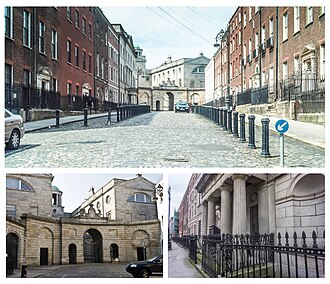
Henrietta Street was laid out as a Georgian residential avenue and originally attracted the city’s prosperous classes. The surviving façades and proportions reflect the ambitions of Georgian Dublin builders: symmetry, tall windows and classical detailing intended for affluent households.
Over time, social and economic shifts transformed many of these houses into multi-occupancy dwellings. The transition from genteel townhouses to crowded tenements is part of Dublin’s documented urban story: larger homes were subdivided, stairwells partitioned and families of different generations shared cramped rooms. That later tenement life is central to the street’s modern identity.
One house on the street is now preserved as a museum—14 Henrietta Street—where visitors can see physical evidence of changing living conditions. The museum displays floor plans, recreated rooms and interpreted objects that illustrate how a grand Georgian house became a place of dozens of daily lives. That museum is a key public resource: it anchors what we can verify about the street’s inhabitants and their material circumstances.
Where the whispers come from: folklore, newspapers and tourist retellings
“Henrietta Street Georgian-house whispers” describes a set of local stories about creaks, voices and chilled stairwells that people associate with the old houses. These accounts arise from several overlapping sources.
First, oral tradition passes memory between neighbours, former residents and storytellers. Family memories of difficult lives in cramped rooms, tales of sudden bereavement, and anecdotes about late-night footsteps find their way into casual retellings and, over time, into more elaborate ghost stories.
Second, newspaper snippets and memoirs occasionally mention dramatic incidents from the street—fires, disputes, or tragic deaths—which can be reframed as spectral narratives in later decades. Third, tourism and guidebook culture amplify selected anecdotes because they are evocative; a phrase repeated on many tours becomes part of the street’s reputational fabric.
It is important to distinguish these layers. Documented events recorded in municipal or museum archives are different in kind from oral recollections or a journalist’s vivid paragraph. Haunted Ghost Tour Dublin aims to make those distinctions clear: we note when a story is corroborated by records and when it remains part of living folklore. For background on ethical collection and presentation of such stories, see our piece on Collecting Dublin’s First‑Hand Ghost Accounts.
Reported encounters and their contexts: assessing reliability and common patterns
Reported encounters on Henrietta Street range from the subtle—an inexplicable cold patch on a stair—to the dramatic—reports of voices or footsteps when a building is empty. When evaluating these accounts, context matters.
Common contextual factors include: the building’s age (old timber and plaster produce sounds), reuse of space (thin walls and shared plumbing transmit noises), and memory (recollections often change with retelling). Many reliable-sounding accounts are explained by structural creaks, passing traffic magnified at night, or the power of suggestion during a spooky tour.
Patterns in oral reports often reflect social memory rather than paranormal causation. Stories about families forced into small rooms, or sudden bereavements, can become haunted narratives because emotional stress and tragedy are easily linked to the idea of lingering presence. That does not make the stories any less meaningful; it simply places them in the realm of human history and collective memory as much as in the supernatural.
Visiting Henrietta Street responsibly
Henrietta Street is a living urban street with residents, businesses and a museum. Responsible visiting means respecting private property and the people who live there.
What is open to the public: the pavement and view of the Georgian façades are public. The preserved 14 Henrietta Street is operated as a museum with opening hours and admission rules—consult the museum directly for current visiting information. Other houses remain private homes or offices; do not attempt to enter without permission.
Respectful behaviour includes keeping noise to a minimum, not blocking doorways, and avoiding intrusive photography of people without consent. If a neighbour asks you to move on, comply courteously. Haunted Ghost Tour Dublin emphasises these practices on our walks to ensure tours do not intrude on day-to-day life.
How guides interpret the whispers: narrative technique and ethical sourcing
Guides at Haunted Ghost Tour Dublin combine architectural observation, documentary history and oral testimony into an interpretive narrative. We mark clearly when a detail is a museum fact, when it comes from a newspaper report, and when it is part of oral tradition. That ethical sourcing helps visitors understand why a place feels haunted without conflating legend with record.
Narratively, guides use sensory description—the slope of a stair, the echo in a landing—to create atmosphere grounded in the physical space. We avoid sensationalising traumatic events and we never attribute living people’s suffering to supernatural causes. If you are interested in how guides collect stories responsibly, read our methods article on ethical oral‑folklore collection: Collecting Dublin’s First‑Hand Ghost Accounts.
Practical visitor tips: atmosphere, photography and accessibility
Best times: early evening can provide atmosphere with remaining daylight, while late evenings are moodier but busier with nightlife nearby. For low-light photography tips that apply to Henrietta Street after dark, consult Photographing Dublin’s Haunted Sites at Night.
Photography: the façades make excellent subjects. Use a moderate wide-angle for street scenes and a longer lens to isolate architectural detail. Respect signs and private-property notices. Avoid lighting up private windows at night with flash.
Accessibility: the public pavement is level in parts but older city streets can be uneven. If you have mobility considerations, check with the museum and with Haunted Ghost Tour Dublin before booking so we can advise on route and access.
Safety: stay on public paths, be mindful of traffic and bicycles, and travel with company after dark. Combine a Henrietta Street visit with nearby heritage that complements the mood—our routes often link to places like Kilmainham Gaol and St Michan’s Crypt for a thematic day of social history and after-dark tales.
Ready to go: suggested itineraries and how to book
Short itinerary (90 minutes): start at the preserved 14 Henrietta Street museum, walk the street, pause at key façades to discuss architectural adaptation, and end with a reflection on tenement life and the whispers that followed.
Half-day itinerary (3–4 hours): combine Henrietta Street with a guided visit to Kilmainham Gaol for social-historical context, then a short walk to a historic pub highlighted in our Lesser-Known Haunted Pubs guide for discussion and convivial debrief.
To join a public guided stop on Henrietta Street, Book a Haunted Ghost Tour Dublin walking tour. If you are planning a private group or after-hours experience, we offer tailored options—contact our private groups page for details: Book a Haunted Ghost Tour Dublin walking tour (private groups).
FAQ
Is Henrietta Street really haunted or are the stories just folklore?
Henrietta Street contains both verifiable historical facts and layers of oral tradition. There are no scientific certainties that prove hauntings; many reports can be explained by building acoustics, memory and social history. The stories are valuable whether they document unexplained events or preserve communal memory—Haunted Ghost Tour Dublin presents both responsibly, separating record from retelling.
Can I go inside the Georgian houses on Henrietta Street?
Some buildings are private and not open to the public. The preserved 14 Henrietta Street operates as a museum with public visiting hours—check the museum’s own visitor information before you go. Haunted Ghost Tour Dublin visits the street as part of a walking tour and arranges stops at public-access points only.
When is the best time to visit if I want atmosphere but also safety?
Early evening delivers atmosphere with residual daylight; late evening is moodier but requires more caution. Weeknights are generally quieter and safer than isolated late-night hours. If you plan to photograph at night, consult our low-light tips and consider joining a guided tour for company and local knowledge.
Do Haunted Ghost Tour Dublin offer private or after-dark tours of Henrietta Street?
Yes. We run public walks that include Henrietta Street and can arrange private or after-dark tours on request. For group bookings and tailored experiences consult our private groups page: Book a Haunted Ghost Tour Dublin walking tour, and for regular bookings use our main tours page: Book a Haunted Ghost Tour Dublin walking tour.