
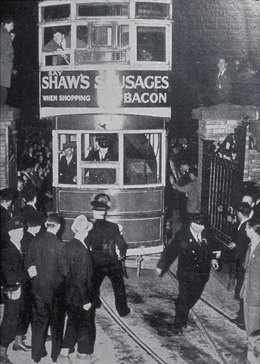
Phantom Tram Legends: Stories from Dublin’s Lost Lines — Ghost Tour Dublin Experience
Dublin’s lost tramlines are a unique kind of city memory: iron and timber that once carved new routes through fog and cobblestones, now reduced to stories, sunken kerbs and the occasional shadow a local insists is a wheel still turning. In this piece we walk the line between archival records and the tales told on the streets at night, offering a guided-tour friendly exploration of phantom tram legends and the tangible places where those stories still echo.
Book the Phantom Tram Night Walk with Ghost Tour Dublin Experience
Why Dublin’s lost tramlines still capture imaginations
There is something inherently spectral about transport that disappears. Trams are particularly evocative: their route maps, poles and depots once threaded the city like a circulatory system. When the service ended and visible infrastructure was removed or repurposed, the scars remained—uneven paving, odd boundary walls, old depot bays in newer buildings. Those half-remembered traces are perfect soil for ghost stories.
Short history of Dublin trams: routes, rise and decline (documented facts)
Documentary records show Dublin’s tram network began as horse-drawn lines and gradually modernised with electric traction. Over decades the system expanded to serve major thoroughfares, markets and suburban routes. The network was a feature of city life for many residents, linking transport hubs, commercial centres and residential suburbs.
By the mid-20th century changes in technology, traffic patterns and public policy led to the gradual replacement of trams with buses and other road transport. Tracks were lifted, rolling stock sold or scrapped, and some depots were repurposed for industry or housing. Physical evidence of routes survives in fragments: embedded rails revealed in roadworks, depot buildings with large arched doors, and the alignment of certain streets that still follows the path of a removed track.
Notable incidents and recorded events linked to tramlines (archives vs. myth)
Local newspapers and municipal records include ordinary but revealing reports: collisions at busy junctions, service disruptions from weather, and the occasional injury when passengers fell while boarding. Those accounts are factual and useful for understanding the risks and realities of tram operation.
There are also records of accidents and fatalities associated with tramlines—reported in contemporaneous press items and official reports. These archived incidents are often the seeds of later folklore: names and brief notices in a register become fuller tales when repeated aloud. Where archives offer terse facts, oral storytelling layers emotion and motive, sometimes conflating separate events into a single vivid narrative.
Phantom tram legends: recurring themes and popular local stories (folklore)
On the tour circuit and in pub conversations the same motifs recur. A silent tram seen in the fog; a bell that rings without a conduit; commuters who step aside on an empty road because “they could feel it coming”—these are common forms of the phantom tram story. The narratives often borrow theatrical details: a conductor in a dated uniform, brass fittings polished despite the absence of a vehicle, or a lone headlamp swinging where no tram could be.
Other stories place tragedies at the heart of the haunting: unclaimed bodies, a child lost in a crowd, or a love story interrupted on a platform. Tour-room storytellers may stitch together these elements with real incidents from the archives, intentionally blurring the line between history and myth to create a more compelling tale. That blending is part of the cultural practice: legends adapt archival fragments into stories that speak to contemporary fears and nostalgia.
Where to see the remnants: streets, bridges and signposts tied to lost lines
Walking Dublin with an eye for tram traces reveals subtle clues. Look for slightly sunken tram track beds exposed during paving works, wide carriageways that once carried rails, and older buildings with low, wide entrances that served as depots. Certain squares and markets retain the flow lines where trams once arrived and departed.
Recommended starting points for a tram-themed walk include historic market areas and main streets where routes converged. Smithfield Square, for example, is rich in night-time atmosphere and links to broader urban stories; see our piece on Smithfield Square After-Dark Apparitions: History, Sightings & Night Walks for related encounters and context. For connections with market life and nocturnal trade, our Moore Street Night-Market Ghost Stories article complements tramline exploration.
Beyond the central routes, smaller suburban traces can be found near old depots and along linear parkland where tracks were removed and green space reclaimed. Cemetery edges such as those described in Deansgrange Cemetery Evening Legends offer a different atmosphere where transport lore meets remnant infrastructure. For an overlap of deeper-time history and nightwalking that sometimes intersects with tramline narratives, see our Viking-era Dublin night walk feature.
Separating fact from fiction: how historians, archives and witnesses differ
Historians rely on contemporaneous documents: municipal minutes, company ledgers, timetables and newspaper reporting. Those materials provide the backbone of verified tram history—routes, company names, operational changes and documented incidents. Where such evidence exists it is helpful to treat it as fact-based context for stories.
Oral witnesses contribute lived experience: a recollection of the sound of a bell, an account of seeing a vehicle late at night, or family stories passed down. Oral history is invaluable but mutable; memory shapes, emphasizes and omits. Tour-room storytellers then add another layer, intentional narrative choices designed to evoke atmosphere.
On a Ghost Tour Dublin Experience walk you will hear all three: archival facts to orient you, witness testimony to humanise the past, and the folklore that binds it together. We explicitly label each type of account on our walks so guests can decide how to weigh them.
Practical guide: joining a phantom-tram themed night walk with Ghost Tour Dublin Experience
Our Phantom Tram Night Walk combines route-finding with storytelling. Expect a mostly pedestrian route across 1–2 miles of city streets, pauses at key locations, and a mixture of documented history and evening legends. The pace is slow to allow for photographs and listening.
Wear sturdy, weatherproof footwear and layered clothing: Dublin weather can change quickly. Tours operate in the dark of evening—bring a small torch if you prefer extra light, though guides use lanterns or lights at stopping points. Accessibility varies by route; contact the team ahead of booking to discuss mobility needs or to arrange alternative arrangements.
Book the Phantom Tram Night Walk with Ghost Tour Dublin Experience
For private groups, corporate events or schools we can create a bespoke tramlines walk tailored to your interest and size—please enquire via our private bookings page to discuss routes, timings and themes. Private group bookings are available on request.
The tour also pairs well with other themed walks that explore different layers of Dublin’s past, such as coaching-inn hauntings in the city centre; see Historic Dublin Coaching Inns and Their Ghost Stories — A Walker’s Guide for complementary material.
How to read the city after the tour
After a night with tram legends you might find yourself noticing the city differently: manhole covers that follow a gentle curve, stone kerbs with an unusual cut, or a line of paving stones hinting at an old platform edge. Those small physical clues are the traces of change—useful for anyone who wants to continue exploring independently.
When researching further, consult contemporary newspapers and municipal archives for verified incidents, and compare those facts with oral accounts gathered on our walks. That practice will give you a richer, more balanced understanding of how transportation history becomes legend.
FAQ
Are stories of phantom trams in Dublin based on any documented events?
Some stories take their roots from documented incidents—accidents, service changes and depot closures reported in period newspapers and municipal records. Those records provide factual touchstones, but the haunting elements (bells in the fog, apparitions dressed in period uniform) primarily belong to oral tradition and folklore.
Which Dublin streets or sites are best for exploring lost tramlines on foot?
Start where historic traffic converged: market squares, main thoroughfares and former depot locations. Smithfield Square and the surrounding streets are often included in night walks; see our feature on Smithfield Square After-Dark Apparitions for more. Market areas like Moore Street also connect to broader transport histories and nocturnal tales.
Is a phantom-tram night walk suitable for children and the faint-hearted?
Our walks are atmospheric but not gratuitously graphic. Families are welcome, though some younger children may find the dark and the storytelling unsettling. We advise checking the tour description and contacting us if you have concerns about content or mobility—guides can adapt material and pacing to suit mixed groups.
Do I need to book in advance for a Ghost Tour Dublin Experience tram-themed walk?
Yes, advance booking is recommended to secure your place, especially for evening and weekend tours. Use the booking link to reserve tickets: Book the Phantom Tram Night Walk with Ghost Tour Dublin Experience.