
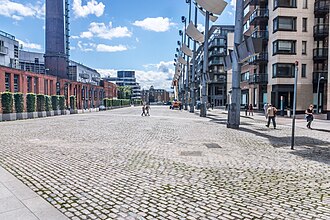
Smithfield Square After-Dark Apparitions: History, Sightings & Night Walks
Smithfield Square by night has a hard, cinematic light: streetlamps throwing long shadows across cobbles, the dark silhouette of the market hall, and a sense that the city’s long public life is compressed into a quieter, stranger hour. For walkers drawn to history and the hint of the uncanny, Smithfield’s plazas and laneways offer a concentrated mix of tangible street-history and the stories that grow from it — the very things Haunted Ghost Tour Dublin explores on evening tours.
Book a guided after-dark Smithfield Square tour with Haunted Ghost Tour Dublin
Documented history of Smithfield Square
When we separate record from rumour, Smithfield Square’s provenance is straightforward: it has long been a civic and commercial space. For centuries it functioned as a market area — a place where livestock, produce and goods passed through, and where Dubliners met, traded and argued.
As in many European cities, open squares in Dublin were used for public punishments and displays. Contemporary records from various Irish urban centres record that public executions and punishments took place in public spaces; Smithfield’s geography and role as a public place have fed similar accounts. Rather than inventing specifics, it’s safest to say: Smithfield’s public role made it a setting for both ordinary commerce and the kinds of civic rituals — markets, proclamations and punishments — that leave a strong imprint on local memory.
The market hall and adjacent buildings are part of the square’s built fabric. Over time Smithfield has undergone waves of change: market decline, industrial and residential shifts, and recent regeneration that introduced cafés, apartments and cultural uses. Those layered changes — market stalls to derelict sheds to renovated halls — are what give the square its visible palimpsest of past and present.
How folklore grew: markets, memory and the making of apparition stories
Folklore rarely springs from nothing. In places like Smithfield, the factors that produce ghost stories are visible: a long history of public gatherings; dramatic events witnessed by many people; rapid urban change that leaves buildings empty or repurposed; and the human tendency to tell stories to explain or enliven otherwise mundane spaces.
Markets produce memory. Sounds — hooves, shouting, laughter — remain in oral recollection even after the livestock and stalls disappear. Empty buildings turn acoustics odd; cobbles and laneways create small, claustrophobic views after dark. When a place has a history of public spectacle, people will sometimes graft narratives of restless spirits onto that past. That process — oral retelling, local news items, later retellings by tour guides and bloggers — is how legend grows.
It’s important to distinguish this cultural process from proven historical fact. Folklore gives texture and local identity; documented records give us verifiable events. Both matter to a visitor, but they should be presented with different tones: archives and maps for the former, anecdote and atmosphere for the latter.
Reported after-dark apparitions and common themes
Accounts collected from locals, night-walkers and longtime residents tend to cluster around a few themes rather than specific named hauntings. Common elements include:
- Shadowy figures moving at the edge of vision — glimpses rather than clear encounters.
- Unexplained cold patches or a sudden sense of being watched in quiet corners.
- Sounds that suggest an earlier market life: distant murmurs, the imagined clatter of hooves, or the echo of voices down laneways.
- Faintly perceived lights or movement around the old market hall when the building is otherwise unlit.
These reports are part of the oral culture of the area. They are interesting and often moving, but they are not evidence in a scientific sense. Our role as guides is to present what people have reported, to place those reports in historical context, and to help visitors decide how much credence to give them.
Top spots to visit in Smithfield Square after dark
For an evening walk that balances atmosphere and sensible visiting, consider these locations:
The square itself
The open space is where market life concentrated. At night the geometry of lamp posts, paving and modern seating makes for strong silhouettes — a good place to listen for local stories and to imagine the square’s public past.
The former market hall
Even when closed, the market hall’s façades and arches read as civic architecture. Guides often pause here to discuss the building’s role and the ways a market’s sounds can linger in memory.
Nearby laneways and alley approaches
Smithfield’s connecting lanes reveal an intimate urban grain. These narrower spaces change acoustics and sightlines; they are where many reported sensations — a passing figure, a cold draft — are most commonly felt.
Plaques and public reminders
Interpretive plaques, memorials and markers around Smithfield provide anchor points for documented history. Use them to separate what is recorded from what is remembered.
Practical tips for an after-dark walk
Short, practical advice will make an evening visit enjoyable and respectful.
- Safety: stick to lit areas and group routes. Smithfield is generally safe, but like any urban area after dark it pays to be aware of surroundings and to walk with others.
- Timing: tours are most atmospheric after dusk and before the late-night crowding that can occur near bars and clubs. Check seasonal sunset times and choose a slot that suits quieter hours.
- Photography: low-light photography is tempting, but long exposures and flash can disturb others and attract attention. See our guidance on respectful photography below.
- Respect residents: Smithfield has homes and late-night workers. Keep noise low, avoid trampling planting, and do not block doorways or restrict access to businesses.
- Operator responsibilities: reputable guides carry insurance and follow safety best practice. Operators preparing night tours should consult resources such as our guide to Insurance & Liability Basics for Dublin Night‑Tour Operators.
How to experience Smithfield with a guided Haunted Ghost Tour Dublin tour
A Haunted Ghost Tour Dublin after-dark Smithfield walk blends recorded history, local memory and the most commonly reported sights and sensations. Typical elements include:
- An orienting introduction that separates documented events from later folklore.
- Stops at the square, the market hall and select laneways with contextual storytelling.
- Discussion of common apparition themes and why people report them — acoustics, urban memory, and the psychology of place.
- Practical advice on photographing low-light scenes and how to be respectful to residents and businesses.
Our walks are led by guides who emphasise accuracy and atmosphere rather than sensationalism. If you want to experience Smithfield alongside other dark Dublin routes, you might also enjoy related evening features such as our piece on Moore Street Night-Market Ghost Stories or longer dusk walks like St Anne’s Park at Dusk.
Book a guided after-dark Smithfield Square tour with Haunted Ghost Tour Dublin
Planning a private or group booking? We also offer tailored after-dark experiences for groups — details are available on our private tours page: Book a guided after-dark Smithfield Square tour with Haunted Ghost Tour Dublin (private groups).
Closing thoughts
Smithfield Square after-dark offers a compact lesson in how urban spaces remember. The square’s documented role as a market and a civic stage provides a firm anchor for the more fluid stories people tell about apparitions. Walking with a thoughtful guide helps you appreciate both the archival record and the living folklore without conflating the two.
If you’re researching how to write or headline about ghostly Dublin for search and bookings, our editorial resources may help — see SEO Headline Formulas for Dublin Ghost Posts. For comparative evening legends beyond the city centre, our Deansgrange Cemetery Evening Legends piece highlights how funerary spaces generate very different stories from market squares.
FAQ
Are the Smithfield apparitions documented or mainly folklore?
Most accounts of apparitions in Smithfield Square fall into the category of local folklore and anecdote. The square’s documented past — as a market and a public civic space — is clear in records and physical remains. Apparition stories are real as cultural phenomena, but they are not established historical facts in the archival sense.
Is Smithfield Square safe to visit for an after-dark walking tour?
Smithfield is generally safe for evening visitors, especially on guided tours that follow well-lit routes. As with any urban night walk, use common-sense precautions: stay with the group, keep valuables discreet, and follow guide instructions. Group operators should also carry appropriate insurance and risk assessments.
Can I take photographs of alleged apparitions or is it discouraged?
Photography is allowed, but treat it respectfully. Avoid intrusive flash in residential areas, ask permission if shooting near doors or cafés, and understand that most “apparition” photos reflect lighting and long exposures rather than supernatural proof. Guides will offer practical tips for low-light shooting.
How do I book a guided after-dark Smithfield walk with Haunted Ghost Tour Dublin?
Reserve your place on our public evening tours via our main booking page: Book a guided after-dark Smithfield Square tour with Haunted Ghost Tour Dublin. For private group bookings or tailored experiences, see our private tours page: Book a guided after-dark Smithfield Square tour with Haunted Ghost Tour Dublin (private groups).