
Phibsborough After‑Dark Lane and Passage Trail — Night Walk Guide
Phibsborough’s back lanes and narrow passages reward a slow, attentive night walk: narrow cast-iron gates, brick service alleys, terraced house backs, and the occasional canal-side shadow offer a different Dublin to the city’s brighter thoroughfares. This guide is written for visitors who want a self-guided, safe, and respectful way to explore phonetic echoes and tangible history after dusk, with clear distinctions between recorded events and the rich folklore that grew up around them.
Book your night tour — visit our Haunted Ghost Tour Dublin tours page
Phibsborough in brief — documented history to set the scene
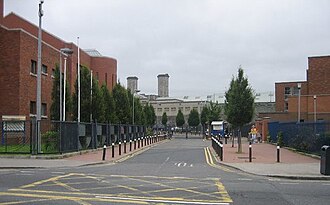
Documented history identifies Phibsborough as an inner-city suburb shaped by urban expansion, transport links and sporting life. The area around Dalymount Park and the main Phibsborough thoroughfares grew significantly during the 19th and early 20th centuries as housing and small industry clustered close to the city centre. Surviving built features — brick terraces, mews-style service lanes and boundary walls — reflect that development and are the physical backbone of any lane-and-passage walk.
Where archives and official records exist they tend to focus on housing, local institutions and the sporting and social life of the area rather than supernatural claims. That distinction is useful when you want to separate documented fact from storytelling: the former is verifiable, the latter is cultural and often locally cherished.
The trail: lane‑by‑lane itinerary and map notes
Estimated time: 60–90 minutes at an unhurried pace. Start and end: a self-contained loop beginning near Phibsborough village centre (close to main shops and cafés) and returning to the same point. The route is written so you can follow it with a basic map app, a printed map, or by joining one of our scheduled tours.
Start — Village crossroads
Begin at the small commercial centre of Phibsborough where shops, pubs and busier streets give way to quieter residential lanes. Confirm a last toilet break and battery level for your phone before you set off.
Lane 1 — The service lanes off the main road
Turn into the first narrow service lane you encounter. These lanes were originally built to access yards and outbuildings and still show older paving patterns and low boundary walls. Look for cast ironwork on gateposts and the clear imprint of terraced backs — practical reminders of working-class urban life.
Lane 2 — Mews and yards behind terraces
Slip into a mews-style passage that reconnects to a secondary street. Mews were often stables or workshops; their compact scale makes them atmospheric after dark. Note the way light falls in pockets: avoid shining strong torches into windows.
Dalymount Park perimeter
Where the route skirts the perimeter of the local football stadium, pause to listen: matchdays transform the place, but off-hours reveal a quieter industrial-residential mix. The railway and stadium structures are anchors in local memory and give context to some of the night-time stories told in the area.
Canal-side return
Complete the loop by following a lane that leads toward the Royal Canal corridor (if visible on your map) and then back to the village. Canal banks and bridges create distinctive night silhouettes and have their own quiet atmosphere—respectfully enjoyed from public pathways.
Map notes: the trail is deliberately flexible. You can shorten to 45 minutes by cutting two lanes or extend to two hours by adding adjoining passages. Bring an offline map or screenshot: narrow lanes sometimes confuse live navigation when GPS signal is intermittent.
Stories along the way — separating folklore and oral tradition from documented events
This is important for visitors and storytellers: label what you say. Three tiers will keep your guide accurate and credible.
Documented history
Documented material includes property records, census listings and accounts of public life such as the stadium and local industries. These provide the framework for place identity and are safe, verifiable anchors in any narrative.
Oral tradition
Oral tradition comprises community memories: tales about a long-shuttered shop, a family that once lived in a terrace, or a remembered incident that never reached formal record. These are valuable and human; present them as recollections rather than fact, and, where possible, attribute them to “local residents” or “neighbourhood memory.”
Folklore and legend
Folklore includes ghost stories, apparition accounts and superstitions associated with lanes and bridges. These are culturally rich and great for atmosphere but should be framed clearly as legend. For example, describe a tale as “a local ghost story passed down over generations” rather than asserting it as historical truth.
Practical tips for an evening walk: safety, lighting, transport and local regulations
Safety first. Keep to public paths, avoid private courtyards and respect posted signs. Many lanes are residential — they are not ghost sets. Use a small headlamp or a torch with adjustable beam so you can keep both hands free and avoid dazzling residents through windows.
Transport: Phibsborough is well served by buses and rail/light-rail links close by; confirm the last service times if you plan to rely on public transit. Taxis and ride-share options are available in the area after dark but check availability if you are walking late.
Local regulations: loud behaviour, trespass and obstructing access are offences. Keep group sizes manageable on self-guided walks and, if leading a group, obtain permission if you plan to use private property for storytelling or photography.
Photography, respect and local etiquette — how to experience without disturbing residents
Photograph sensitively. Many lanes are flanked by private homes; avoid directing flash into windows or lingering outside doors. If residents ask you to move on, comply politely. Night photography can be rewarding quickly — concentrate on textures, lamp pools and architectural details rather than people’s private spaces.
Tour leaders should brief guests on noise, lighting and behaviour before the walk begins. Encourage quiet observation and remind people that the charm of these lanes depends on everyday life continuing undisturbed.
Accessibility and seasonal considerations, plus an alternative daytime version
Many of Phibsborough’s passages are narrow and uneven underfoot. Expect cobbles, gravel and occasional steps. The route is not fully wheelchair accessible. For visitors with limited mobility we recommend a shorter, daytime loop along the more even pavements of the main streets and canal towpath, which keeps the same atmosphere but with easier footing and daylight navigation.
Seasonal notes: winter evenings are atmospheric but colder and potentially icy; autumn offers clear air for story-telling and spring brings the quieter hum of late-night residents. Use appropriate footwear and check weather forecasts before you go.
How to join Haunted Ghost Tour Dublin — scheduled night tours and private group options
If you prefer a guided evening, Haunted Ghost Tour Dublin runs scheduled and private night walks that use tried-and-tested routes, risk assessments and trained guides. Our public tours create a shared storytelling experience and are an easy way to enjoy the lanes safely and with local context. Book your night tour — visit our Haunted Ghost Tour Dublin tours page
If you have a private group, corporate event or a special occasion, we also offer tailored night walks that focus on lanes, oral histories or photographic composition. For private bookings please see our group options: Book a private guided Phibsborough night walk for a group.
For readers who like to compare routes, our lane-led focus complements other local walks such as the North Strand Riverside Apparitions Trail and the evocative ideas in Drumcondra Victorian-era Ghost Walk Ideas. If you are interested in creating your own publication about dark local history, see our practical checklist: Crowdfunding a Dublin Dark-History Zine: A Practical Checklist for Creators. For a leafy contrast to Phibsborough’s lanes, the Donnybrook Dusk Hauntings walk explores different suburban textures, while the Hugh Lane Gallery: Late-Night Echoes and Oddities piece takes a museum-adjacent approach to after-hours atmosphere.
FAQ
How long is the Phibsborough after‑dark lane and passage trail and how much walking is involved?
The suggested loop takes 60–90 minutes at a relaxed pace. Shorter 45-minute variations are possible by skipping some lanes; longer 2-hour versions are available if you extend into neighboring passages. Expect a moderate amount of walking with some uneven surfaces.
Is it safe to walk the trail after dark and are there parts to avoid?
Yes, when you stick to public lanes and follow sensible precautions: stay in groups, keep to lit areas where possible, and avoid private yards or gates. There are no routinely dangerous sections, but some narrow alleys have uneven paving—use a torch and watch your step.
Are the ghost stories on this trail based on documented history or local folklore?
Most of the supernatural material associated with the lanes is local folklore and oral tradition rather than documented history. We advise labelling such material clearly as legend or recollection, and anchoring narratives with verifiable historical context where it exists.
Can I book a private guided Phibsborough night walk for a group?
Yes — Haunted Ghost Tour Dublin offers private, tailored night walks for groups. For details and to arrange a bespoke itinerary, please visit our group bookings page: Book a private guided Phibsborough night walk for a group.