
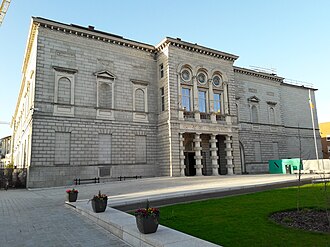
Hugh Lane Gallery: Late-Night Echoes and Oddities — After‑Hours Guide
The Hugh Lane Gallery sits at an intersection of art, civic memory and quiet corridors that take on a different character after dark. For visitors who prefer the hush of gallery hours when fewer people are around, the building’s wood and stone, its preserved studio spaces and the stillness around the canvases can feel unexpectedly intimate — and occasionally, oddly animated. This after‑hours guide separates archival fact from folklore, explains the architectural reasons behind late‑night sounds, and outlines how to experience the gallery as part of a Haunted Ghost Tour Dublin evening.
Book a Haunted Ghost Tour Dublin late‑night tour to join a guided evening exploration that pairs historical context with atmospheric storytelling around the Hugh Lane and neighbouring dark‑history sites.
Documented history: Sir Hugh Lane, the gallery’s evolution and key facts
The Hugh Lane Gallery is a municipal collection built around the ambitions of an individual collector. The gallery’s development and acquisition records are part of the institution’s documented history: its founding impetus, major donations and the ways its collection expanded over time are preserved in institutional archives and catalogues. These records explain how the gallery came to house a mix of Irish and international works and why it occupies the architectural footprint you see today.
When exploring after hours, it helps to separate the museum’s verifiable past — acquisition notes, preserved galleries, and official provenance — from the human stories and feelings the place inspires. The gallery is a civic art space whose curatorial choices and conservation practices shape what visitors experience in every light.
The Francis Bacon Studio — a preserved space and its provenance
One of the most discussed features in the Hugh Lane is the preserved studio of Francis Bacon. The studio’s physical relocation and reconstruction have been publicly recorded as part of the gallery’s collection stewardship. It is presented as an object‑space: the artist’s work environment has been carefully archived, reassembled and conserved to convey the conditions in which chosen works were made.
Visiting the studio within the gallery is a distinct experience: paint‑spattered surfaces, clustered furniture and the sense of a working place held in suspended time. These details are part of the museum’s curatorial decision to treat the studio as both artefact and interpretive tool, not as a theatrical reconstruction. The provenance of the studio, the decisions behind its display and the conservation notes that accompany it are matters of record and available through the gallery’s own documentation.
Anecdotes and reported echoes: staff and visitor recollections (anecdotal vs verified)
Stories circulate among staff and repeat visitors about late‑night sensations: the impression of footsteps in empty rooms, a brief coldness near a doorway, or flickers of movement seen at the edge of peripheral vision. These accounts are primarily anecdotal — personal recollections and stories passed on in staff break rooms or shared over coffee — and they should be treated as such.
Anecdotal reports differ from verifiable incidents recorded in institutional logs. Where a visitor report has been formally documented, it is filed and investigated under gallery procedures. Most “echo” stories are the sort of quiet, human experiences that arise in places of concentrated visual attention: people project narratives onto ambiguous stimuli. That does not diminish their power; it simply places them in the category of personal testimony rather than institutional fact.
Separating folklore from fact matters. Folklore grows from repeated tellings: a single staff remark becomes a theme, and themes attract embellishment. We note these stories to give context to why people are drawn to the gallery at night, not to assert supernatural claims.
Architectural and acoustic explanations for late‑night sounds
Architectural features explain much of the eerie character of galleries after hours. High ceilings, hard floors, plaster walls and expanses of glass create reverberant spaces. In daytime, bodies and furniture absorb sound; at night, those absorbers disappear, leaving a clearer acoustic signature. HVAC systems and night‑time building noise can introduce low‑frequency hums and intermittent clicks.
Old timber staircases and suspended ceilings have their own thermal and structural behaviours. Temperature changes after dusk cause beams to contract and expand, producing creaks that can be mistaken for footsteps or distant doors. The movement of air in ducts, or pressure changes when doors open and close, often registers as a soft whoosh or a settling noise.
Sound can also travel via enclosed service passages and cavity walls, making a distant conversation or delivery sound like it originates within a gallery. Once you understand these physical causes, much of what might feel uncanny becomes clearly explainable.
Artworks, lighting and atmosphere: how late openings change perception
Lighting dramatically alters how we read paintings and objects. Spotlighting defined for evening viewings creates deep shadows and intensifies tonal contrasts. The same canvas viewed in soft daylight reveals different brushwork and colour relationships than in theatrical evening light.
Glass frames and varnished surfaces reflect interior lights and sometimes pick up distant movements as ghostly doubles. At night, those reflections are more pronounced because of higher contrast between lit surfaces and dark surroundings. Small changes in lighting direction or intensity can transform a quiet corner into a place of uncanny depth.
Conservators and curators intentionally vary lighting to protect sensitive works, but they also use light to influence mood. When the gallery opens late, the combined effects of controlled illumination, reduced ambient noise and fewer visitors create a heightened sensory condition that naturally encourages close attention and sometimes makes mundane noises feel momentous.
Practical visitor information: opening hours, after‑hours access and etiquette
For accurate opening hours and official late‑night events, always check the Hugh Lane Gallery’s current information before visiting. Galleries change hours seasonally and may host special extended‑hours evenings or ticketed events that alter normal access.
If you are lucky enough to attend a sanctioned after‑hours event, follow standard museum etiquette: mobile phones off or on silent, low voices, and no touching of works or barriers. Respect any additional instructions from gallery staff or event organisers; after‑hours visits are often held for conservation reasons and rely on visitor cooperation.
Informal or unaccompanied visits after closing are not appropriate. If your interest is particularly focused on the gallery’s nocturnal atmosphere, consider joining a supervised tour or a ticketed evening opening rather than attempting to explore alone.
How to join a Haunted Ghost Tour Dublin late‑night tour (what to expect and book)
Our Haunted Ghost Tour Dublin evening tours are designed for visitors who want historical context together with atmospheric storytelling. Expect small groups guided by an experienced storyteller who blends documented history with clear distinctions between archival fact and local folklore. Routes vary by night but commonly include the Hugh Lane exterior and vicinity, with interpretive stops that set the gallery in its broader urban and cultural landscape.
When we can arrange partnered or ticketed after‑hours access, we accompany guests inside for curated views and focused commentary. These opportunities are limited and require advance booking. For a fuller evening, many visitors pair a Hugh Lane stop with nearby dark‑history walks — for example, our route networks easily to other after‑dark experiences like the Smithfield Market After‑Dark and the Bull Island Dusk Ghost Trail.
Our guides also contextualise the gallery within Dublin’s wider historical landscape; guests often enjoy optional extensions that reference nearby venues with atmospheric reputations, such as the National Museum of Ireland (Kildare St.), St Patrick’s Cathedral, or the hush and wide spaces of Phoenix Park.
If you want to join or check availability, please Book a Haunted Ghost Tour Dublin late‑night tour. Private group bookings and themed events can be arranged; for bespoke experiences, enquire at our private groups page: private group tours of the Hugh Lane Gallery.
Final notes on visiting responsibly
The Hugh Lane Gallery is both an active cultural institution and a place that inspires stories. Respecting the documented history and conservation needs of the collection while enjoying the mood and narratives that night brings makes for the best visit. Treat folklore as a companion to fact: it adds texture without replacing archival record.
If you are curious about after‑dark explorations beyond the Hugh Lane, our guided routes offer safe, informed and atmospherically rich ways to experience Dublin’s quieter hours. To reserve a spot on an evening tour, please Book a Haunted Ghost Tour Dublin late‑night tour. For private or themed group enquiries, visit our private page above.
FAQ
Are the ghost stories at the Hugh Lane Gallery documented or just local legend?
Most ghost stories associated with the gallery are local legends and personal anecdotes rather than formally documented incidents. The gallery maintains institutional records of verifiable events; anecdotal reports — staff recollections or visitor tales — form the body of folklore that grows around atmospheric places. We present both, clearly marked, so visitors understand the difference.
Can visitors join the gallery after hours and are there official late‑night tours?
Official after‑hours access varies according to the gallery’s schedule and programming. The gallery occasionally hosts late openings and ticketed events; these are the appropriate avenues for evening visits. Our Haunted Ghost Tour Dublin tours sometimes coincide with or include arranged after‑hours entries; check our bookings and the gallery’s announcements for specific events.
Is photography allowed during after‑hours visits and are flash or tripods restricted?
Photography policies depend on the gallery and the specific event. Many galleries prohibit flash and tripods to protect artworks and other visitors. If you attend a partnered or ticketed after‑hours event, follow the instructions provided in your booking confirmation and any guidance from on‑site staff. When in doubt, ask before taking photos.
Do you offer private group tours of the Hugh Lane Gallery for themed events?
Yes. We offer private group bookings and themed events that can include curated commentary around the Hugh Lane area. Availability for internal after‑hours access is limited and requires coordination; please enquire via our private groups page to discuss options and bookings.