
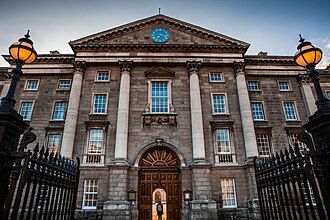
In Dublin, every dark alley, courtyard and Georgian doorway carries a story — some borne of court records and parish books, others passed along at the pub or beside a canal at night. For bloggers covering hauntings and historical scars, separating verifiable facts from handed-down folklore is not just good practice: it protects readers, preserves local heritage, and supports sustainable tourism. This guide gives practical, tourism-focused source checks so you can report ghost sightings with credibility, respect and SEO-ready transparency.
Book the Ghost Tour Dublin Experience to compare stories in person — a live walk can help you see how oral accounts, archival traces and tour narratives interact in real settings.
Why verification matters: credibility, ethics and the tourism impact of ghost reporting in Dublin
Readers expect intrigue from ghost posts; they also expect honesty. Misattributed deaths, embellished timelines or recycled legends can harm families, misrepresent local communities and erode trust in your blog. Ethical verification preserves historical truth, helps maintain relationships with heritage sites, and improves your authority in search engines — which reward transparent sourcing and useful content.
Tourism-wise, a responsibly framed ghost story can turn curiosity into visits. Linking verified history to walking routes and tours gives readers safe, bookable ways to engage — for example, pairing a researched account with a relevant route like the South Circular Road Twilight Ghost Trail or the Drimnagh Canal Ghost Tales can be exactly the context curious visitors want.
A quick 7-point verification checklist every Dublin ghost post should follow
Use this checklist as a front-line filter before you publish.
- Identify the claim: Who, what, where and when? If key facts are missing, flag the item as unverified.
- Search primary records: look for contemporaneous documentation such as newspapers, registers or court records.
- Tag the genre: label content as documented history, folklore or legend (see the section below).
- Triangulate witnesses: seek independent accounts, timestamps, or physical evidence across sources.
- Verify media: request original photos/videos, check metadata and look for editing signs.
- Consult experts: contact archivists, local historians or reputable tour operators for interpretation.
- Disclose relationships: declare if the post promotes a tour, merchandise or a partner.
Researching primary records in Dublin: archives, newspapers and parish registers
Primary records are your most reliable anchors. Start locally, then widen your search.
Key institutions to consult in Dublin include municipal and national collections: Dublin City Archives and the National Archives/Library collections hold newspapers, maps and historic directories. The Representative Church Body Library preserves Church of Ireland parish registers; Roman Catholic parish registers and civil registers are often accessible through the National Library and state record offices. For births, marriages and deaths you may also consult civil registration indexes and the General Register Office for confirmation.
Newspaper archives are crucial for sightings linked to an incident. Contemporary press coverage can confirm events, dates and public reaction. Search titles available in local collections and subscription archives, and remember that not every event was reported.”
Expect gaps: many everyday lives and minor incidents left little formal trace. When records exist, describe their nature: “documented in court minutes” or “reported in contemporary papers” rather than inventing specifics.
Folklore vs. documented history: how to label oral traditions, legends and unverifiable anecdotes
Clear labels protect your credibility. Use three broad categories:
- Documented history — events corroborated by primary sources (archives, newspapers, church or official records). These are suitable for stronger claims and factual SEO terms.
- Folklore — oral traditions passed locally, often without documentary support. Treat these as cultural heritage and situate them as “local belief” or “tradition.”
- Legend — narratives that have evolved and taken on mythic qualities. Present them as storytelling, not factual history.
Make the distinction visible in headings and opening paragraphs. Readers appreciate knowing whether a tale is archival fact, a communal memory or a colorful legend. This clarity improves reader trust and reduces the chance of spreading misinformation about sensitive topics like deaths or crimes.
Evaluating eyewitnesses, tour reports and social media: triangulation, timestamps and credibility signals
Eyewitness testimony can be compelling but must be vetted. Ask for specifics: exact location, time, lighting, weather, other present witnesses, and whether anyone recorded the event. Compare independent accounts: multiple unrelated witnesses who describe the same details strengthen credibility.
Tour operators and guides are valuable sources—many have decades of anecdotal knowledge. When you quote a guide, disclose the relationship (paid or unpaid) and seek corroboration. You can also link contextual tours where appropriate, for example the Four Courts After-Dark Ghost Route or the Dublin Castle Servant Ghost Stories guide to give readers vetted experiences.
Social media posts require special care. Check upload timestamps, metadata when available, and whether the poster supplied original files. Beware of reshared clips without provenance; treat them as leads, not proof.
Basic photo and audio checks for bloggers: metadata, context, and when to call an expert
Photos and audio are commonly used as evidence, but are easily manipulated.
Ask for original files. Inspect EXIF metadata for camera make, timestamp and GPS where available. Look for editing signs: inconsistent shadows, cloning artifacts, abrupt audio edits or background noise removed unnaturally. If you lack tools, free metadata viewers can help, but when an image is central to a claim, consider involving a digital forensics expert or a reputable conservator.
Context matters as much as metadata. A spooky sound recorded near a busy street at night may be a manhole echo; a video taken inside a staged tour setting might be part of the experience rather than an independent sighting. Note environmental factors and cross-reference with eyewitness statements.
Partnering with local experts and tours responsibly: interviews, citations and commercial opportunities
Collaborating with local historians, archivists and legitimate tour operators enhances credibility. Request interviews, cite experts by name and affiliation, and ask for permission before publishing audio or images they provide.
Be transparent about commercial ties. If you earn commission or receive free tickets, state that clearly. Tasteful promotion belongs in a distinct section — for instance, an itinerary that pairs documented sites with guided routes such as the Drimnagh Canal Ghost Tales or merchandising ideas linked in Merch Ideas for a Dublin Dark Tourism Blog. Doing so gives readers actionable ways to visit responsibly without blurring the line between reporting and advertising.
Presenting uncertainty and citing sources: templates for transparent copy that converts readers to visitors
Transparent language improves SEO and reader trust. Use short templates that can be adapted to a post’s certainty level:
- Documented history: “Contemporary records at [institution name] report that [fact].”
- Probable but unconfirmed: “Local reports and a guide’s account suggest [claim]; no primary record has been located.”
- Folklore/legend: “Locals say that [story]; this is a traditional tale associated with the site rather than a verifiable event.”
Always link to the source when possible. Internal links to themed routes and visitor guides help readers convert curiosity into visits — for example, suggest a relevant walk: Four Courts After-Dark Ghost Route.
Book the Ghost Tour Dublin Experience to compare stories in person. For private group bookings and tailored research walks, visit our private groups page at https://www.ghosttourdublin.com/.
Final tips for SEO and ethics
Use clear headings (documented, folklore, eyewitness account) to match search intent. Cite sources and use internal links to keep readers on-site. Avoid sensational language where records are absent — nuance ranks better and builds long-term readership.
When in doubt, label it. An honest caveat is better than a viral falsehood, and a well-sourced post can become a gateway for visitors to experience Dublin safely and respectfully.
FAQ
How can I tell if a Dublin ghost sighting is folklore or supported by historical records?
Start by asking whether the event appears in primary sources: newspapers, parish or civil registers, court papers or municipal records. If you find contemporaneous documentation, treat it as documented history and describe the record. If the story appears only in oral accounts, guidebooks or repeated retellings with no archival support, label it as folklore or local tradition.
Which Dublin archives or newspapers should I check first when verifying a report?
Begin with Dublin municipal collections and the National Library/Archives holdings for newspapers, maps and registers. Church register collections such as the Representative Church Body Library are useful for parish records. Local newspaper archives — including titles preserved in national collections — are a practical next step to confirm contemporary reportage.
Is it acceptable to publish social media videos of ghost sightings, and how should I vet them?
You can publish social media clips if you vet them: request original files, check timestamps and metadata, and look for corroborating witnesses or independent coverage. Always attribute the source, disclose whether you verified the material, and treat unverified clips as leads rather than proof.
How do I link to local tours or sell experiences without overstating the evidence?
Separate interpretation from promotion. In a clear “Visitor information” or “How to experience this” section, link to tours and explain what they offer. Disclose any commercial relationship, avoid presenting promotional material as evidence, and use neutral phrasing like “experience the story on” or “join a guided walk,” so readers can book safely and informedly.