
Bram Stoker’s Dublin: Pubs and Places That Inspired Dracula
Dublin matters to Bram Stoker because it is where he was born, where he spent formative years, and where the city’s streets, taverns and legends fed the imagination that produced Dracula. Over the years visitors and writers have teased apart what is documented in biographies and public records from what grew later as attractive local folklore. This guide separates archival links from legend, maps a compact walking route, highlights pub stops and interpretation, and gives practical information for anyone wanting to follow Stoker’s Dublin footsteps.
Book the Bram Stoker’s Dublin Experience with Ghost Tour Dublin — guided walks and pub stops
Quick route map: a compact walking loop
Suggested loop: start near Trinity College, follow into the medieval streets around Temple Bar and Fleet Street, then cross toward Dublin Castle and the south-side Georgian streets. Finish with a pub stop in an atmospheric Victorian interior. Total distance: roughly 2–3 km (1.5 miles), depending on detours. Typical time: 90–120 minutes at an unhurried pace with two pub stops; allow extra time if you want to linger for food.
Best time to go: late afternoon into evening offers the moodiest light and liveliest pub atmospheres. If you prefer quieter streets, aim for a morning walk. For a guided, interpretive experience after dark consider related evening walks like the Temple Bar Hidden Alleys Night-Walk.
Pubs with the strongest historical connections
Documented biographical and archival links (what we can verify)
Verified facts are simple and important: Bram Stoker was born and raised in Dublin and the city forms part of his biographical record. He lived and worked in the city during his early life before his theatrical career in London. These biographical facts are the confirmed foundation for any Dublin-inspired reading of Dracula.
Where archival records exist—census entries, city directories and contemporary newspapers—they most reliably show addresses, occupations and social circles rather than the precise pub receipts of nightly visits. For an in-depth look at how Dublin’s civic history and justice sites feed into local ghost stories, see the walk through 18th-Century Execution Sites — Dublin’s Justice Hauntings & Walking Guide.
Pubs and taverns with the strongest circumstantial ties
Several Dublin pubs are repeatedly associated with Stoker and his contemporaries because they were literary hubs or retain intact Victorian interiors that match descriptions in period sources. These ties are often circumstantial—proximity to places Stoker frequented, patrons recorded in the same social circles, or surviving accounts that place writers and actors at the same establishments.
Notable stops to consider on your loop:
- The medieval-feel taverns around Fleet Street and Temple Bar — these alleys and cellars preserve the kind of nocturnal atmosphere Stoker knew well.
- Victorian pub interiors in the central city — places with snug snugs, gas-light style fittings and waxed wood that evoke the period ambience often described in late-19th-century Dublin.
- Longstanding literary pubs where writers and theatre people met; even when direct Stoker receipts are absent, these venues tell the social story of a Dublin literary community that included Stoker’s friends and colleagues.
When you stop for a pint, ask staff about any on-site memorabilia or copies of period newspapers; many publicans keep fragments of provenance and oral histories that add texture to the archival record.
Places that likely inspired Dracula’s scenes
Dracula’s moods—fog, shadowed streets, crowded city inns—have parallels in Dublin’s medieval core and Georgian quarters. The following places are most commonly cited by scholars and guides as likely inspirations; these are drawn from topography, surviving buildings and documented aspects of Stoker’s Dublin life.
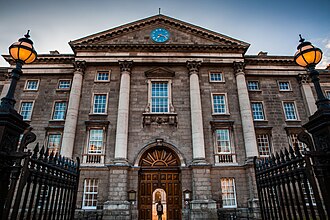
- Trinity College environs and nearby lanes: a nexus of students, books and theatrical life in Stoker’s time.
- Temple Bar and Fleet Street alleys: cramped medieval lanes and riverside commerce that supply the cramped, labyrinthine city feel found in late Victorian fiction.
- The Castle precinct and the city’s administrative corridors: the sense of institutional authority and hidden cellars that often appear as settings in Gothic scenes.
- Whitefriar Street and certain churches, where shadows, votive candles and devotional iconography can prompt the same uncanny response as Gothic descriptions—see Shadow Sightings at Whitefriar Street Church: A Visitor’s Guide for a visitor-focused look.
These sites are presented as likely sources for mood and detail rather than simple one-to-one mappings; Stoker adapted atmospheres and fragments into a transnational Gothic narrative.
Local legends and later attributions (clearly labelled as legend)
Legend: “Dracula visited Dublin.” This is unverified and belongs to the realm of appealing story-making. No reliable contemporary evidence shows the novel’s fictional vampire ever walked Dublin’s streets.
Legend: “Certain pubs are haunted by vampiric spirits linked to Stoker.” These stories are part of local oral tradition and make for entertaining pub-chat, but they are not supported by archival documentation. They are valuable as folklore—stories that communities tell to explain architecture, odd occurrences, or a pub’s eerie mood.
Legend: “Plaques or signs confirm Stoker’s presence in a given bar.” Plaques can commemorate real events, but not every plaque is based on documented evidence; always ask for primary sources if a claim matters to you.
What to look and listen for on the walk
Look for architectural cues: narrow alleys, cellar entrances, old signage and surviving gas-lamp fittings. These physical features create the visual grammar of Victorian Gothic.
Listen for oral histories when you enter pubs. Barmen and local guides often preserve fragments—names, anecdotes, newspaper clippings—that are not digitised but can be illuminating. Distinguish between “this was reported in a contemporary newspaper” and “this is what people say today.”
Interpretive tips for pub stops: order a drink local to the pub (a stout or traditional Irish ale), keep to one or two table rounds, and use the pause to read a short passage of Dracula aloud to friends—matching text to setting is the quickest route from historic fact to felt atmosphere.
Practical visitor info and accessibility
Booking: small groups sell out in high season. For scheduled public walks or private bookings, follow the main booking link above. If you have a private group, contact the Ghost Tour Dublin team to arrange a bespoke walk and pub itinerary.
Opening hours: most central pubs open midday and stay open late; kitchens vary. If your route includes a dinner stop, reserve ahead for evenings. Pubs with limited seating will appreciate a quick call ahead.
Food and drink etiquette: many traditional pubs welcome tables for drinks only, others have full menus. Respect quiet sections and be mindful that heritage interiors are delicate—no candles or disruptive props without permission.
Accessibility and safety after dark: parts of the medieval core are cobbled and uneven. Wear sturdy shoes and allow extra time for steps or narrow passages. If mobility access is essential, inform your guide in advance so the route can be adapted. For a broader set of themed evening options, see the Ballsbridge Twilight Folklore District Guide — Evening Walk & Stories.
Why take a guided Bram Stoker walk with Ghost Tour Dublin Experience
A guided Ghost Tour Dublin Experience adds curated archival interpretation, selective pub stops, and the kind of contextual nuance that separates documented biography from later legend. Guides carry primary-source awareness—where Stoker’s Dublin life is attested and where oral tradition has filled the gaps—and they aim to keep your route safe, atmospheric, and enjoyable.
You can Book the Bram Stoker’s Dublin Experience with Ghost Tour Dublin — guided walks and pub stops for a scheduled public walk, or enquire about private bookings for groups. For private group arrangements please use the private booking channel when you need a bespoke route, larger party coordination or special access.
FAQ
Are these pub connections to Bram Stoker documented or just stories?
Short answer: both. Some connections are documented in the sense that Stoker’s Dublin birthplace and social environment are part of the historical record. Many pub claims are circumstantial—based on proximity, surviving interiors, and the literary social scene—and some are later local legend. This guide labels each type clearly so you can judge the strength of a claim.
How long is the suggested walking route and is it suitable for families?
The compact loop is roughly 2–3 km and typically takes 90–120 minutes including two pub stops. It is suitable for families if you choose daytime hours and skip late-night stops. Cobblestones and narrow alleys mean prams and small children will need care; consider a shorter tailored route if that’s a concern.
Can I join a guided Bram Stoker-themed tour and what does it include?
Yes. A guided Bram Stoker walk with Ghost Tour Dublin Experience includes archival context, street-level interpretation, recommended pub stops and time to linger. Guides explain what is documented, what is circumstantial and what is folklore. To reserve a place on a scheduled walk or to arrange a private group, follow the booking link above.
Are the pubs on the route open late and do I need to reserve a table?
Many central Dublin pubs open late, but kitchens and seating policies vary. If you plan to eat or have a larger group, reserve ahead—especially for evening sittings. For solo or small-group drinks, arriving early or between peak dining hours reduces the need for a reservation.