
Dublin Castle: Haunted Rooms and Spectres — Guide & Visitor Tips
Dublin Castle sits at the intersection of living history and local memory; its stone rooms, layered repairs and ceremonial apartments naturally invite stories about presences, lost lives and shadowed corners. For visitors curious about “Dublin Castle haunted rooms and spectres,” this guide maps the parts of the castle most often associated with ghost stories, separates documented history from folklore, and gives practical advice for planning a respectful, atmospheric visit.
Book a Ghost Tour Dublin Experience to explore Dublin Castle’s stories and haunted rooms — our guided walks combine well-researched context with storytelling designed for visitors who want atmosphere without sensationalism.
Why Dublin Castle draws ghost stories
Dublin Castle has been a seat of power, a military stronghold, an administrative centre and a site of ceremonial grandeur over many centuries. Buildings with long public lives accumulate human stories: births, official gatherings, imprisonments, political incidents and sometimes tragic accidents. Stonework, narrow staircases and dim chambers naturally feed the imagination, especially where the historical record is fragmentary or dramatic events occurred.
Concise documented history of Dublin Castle
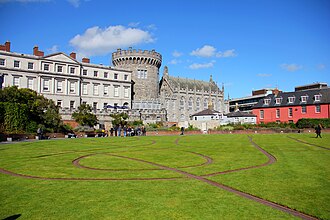
The castle’s footprint reflects layers of construction and reconstruction. Parts of the medieval complex survive alongside later Georgian state apartments and Victorian additions. The Record Tower is widely acknowledged as one of the oldest surviving elements of the medieval defences. For centuries the castle functioned as the administrative hub for successive governments, and it hosted official ceremonies and receptions.
These documented civic roles are important: they explain the castle’s mix of fortified and ceremonial architecture and help us locate where archival records and public memory might overlap with ghost stories.
Rooms and locations most tied to hauntings
Record Tower
What stories say: The Record Tower is often described as a place where visitors feel cold spots or imagine shadowy figures. Stories sometimes mention former guards or prisoners seen within its old stone stairways.
What records show: The Record Tower is one of the better-preserved parts of the medieval defences and would have had military and storage uses. Its age, thick walls and atmospheric lighting make it a natural focal point for stories; documented uses are architectural and administrative rather than supernatural.
State Apartments and ceremonial rooms
What stories say: The richly furnished State Apartments are sometimes said to carry echoes of past ceremonies and figures who once moved through the rooms — a common trope for grand historic interiors.
What records show: The State Apartments are largely used for official functions and are carefully conserved. Many anecdotes about “visitors” or “apparitions” stem from oral storytelling traditions rather than archival documentation. Access is often controlled during state events, which can feed speculation about “closed” rooms.
Chapel areas
What stories say: Chapel spaces are often linked to quiet, lingering presences; tales sometimes describe faint singing, fleeting figures or the sense of being watched.
What records show: Chapels historically hosted religious services and private devotion. Their atmosphere—stone benches, dim light and echoing acoustics—makes them susceptible to misperception and to being focal points for local legend rather than documented hauntings.
Undercrofts and basements
What stories say: The undercrofts are frequently described in folklore as places of detention or secret activity and therefore attract ghost stories about former prisoners and hidden tragedies.
What records show: Undercrofts in medieval and later structures were pragmatic spaces for storage, maintenance and occasionally temporary confinement. Records may note functional uses but rarely support specific supernatural claims; the close, cool architecture of these spaces amplifies atmosphere and promotes storytelling.
Separating fact from folklore
There are clear, documented events and broad social practices that fuel spectre tales: the castle’s military role, its use as an administrative centre with records of detentions or legal punishments in the surrounding city, and public-facing incidents such as fires, repairs or political unrest. These events create plausible human stories that folklore can elaborate on.
Folklore arises where documentation is thin, where collective memory is vivid, or where memorable incidents—arrests, executions in the wider city, or high-profile political events—leave an emotional imprint. When approaching a specific tale, first ask whether there are contemporary records or only oral retellings. Reliable history will cite documents, official records or contemporary reporting; folklore will show variation in detail and often adapts to the storyteller’s purpose.
How to plan a visit
Opening hours, ticketing and access can change seasonally and for state events. Before you go, check the castle’s official visitor information and book tickets in advance if you want to see the State Apartments or special exhibitions. Many areas are included in guided tours only, and certain rooms can be closed for official functions or conservation work.
Security is routine: expect bag checks, metal detectors or temporary access controls. Large items like tripods or specialist lighting are commonly restricted without prior permission. If you have mobility concerns, check access routes for the rooms you want to visit because some older areas have steep stairs.
Tour tips for atmosphere seekers
Best times of day: early morning tours can offer quieter conditions for photography and contemplation, while late-afternoon light enhances stone textures. Evening special events may create more atmosphere but can be limited and require prior booking.
Respectful behaviour: keep noise low, follow staff instructions, and do not touch objects or enter cordoned areas. Historic rooms contain fragile finishes and artefacts—respect protects both the collection and fellow visitors’ experience.
Low-light photography basics: use a fast lens (low f-number) and a camera body with good high-ISO performance to capture interior spaces without flash. Flash can damage sensitive surfaces and is often prohibited; tripods are frequently not allowed in busy rooms. Always ask staff before using stands or unusual equipment.
What a Ghost Tour Dublin Experience offers at Dublin Castle
Our Ghost Tour Dublin Experience blends historical context with local storytelling. We map the castle’s public rooms and exterior features that have inspired narratives, and we make clear when a story is rooted in archival evidence and when it belongs to oral tradition. Routes focus on atmosphere and learning rather than attempting to “prove” supernatural claims.
We run public walks, themed evening events and private-group tours. All tours emphasise safety and respect for the site and its visitors. Booking options include open tickets and private bookings for groups who want a tailored route or quieter experience. For group enquiries, see our private bookings options.
Book a Ghost Tour Dublin Experience to explore Dublin Castle’s stories and haunted rooms — choose a public walk for atmosphere or reserve a private group for a focused visit.
For private groups and corporate events, we offer bespoke itineraries that can place greater emphasis on archival sources, local folklore or related night‑walks around the city. Contact us to discuss accessibility needs and safety arrangements for evening walks: Private group bookings.
Further resources and recommended reading
To research castle history responsibly, consult primary archives, reputable local history books and institutional collections held by libraries and city archives. Local folklore collections and oral-history projects are invaluable for tracing how a story evolved, while conservation reports and architectural surveys clarify which spaces are original and which are later additions.
For related local walks and folklore that enrich a castle visit, explore our deeper guides and night‑walk resources: Phoenix Park Ranger Apparitions: Folklore, History & Night‑Walk Tips, Royal Canal Lock-Keeper Apparitions: Night-Walk Guide & Local History, Merchant’s Quay Lost-Shopfront Hauntings: Night‑Walk Guide to History & Tales, Mount Jerome Cemetery Night Stories: History, Folklore & Night‑Walk Guide, and practical visitor items at Merch Ideas for Dublin Ghost Tours — Low-Cost Souvenirs.
Book a Ghost Tour Dublin Experience to explore Dublin Castle’s stories and haunted rooms — our guides will help you distinguish record from rumour and enjoy the castle respectfully, whether you seek history, atmosphere or both.
FAQ
Are the haunted rooms at Dublin Castle open to the public and can I visit them on my own?
Many of the castle’s principal rooms are accessible to the public with a standard ticket, but access can be restricted for official events, conservation or security reasons. Some historic areas are only viewable on guided tours. Plan ahead: check official visitor information and book in advance if you want to enter the State Apartments or attend a special event.
How do I tell the difference between verified history and folklore about the castle’s spectres?
Verified history is supported by documentary records, archival evidence or contemporary reporting. Folklore typically survives in oral tradition, varies by teller, and adapts over time. A healthy approach is to ask whether a specific claim cites records or appears only in local stories; reputable guides will label each accordingly.
Can I join a Ghost Tour Dublin Experience that focuses on Dublin Castle and book tickets in advance?
Yes. We offer scheduled public walks and private bookings that include Dublin Castle in their route. Booking in advance is advised, especially for evening events or private-group tours. Reserve online to secure your place and to check meeting points and accessibility information.
Are photography and audio‑recording allowed inside the castle during evening or special tours?
Policies vary by room and event. Flash photography and tripods are often restricted to protect interiors and artefacts. Audio recording for private use is usually acceptable, but commercial recording or large equipment may require prior permission. Always check with staff or your guide before recording.