
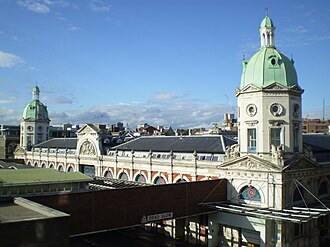
Smithfield Market After-Dark: Legends, Reports & Visitor Guide
Smithfield Market after dark is a study in contrasts: broad, quietly lit paving, weathered façades that take on a different character at night, and the occasional hum of delivery traffic breaking the silence. For many visitors the square’s mix of old market architecture, adjacent laneways and changing uses creates an atmosphere that invites questions about what the city leaves behind when daylight fades. This guide blends archival facts, locally reported eyewitness accounts and practical visitor advice so you can experience Smithfield responsibly and with context.
Setting the Scene: Smithfield after dark
Smithfield is a large open square framed by former market buildings, low-rise warehouses and newer developments. After dark the area softens into pools of sodium and LED light, long shadowed alleys and the occasional worklight from delivery vehicles. The mixture of old masonry, ironwork and cobbled or paved surfaces amplifies small sounds, which can make everyday noises — footsteps, doors, distant engines — feel more immediate and sometimes uncanny.
That atmosphere is why dark-history enthusiasts and night walkers are drawn here: the site holds layers of use and change, and the nighttime environment makes those layers visible in different ways than daytime tours do.
Documented History of Smithfield Market
When we refer to documented history we mean records, maps, planning documents, contemporary newspaper accounts and published local histories. These sources consistently identify Smithfield as an established market and civic space that has undergone multiple phases of use: open-air trading, enclosed market halls, warehousing and more recent regeneration.
Architectural records and municipal archives show changes to building fabric, utilities and street layout; oral histories collected by museums and local groups record the lived experience of traders and residents. Those materials form the backbone of what we present as fact about Smithfield: its function as a market square, the presence of commercial and light-industrial buildings, and the area’s role in Dublin’s changing urban economy.
How We Distinguish Fact from Folklore
We separate documented fact from folklore by assessing three categories of information:
- Contemporaneous records and published histories — these support claims about what happened, where and why.
- Independent eyewitness reports — multiple unrelated accounts describing similar experiences raise interest but remain anecdotal unless corroborated by other evidence.
- Oral tradition and legend — colourful and valuable for cultural context, but not treated as provable history unless supported by documentation.
When we share local legends we label them as folklore and provide the cultural or historical context where possible. When we report eyewitness accounts we describe the nature of the reports (what was seen or heard) without asserting a definitive explanation, and we suggest natural or architectural causes where appropriate.
Common After-Dark Reports and Local Legends
Visitors and locals describe several recurring types of experiences after dark:
- Perceived figures or shapes in peripheral vision — often described as quick movements or silhouettes in laneways.
- Unexplained sounds — footsteps, doors, voices or the impression of activity within empty buildings.
- Sudden changes in temperature or “cold spots” — sensations often reported near alleys or doorways.
- Lights or glows that seem out of place — reflections, maintenance lights or interior illumination seen through windows.
What’s verifiable? Many reports have plausible environmental explanations: long façades and courtyards create echoes, reflecting light from passing vehicles or distant signage can produce unexpected illuminations, and wind funnels through gaps in building lines to create localised temperature changes. Insurance of repeated, independently recorded phenomena (for example, video captured on different nights at the same spot showing the same unexplainable event) is rare; most accounts remain personal experiences that enrich the local oral tradition.
Key Smithfield Locations to Watch
The Market Square
The open square is the area most visitors know. At night its expanse emphasizes echo and distance; steps, lamp standards and the footprint of former market stalls create visual cues. Look for changes in pavement level, historic signage and metal fixtures that hint at former uses.
Historic Façades and Alley Entrances
Rows of older façades often hide narrow entries and yards. These transitional spaces — thresholds between public and private — are where sound changes most abruptly. Pay attention to iron gates, old deliveries doors and windows; many stories and eyewitness mentions concentrate around these liminal spots.
Night-Shift Routes and Nearby Buildings
Smithfield remains active around the clock for deliveries, late services and businesses operating at odd hours. Routes used by night-shift workers, security staff and maintenance crews can create the impression of unusual movement. Knowing which doors are used regularly helps separate routine activity from what might feel anomalous.
Visitor Experience: What to Expect on a Smithfield After-Dark Walk
A guided after-dark walk in Smithfield focuses on atmosphere, context and responsible storytelling. Expect small-group pacing, stops at architecturally or historically significant points and commentary that clearly labels archival information, eyewitness accounts and folklore. Tours emphasise listening and observation rather than theatrical sensationalism.
Typical timing for a walk is after twilight when electric lighting is established but the streets remain quiet; this enhances visibility of architectural detail while preserving the sense of nocturnal atmosphere. Guides will recommend sensible footwear, a charged phone and a small torch for reading plaques or navigating darker laneways.
Safety, Access and Practical Tips
Safety is central to a positive night visit. Practical tips:
- Use public transport or licensed taxis to arrive and depart; plan your return journey in advance.
- Stick to public thoroughfares and guided-route recommendations; do not enter private yards or locked buildings.
- Keep to well-lit areas and travel in groups where possible. Carry a charged phone and a basic first-aid item if you prefer.
- Photography in public spaces is allowed, but be respectful: do not aim cameras into private windows, and check with guides before using tripods or staging shots on shared walkways.
- Be mindful of local residents and businesses: keep noise to a minimum, and do not obstruct doorways or deliveries.
If you are attending with a larger group or a special requirement, consider booking a tailored private tour to ensure the walk aligns with your access needs and group size.
Book a Guided Experience
A guided Haunted Ghost Tour Dublin walk brings together archival context, carefully framed eyewitness reports and theatrical presentation without making unsubstantiated claims. Guides aim to give travellers an informed experience that enhances appreciation for Smithfield’s architectural and social history while respecting the line between history and legend.
If you are organising a private group, corporate event or special-interest walk, please enquire about bespoke options at our private groups page.
Interested in other dark-history walks in and around Dublin? Explore complementary trails such as the Bull Island Dusk Ghost Trail: Dark History, Folklore & Visitor Guide, or expand your itinerary with visits to sites covered in our other guides like the Unexplained Stories at the National Museum of Ireland (Kildare St.), St Patrick’s Cathedral: Spectral Tales and History, and the Phoenix Park: Eerie Legends and Dark Spots.
FAQ
Is Smithfield Market actually haunted or are the stories just folklore?
There is no definitive evidence that proves Smithfield is haunted in the scientific sense. The area has a rich oral tradition and many personal eyewitness accounts that form local folklore. We distinguish verified historical facts from anecdotal reports and present both with clear labels so visitors can form their own impressions.
Are there reputable guided after-dark tours that cover Smithfield’s legends?
Yes. Reputable tours combine documented history, local eyewitness reports and measured interpretation. Haunted Ghost Tour Dublin emphasises context and credible storytelling rather than sensational claims; tours are led by guides who explain the difference between archival records and oral tradition.
Is it safe to visit Smithfield at night and what should visitors be aware of?
Smithfield is a lively part of the city but, like any urban area after dark, visitors should take common-sense precautions: travel in groups, keep to well-lit routes, be aware of local traffic and deliveries, and follow guidance from tour leaders. Do not enter private property or obstruct businesses and always respect signage and local residents.
Can I take photos or record while on a Smithfield after-dark walking tour?
Photography in public spaces is generally allowed, but be considerate: avoid filming through private windows, ask permission before photographing people, and check with your guide before setting up tripods or conducting staged photography on shared walkways. For organised groups or special shoots, consider booking a private tour to ensure permission and safety are managed.