
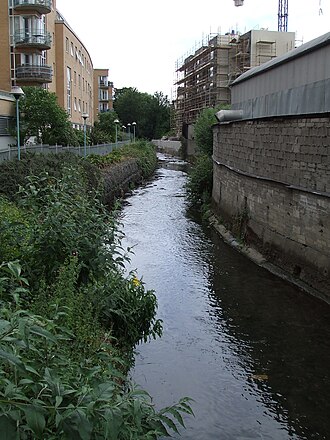
Tolka River Mills Ghost Trail — Abandoned Industry and Eerie Echoes
The Tolka River winds through parts of north and west Dublin, carrying visible layers of the city’s industrial past: low masonry walls, collapsed sluices, terraces of worker housing and the echo of machines that no longer turn. For walkers interested in dark history, the Tolka mills offer an atmospheric urban trail that combines documented industrial change with robust local folklore — a landscape where facts and stories sit side by side.
Introduction: Why the Tolka River mills make a compelling dark-history trail
On a Tolka mills walk you move at river level through working-class neighbourhoods and pockets of dereliction. The contrast between surviving civic infrastructure and abandoned industrial fragments creates a mood that is both historically instructive and quietly uncanny. This is not a theatrical haunted house; it is a place where labour history, environmental change and oral tradition meet on the riverbank.
Book a guided Tolka River Mills Ghost Walk with Ghost Tour Dublin Experience to join a small-group guided route that pairs archival context with local storytelling and safe, thoughtful access to the best mill-related sites along the Tolka.
Industrial rise and decline: documented history of the mills, riverside industry and worker communities
The Tolka supported a string of small to medium mills and related riverside trades. Textile processing, grain milling and ancillary engineering works clustered where the river provided reliable flow for waterwheels and later for turbines. Mill complexes often included weirs, sluices and channels cut into the bank to control water power.
Workforces lived nearby in terraces and tenements that were often built quickly to house mill employees and their families. Those streets and rows of houses remain a reminder of the economic logic that once tied homes tightly to mill sites and river access.
Over time, many Tolka mills declined due to wider economic shifts: mechanisation, the centralisation of industry, changing trade patterns and competition from larger urban works. As production moved or ceased, buildings were abandoned, machinery removed and riverside features left to decay. The physical decline is well-documented in municipal records and contemporary accounts of urban change; the ruins you see today are the residual evidence of that industrial contraction.
Trail overview: recommended route, access points, estimated time and map notes
A practical Tolka mills route follows the river in stages rather than in one continuous stretch. Pick a single section for a focused walk: north Dublin suburbs where the river passes under bridges and through former industrial stretches are good starting points.
Suggested approach: choose a public access point, follow the riverside paths where they exist, use footbridges and public roads to navigate around private plots, and finish at a neighbourhood with cafés or public transport links. A typical single-section walk can be 2–4 kilometres and takes 1–2 hours at an investigative pace.
Map notes: the Tolka is often bordered by mixed-use land. Expect abrupt changes where public pathing finishes and private property begins. Planning ahead with a local map or a guided walk will help avoid dead-ends and unsafe detours.
Notable stops: mill ruins, weirs, bridges, workers’ terraces and industrial detritus
When you walk the Tolka mills trail, look for these recurring features:
- Concrete and stone weirs: often partially collapsed but visible as lines across the river where water was once diverted into mill races.
- Mill foundations and masonry walls: fragments of multi-storey buildings with thick walls and large arched openings. These reveal the scale and construction methods of riverside industry.
- Sluice channels and culverts: narrower channels cut into banks to direct water to wheels or turbines.
- Workers’ terraces: compact rows of houses within minutes’ walk of the river. Front doors, narrow back alleyways and communal yards show how communities were arranged around work.
- Industrial detritus: old brick, metal fittings and occasional machinery bases. These items survive in situ or as reused building materials in nearby properties.
Take time to observe construction details: the size of the stone blocks, surviving iron fixings and any stamped or moulded bricks. These tell the story of local suppliers and the technologies in use.
Folklore and reported hauntings: separating oral tradition and local legend from archival evidence
Local oral tradition is rich along the Tolka. Stories range from tales of lost children near weirs to accounts of spectral figures seen on footbridges at dusk. These narratives are valuable cultural material — they convey how communities remember danger, tragedy and the stresses of industrial life.
It is important to separate folklore from documented fact. Archival records, council reports and newspaper archives are primary sources for workplace accidents, mill closures and recorded events. Folklore often fills the gaps where records are silent or where painful events were not fully documented. When a story names a specific incident that cannot be corroborated in archives, treat it as legend: historically meaningful, but not necessarily provable.
Examples of common Tolka legends include:
- Weir-associated warnings: tales that emphasise the danger of hidden currents and sudden drops. These stories often function as safety reminders passed between generations.
- Worker apparitions: sightings of figures in period clothing near ruined mill walls. These are typically described in broad strokes and vary between tellers.
- Sound-based legends: reports of phantom machinery or distant hammering where no mill remains. Acoustic phenomena can be influenced by river flow, wind and the urban soundscape, which can feed the imagination.
Ghost Tour Dublin Experience distinguishes verified records from oral tradition on our guided walks. We point out where documents confirm events and where community memory keeps narratives alive without archival backing.
Visitor practicalities: safety, access, permissions, best times to visit and photography tips
Safety first: many mill sites are derelict and unstable. Do not climb on crumbling walls, lean over broken railings or enter fenced-off areas. Wear sturdy footwear and stick to public paths.
Access and permissions: some riverbank sections are on private land or have restricted access. Respect signage and property boundaries. If you want close inspection of a site that appears private, arrange access through official channels rather than trespassing.
Best times: daylight hours provide the safest conditions and the best opportunity to read the built environment. Early morning and late afternoon light are favourable for atmospheric photography, but avoid low light in unsafe areas.
Photography tips: use a wide-angle lens to capture the relationship between river and ruins. Shoot details — masonry, bolts, sluices — to tell the industrial story. When photographing people, get permission. If you’re working in twilight for atmosphere, bring a flashlight and a friend for safety.
Guided experience with Ghost Tour Dublin Experience: what’s included, itinerary highlights and booking info
Ghost Tour Dublin Experience offers guided Tolka River mills walks that balance historical documentation with local storytelling. A typical guided walk includes:
- Expert-led commentary on industrial processes, workers’ lives and riverside infrastructure.
- Clear guidance on where it is safe to walk and which sites should be viewed from a distance.
- Interpretation of local folklore alongside corroborated historical records, so you can judge for yourself what feels like legend and what has documentary proof.
- Small groups to minimise impact and maximise conversation.
Itinerary highlights include riverside stretches with visible sluices and weirs, surviving mill masonry, and workers’ terraces that illustrate the social geography of the industrial Tolka. Guides also share connections to wider local histories, from burial ground legends to anecdotal urban tales, linking to related trails such as Plague Pits and Forgotten Burial Grounds in Dublin and neighbourhood oddities like Terenure Lane Apparitions.
Book a guided Tolka River Mills Ghost Walk with Ghost Tour Dublin Experience to secure your place and get pre-walk guidance. For groups and private bookings, we can tailor a route and content; please enquire for private group rates and bespoke itineraries. Contact us for private groups.
Conservation, respect and supporting local heritage initiatives
Many Tolka mill remnants are fragile and of local heritage interest. Treat them with respect: do not remove bricks, graffiti or other materials. Report hazardous structures to local authorities rather than attempting to stabilise them yourself.
Supporting local conservation can be as simple as joining community clean-ups, attending local heritage talks or donating to civic initiatives that document industrial history. Engaging with oral historians and listening to neighbourhood stories helps preserve intangible heritage alongside built fabric.
The Tolka mills trail sits within a network of Dublin’s dark and industrial histories. If you enjoy this walk you may appreciate other themed routes and articles such as Tollhouse Tales and explorations of literary corners in Bram Stoker’s Lesser-Known Dublin Corners. For those interested in institutional haunts, see Haunted Schools: Night Tales from Dublin’s Former Academies.
Book a guided Tolka River Mills Ghost Walk with Ghost Tour Dublin Experience to join a curated walk that respects the landscape, clarifies history and shares the stories that give the Tolka its eerie echoes.
FAQ
How long is the Tolka River mills ghost trail and how much time should I allow?
There is no single fixed trail. Choose a single section for 1–2 hours of walking and interpretation, or combine sections for a longer exploration. Guided walks typically last 1.5–2 hours.
Is the trail suitable for children, strollers or visitors with limited mobility?
Conditions vary by section. Some stretches have firm paths suitable for families; others involve uneven ground and may be unsuitable for strollers or limited mobility visitors. Contact us to plan a route that matches accessibility needs.
Are any of the mill sites on private land or unsafe to enter?
Yes. Many remnants sit on or near private property and some structures are unstable. Do not enter fenced or signposted private areas. Guided tours emphasise safe viewing points and do not encourage trespass or climbing on ruins.
Do you offer guided Tolka River mills ghost walks and how do I book?
Yes. Book a guided Tolka River Mills Ghost Walk with Ghost Tour Dublin Experience at https://www.ghosttourdublin.com/. For private groups or bespoke itineraries, contact us through the same site to discuss options and availability.